Quranic Answer
The Importance of Prayer in the Holy Quran: A Comprehensive Study In the Holy Quran, prayer holds a significant and pivotal role in the spiritual development and everyday lives of believers. Prayer, or 'Salah' in Arabic, can be described as a means of communicating with the Divine, a channel through which believers seek guidance, support, and forgiveness from God. It is a multi-faceted practice that encompasses not only vocal supplications but also an inner dialogue that transcends mere words. This article delves into the various dimensions of prayer as presented in the Quran, its significance, and its various forms. The Quran, which is regarded as the literal word of God in Islam, contains numerous verses that emphasize the importance of prayer. Essentially, prayer is a means of requesting and seeking from God. It establishes a profound connection between the believer and the Almighty, reaffirming the notion that human beings are dependent on God's mercy and guidance. As stated in Surah Al-Mu'min, verse 60: "Call upon Me; I will respond to you.” This verse serves as a compelling reminder that prayer is not merely a routine act but rather a core aspect of faith that facilitates a personal relationship with God. It encourages believers to reach out to their Creator, assuring them that their supplications will not go unanswered. The essence of prayer in Islam is rooted in the idea of invocation. Invoking God can be a spoken medium—a heartfelt verbalization of one’s thoughts and desires. This external expression of prayer is crucial for several reasons. It provides a structured form of worship, allowing believers to engage with God through prescribed prayers like the five daily 'Salah'. However, prayer also goes beyond verbal communication. It encompasses silent contemplation, unspoken thoughts, and pure intentions. In today's fast-paced world, an emphasis on heartful prayer becomes increasingly relevant. A person may find solace in quietly reflecting on their life, expressing their needs without the necessity of vocal articulation. In Surah Al-Imran, verse 38, the Quran further illustrates the importance of prayer in seeking mercy: "My Lord, grant me from Yourself mercy. Indeed, You are the Bestower.” This verse encapsulates the essence of humility and recognition of one's limitations. It highlights that an individual does not need to vocalize every plea for mercy; the heart and intention behind the plea are paramount. Such verses guide believers in understanding that the depth of their faith reflects in their sincerity and humility when approaching God. Furthermore, the act of prayer is not limited to specific phrases or formats. In fact, the Quran encourages spontaneous prayers that arise organically from one’s heart. This dynamic aspect allows for a more personal and genuine connection with God. Believers are encouraged to voice their innermost thoughts, grievances, and aspirations, allowing them to pour their souls out to the Divine. This connection becomes an avenue for catharsis, healing, and spiritual growth. The emphasis on prayer as a means of seeking forgiveness and mercy is reiterated in various Hadiths, or sayings of the Prophet Muhammad (peace be upon him). He emphasized that God is always willing to forgive those who sincerely turn to Him in repentance. This aspect signifies that no matter the circumstances, prayer is a tool for attaining mercy regardless of one's past actions. The process of admitting one's wrongdoings and seeking forgiveness through prayer cultivates accountability and a desire for spiritual redemption. While the Quran recognizes and promotes the importance of verbal prayer and rituals, it also stresses that God looks beyond the surface. It is essential to approach prayer with sincerity and a pure heart. As stated in Surah Al-Baqarah, verse 186, "And when My servants ask you concerning Me, indeed I am near. I respond to the invocation of the supplicant when he calls upon Me.” This highlights the inextricable link between the individual’s intention and the efficacy of their prayer. Thus, believers are reminded that God is not only accessible through ritual but is also attuned to the quiet whispers of the heart. In conclusion, prayer, in its many forms, is among the most important acts of worship in the lives of believers as portrayed in the Holy Quran. It serves as a bridge that connects the individual to the Divine, establishing a relationship that is nurtured through humility, sincerity, and intention. While vocal prayers are acknowledged as a vital component of worship, the importance of heartfelt supplication should not be overlooked. Regardless of whether expressed through words or silent contemplation, prayer is a divine dialogue—a necessary practice that allows individuals to draw closer to God and receive His mercy and guidance. The Quran's teachings on prayer encourage believers to cultivate this vital aspect of their faith, paving the way toward spiritual fulfillment and a profound connection with the Almighty.
Related Verses
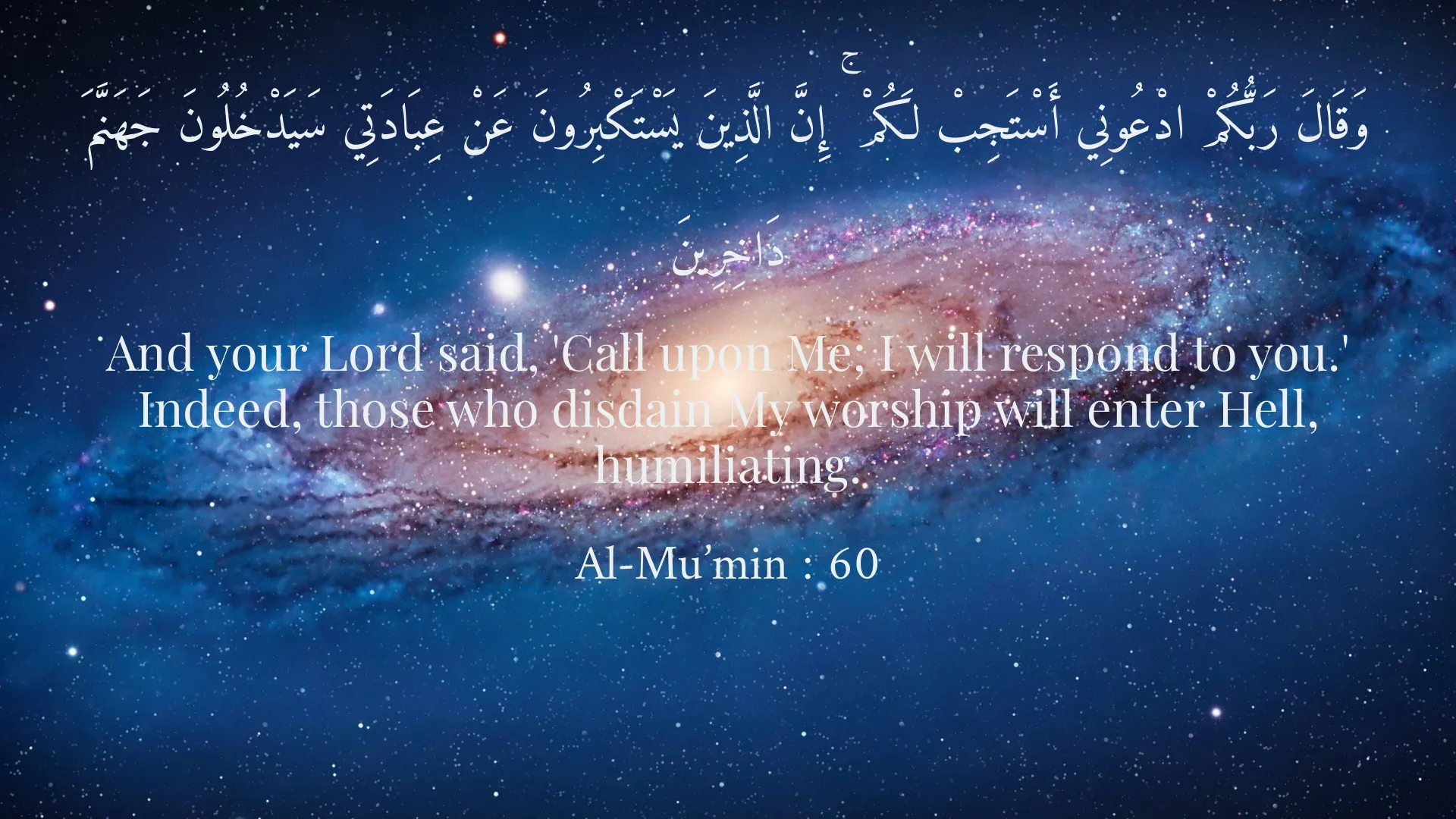
وَقَالَ رَبُّكُمْ ادْعُونِي أَسْتَجِبْ لَكُمْ ۚ إِنَّ الَّذِينَ يَسْتَكْبِرُونَ عَنْ عِبَادَتِي سَيَدْخُلُونَ جَهَنَّمَ دَاخِرِينَ
And your Lord said, 'Call upon Me; I will respond to you.' Indeed, those who disdain My worship will enter Hell, humiliating.
Al-Mu’min : 60
رَبِّ هَبْ لِي مِنْ لَدُنكَ رَحْمَةً إِنَّكَ أَنتَ الْوَهَّابُ
My Lord, grant me from Yourself mercy. Indeed, You are the Bestower.
Al-Imran : 38
Short Story
One day, Maryam decided to connect more with God. She would go to her garden and pray in her heart. She knew that her pure intentions were important and that God hears her prayers, even if she doesn't raise her voice. One night, while gazing at the sky, she felt as if she was speaking to God from her heart, giving her a profound sense of closeness and tranquility.