Quranic Answer
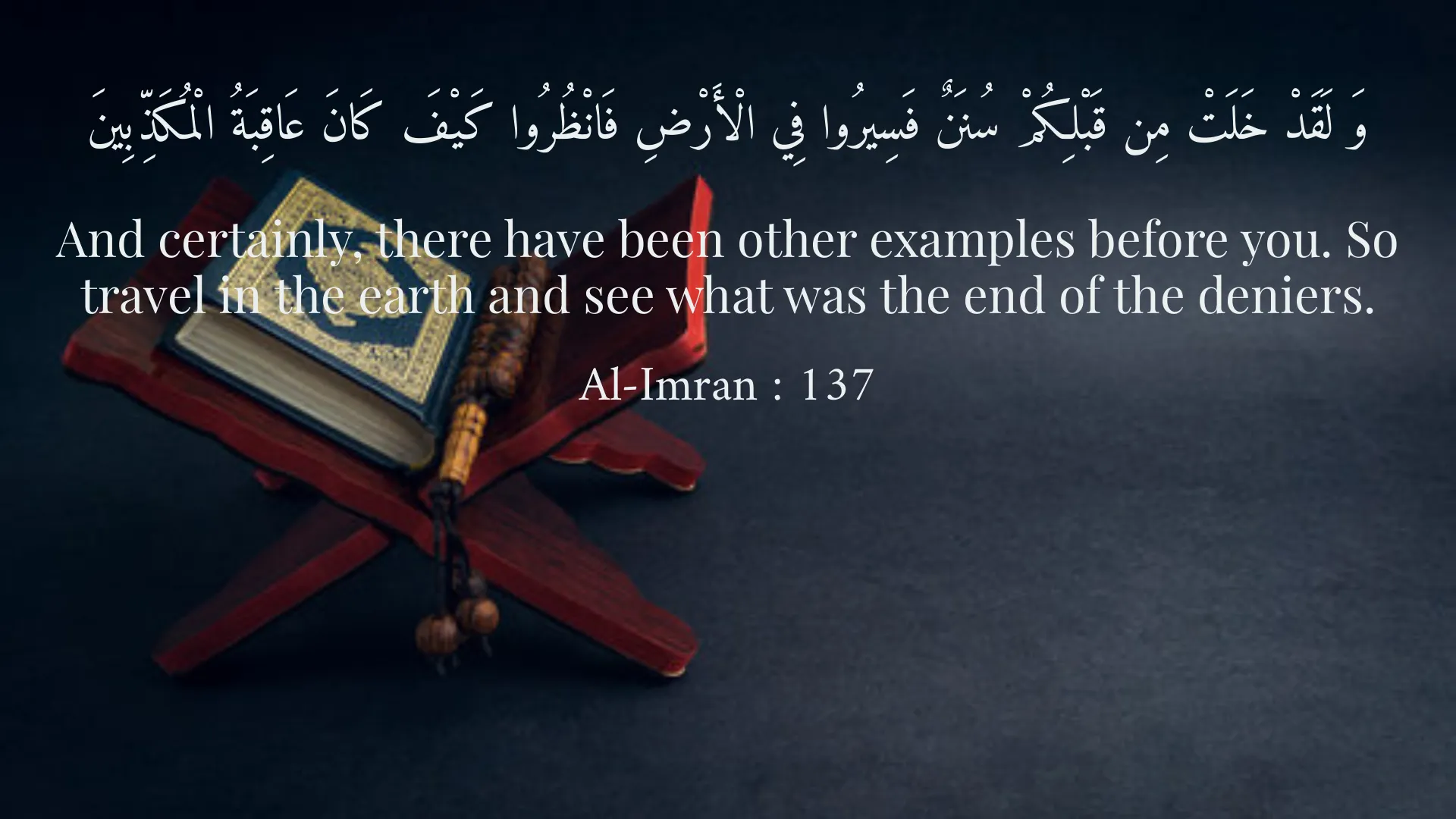
The Holy Quran serves as both a spiritual guide and a historical record, encouraging believers to reflect on the past as a means to enhance their understanding of themselves and their destinies. This idea is especially emphasized in the verses that urge individuals to contemplate the historical paths taken by those before them. Reflection and contemplation are not merely encouraged but seen as essential tools for personal growth, learning, and ultimately achieving a life of purpose and meaning. The discussion below aims to explore the various facets of this practice as elucidated in the Quran, with a focus on self-awareness, lessons from history, and the motivation for personal transformation. ### The Significance of Reflection in the Quran The Quran contains numerous verses that direct humans to draw lessons from past events and the lives of previous nations. Among these, Surah Al-Imran (3:137) stands out, as Allah commands believers: "And certainly, there have been other examples before you. So travel in the earth and see what was the end of the deniers." Here, the travelers are not only those who journey physically across lands but also those who traverse the vast landscape of history, seeking to understand the consequences of denying divine guidance. This verse highlights the importance of examining the trials and tribulations faced by earlier generations. By reflecting on the choices made by those before us and the resulting outcomes, individuals can gain insights into their own lives. The Quran emphasizes that reflecting on history is not just an academic exercise; rather, it is integral to the development of one’s character and faith. This historical reflection acts as a mirror, enabling individuals to see their strengths and weaknesses clearly, thereby fostering a deeper self-awareness. ### Learning from History One of the fundamental lessons the Quran imparts is that history is replete with examples of both triumph and failure. The narrative of past communities serves as a guide on how to navigate the complexities of life. For instance, numerous stories of prophets illustrate resilience in the face of adversity, adherence to divine commands, and the ultimate success that comes from faith. By studying their stories, individuals can find motivation to persevere in their struggles. In Surah An-Nahl (16:16), Allah further reinforces this concept by declaring, "And in the creation of the heavens and the earth are signs for those of understanding." The signs mentioned here remind us to look beyond mere existence and superficial observations. They encourage deep contemplation, prompting us to analyze our environment, our origins, and our purpose. The challenges faced by past civilizations and their narratives of persistence against challenges offer profound lessons that can be applied in today’s context. ### The Path to Personal Growth Engaging in reflection encourages a kind of intellectual and spiritual growth that can lead to significant life changes. This process begins with self-examination and recognition of one's own flaws and virtues. For believers, this becomes an avenue for repentance and striving for improvement, as it urges them to align their lives with the teachings of the Quran. Moreover, the act of remembering history fosters a sense of humility. Acknowledging the mistakes and triumphs of those who preceded us can lead to a deeper appreciation of one’s own journey. It instills a sense of responsibility, motivating individuals to act justly and compassionately in their communities. Just as the past is marked by both mistakes and achievements, our individual lives are shaped by our choices, and reflection allows us to approach these choices with greater awareness and intention. ### The Quran as a Guide for Change As believers contemplate their lives in light of historical examples, they often find themselves at crossroads, facing choices that can fundamentally alter their futures. The Quran acts as a guide in making these decisions, encouraging believers to align their actions with divine principles. The lessons learned from historical narratives often serve as foundational to understanding one’s purpose in life. The stories of past prophets and their communities convey moral and ethical teachings that are timeless and applicable in modern scenarios. For example, through the stories of accountability faced by the communities of Prophet Noah or Prophet Lot, individuals are reminded of the consequences of moral decay, arrogance, and defiance of divine command. These narratives motivate believers to choose paths of righteousness and to take heed of the warnings encapsulated in these historical events. ### Encouragement to Transform and Evolve Ultimately, the reflection on history prompts believers to consider their roles in shaping their futures. The Quran emphasizes that while history is filled with lessons, the present moment provides an opportunity for transformation. The knowledge gained from the past is intended not just to inform but to inspire action, growth, and positive change. As Allah reminds in the verses, recognizing the signs of His creation and the historical events allows believers to develop a mindset geared towards continuous self-improvement. To foster this spirit of transformation, it is crucial for individuals to engage actively in self-reflection. This involves regularly assessing one’s beliefs, actions, and their alignment with the teachings of the Quran. It is about committing to learning from the past while simultaneously preparing for a future that reflects the values embraced by the teachings of Islam. ### Conclusion In conclusion, the practice of reflection and contemplation as described in the Quran holds substantial importance in the life of a believer. By examining historical signs outlined in the sacred text, individuals are given the tools to better understand themselves, their choices, and their destinies. The lessons drawn from the narratives of past communities and the promptings to reflect lead to personal growth, self-awareness, and a drive for transformation. It is this unique interplay between the past and present, guided by divine insight, that allows individuals to cultivate a more meaningful and purposeful existence.
Related Verses
وَ لَقَدْ خَلَتْ مِن قَبْلِكُمْ سُنَنٌ فَسِيرُوا فِي الْأَرْضِ فَانْظُرُوا كَيْفَ كَانَ عَاقِبَةُ الْمُكَذِّبِينَ
And certainly, there have been other examples before you. So travel in the earth and see what was the end of the deniers.
Al-Imran : 137
وَآيَاتٌ فِي الْأَرْضِ وَمَخْلُوقَاتٌ عَلَى الْكُونِ
And signs in the earth and creations in the heavens.
An-Nahl : 16
Short Story
Once upon a time, there was a young man named Amir who always reflected on his past. He would review his experiences and mistakes, learning from them. One day, he came across the verses of the Quran and decided not to dwell on his past regrets but to use them as a tool for growth and learning. He learned from his mistakes and moved towards positive changes in his life. Over time, Amir became a successful and influential person in his community.