Quranic Answer
Regretting the past is a common human experience. All of us, at times, reflect on what has happened, mistakes we have made, or opportunities we have lost. This reflection, if aimed at learning lessons and correcting our path, can be beneficial and constructive. However, if it transforms into an endless cycle of remorse, self-blame, and unproductive "what ifs," it can have profound negative impacts on one's psyche and, particularly, on one's faith (iman). From the perspective of the Holy Quran, the answer to this question requires distinguishing between constructive regret and destructive regret. While the Quran does not directly address "regretting the past" and its specific impact on "weakening faith" in a single verse, it offers principles and teachings that clearly illustrate how certain types of regret can harm one's faith and how one should approach the past to strengthen it. One of the most vital Quranic teachings in this regard is the concept of "Tawbah" (repentance) and returning to Allah. Almighty God invites His servants to repent in numerous verses, even if their sins are grave. For instance, in Surah Az-Zumar, verse 53, Allah says: "Say, 'O My servants who have transgressed against themselves [by sinning], do not despair of the mercy of Allah. Indeed, Allah forgives all sins. Indeed, it is He who is the Forgiving, the Merciful.'" This verse is a beacon of hope for anyone who has erred in their past. Regret for the past, if it leads to despair of Allah's mercy, is precisely what this verse forbids. Despair of God's mercy is itself one of the greatest sins and a clear sign of weak faith. A faith that believes in Allah's boundless power and forgiveness does not allow past regrets to lead to hopelessness and despair about the future. True iman empowers an individual to acknowledge past missteps, seek Allah's forgiveness with sincerity, and then move forward with renewed determination and optimism. Dwelling on sins after sincere repentance is often a whisper from Shaytan, aiming to shackle the believer and prevent them from progressing spiritually. Another crucial principle is the concept of "Qada and Qadar" (Divine Decree) and "Tawakkul" (reliance on Allah). A true believer holds the conviction that everything that has occurred in the past happened with Allah's permission and knowledge. This does not negate human responsibility for choices and actions, but rather implies that after one's efforts and choices, the ultimate outcome rests with Allah. Excessive regret over the past and fruitless "if onlys" can be a sign of weakness in accepting Allah's Qada and Qadar and a lack of complete reliance on Him. If a person constantly thinks, "If I hadn't done that" or "If that hadn't happened," they are essentially engaging in a futile battle with an unchangeable past. This internal struggle drains their psychological energy and prevents them from focusing on the present and future, which are the times for action and change. Strong faith guides a person to accept Divine wisdom in what has transpired and to concentrate on what can be built in the present and future. In Surah At-Tawbah, verse 51, it is stated: "Say, 'Nothing will ever befall us except what Allah has decreed for us. He is our Protector; and in Allah let the believers put their trust.'" This verse perfectly illustrates how reliance on Allah and acceptance of destiny is a path to liberation from the chains of endless regrets. The Holy Quran also strongly emphasizes the importance of performing righteous deeds in the present and preparing for the future (the Hereafter). Dwelling on the past, especially a past filled with regret, makes a person oblivious to the opportunities of the present and future. A believer should always be striving for progress, learning from past mistakes, and building their future through good deeds. Destructive regret diminishes the energy and motivation that should be dedicated to righteous actions, sinking the individual into a swamp of stagnation and inaction. In Surah Al-Hashr, verse 18, we read: "O you who have believed, fear Allah. And let every soul look to what it has put forth for tomorrow - and fear Allah. Indeed, Allah is Acquainted with what you do." This verse underscores that a believer's gaze should be towards the future, accumulating provisions from today for tomorrow. Fruitless regret over the past is a significant obstacle to this Quranic outlook. Therefore, regret over the past weakens faith if it: 1. Leads to despair of Allah's mercy: meaning the individual believes Allah will not forgive them, or there is no way back. This contradicts the very essence of Allah's attributes as Al-Ghafur (The Forgiving) and Ar-Rahim (The Merciful). 2. Causes a rejection of Divine decree: making the individual constantly struggle with destiny and the past, feeling unfairly treated or believing they could have completely altered events that were beyond their ultimate control. 3. Prevents righteous action in the present: by consuming one's energy in unproductive rumination over the past, thus hindering spiritual and worldly progress. 4. Results in incessant self-blame and a feeling of worthlessness: which contradicts the dignified self-perception of a believer who knows they are honored by Allah and capable of change and improvement. Conversely, if regret serves merely as a catalyst for learning, repentance, and behavioral correction, it not only avoids weakening faith but can actually strengthen it. This is because by acknowledging mistakes, the individual turns back to Allah, seeks His forgiveness, and moves forward with greater determination towards righteous deeds. This type of regret, accompanied by genuine remorse and resolve, is the key to sincere repentance and the opening of doors to Divine mercy. Thus, the crucial factor is the nature and depth of regret. Regret that leads to despair and stagnation is destructive to faith, whereas regret that culminates in repentance and proactive movement is constructive and faith-enhancing. It guides the believer towards a deeper understanding of Allah's attributes, their own human fallibility, and the path to spiritual growth.
Related Verses
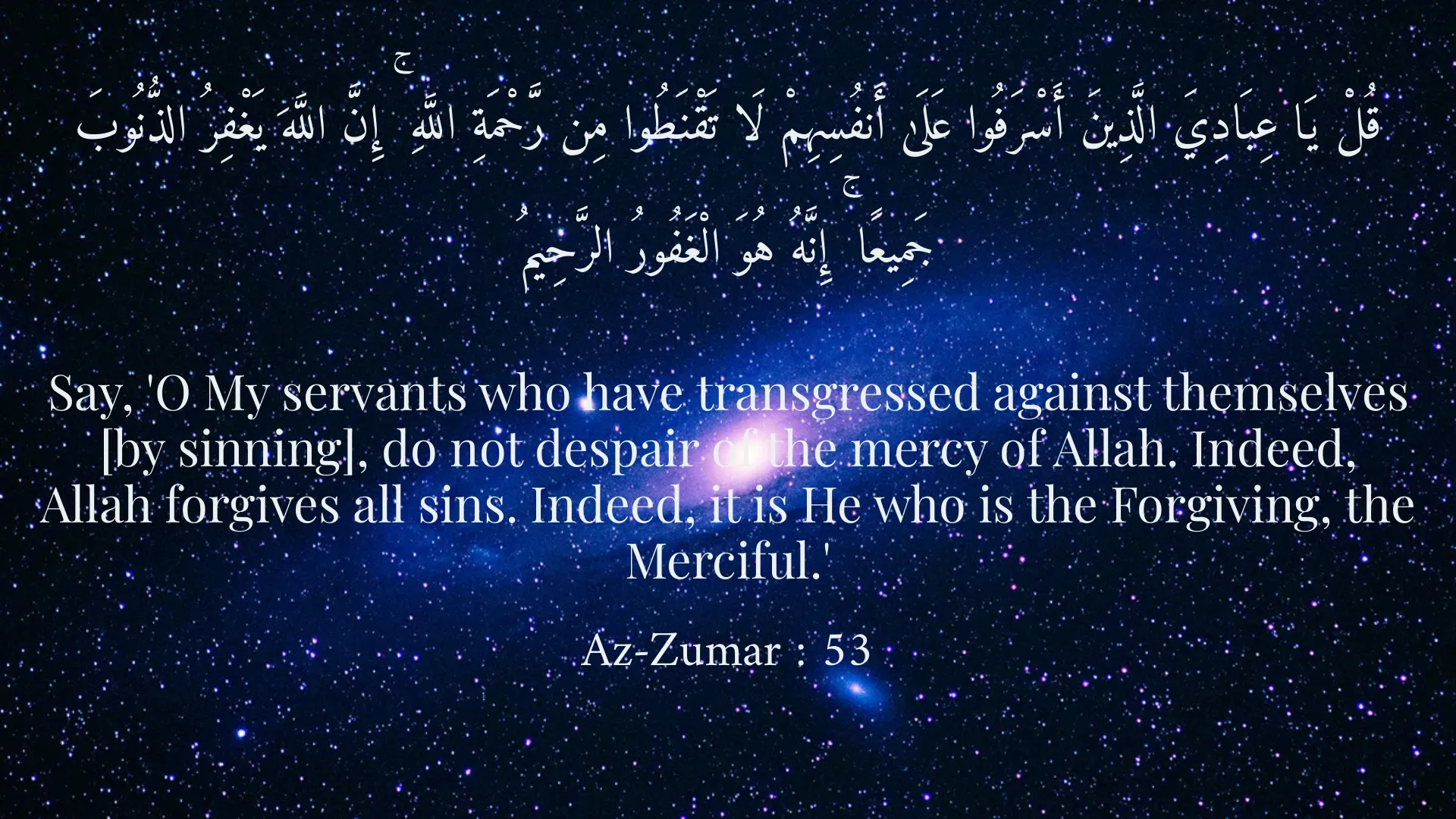
قُلْ يَا عِبَادِيَ الَّذِينَ أَسْرَفُوا عَلَىٰ أَنفُسِهِمْ لَا تَقْنَطُوا مِن رَّحْمَةِ اللَّهِ ۚ إِنَّ اللَّهَ يَغْفِرُ الذُّنُوبَ جَمِيعًا ۚ إِنَّهُ هُوَ الْغَفُورُ الرَّحِيمُ
Say, 'O My servants who have transgressed against themselves [by sinning], do not despair of the mercy of Allah. Indeed, Allah forgives all sins. Indeed, it is He who is the Forgiving, the Merciful.'
Az-Zumar : 53
قُل لَّن يُصِيبَنَا إِلَّا مَا كَتَبَ اللَّهُ لَنَا هُوَ مَوْلَانَا ۚ وَعَلَى اللَّهِ فَلْيَتَوَكَّلِ الْمُؤْمِنُونَ
Say, 'Nothing will ever befall us except what Allah has decreed for us. He is our Protector; and in Allah let the believers put their trust.'
At-Tawbah : 51
يَا أَيُّهَا الَّذِينَ آمَنُوا اتَّقُوا اللَّهَ وَلْتَنظُرْ نَفْسٌ مَّا قَدَّمَتْ لِغَدٍ ۖ وَاتَّقُوا اللَّهَ ۚ إِنَّ اللَّهَ خَبِيرٌ بِمَا تَعْمَلُونَ
O you who have believed, fear Allah. And let every soul look to what it has put forth for tomorrow - and fear Allah. Indeed, Allah is Acquainted with what you do.
Al-Hashr : 18
Short Story
One day, I read in Saadi's Gulistan about a poor man who for many years regretted the loss of a great treasure. Every day, he would sit at the site of that lost treasure, lamenting why he had lost it. A wise man passed by and saw that this poor man, due to his intense regret, neither ate nor worked. The wise man said to him, "My friend! If you spend your entire life regretting this lost treasure, not only will that treasure not return, but you will also lose your present day and your future. If, instead of sighing and regretting, you were to seek another treasure or earn your livelihood through lawful means, perhaps you would acquire an even greater treasure. Yesterday is gone; seize today." The poor man heeded the wise man's advice, rose from his place, and with reliance on God, engaged in work and effort, freeing himself from fruitless regret.