Quranic Answer
Title: The Remembrance of Death in the Holy Quran: A Path to Spiritual and Moral Enlightenment Introduction Death is often regarded as a taboo subject in many cultures, yet in the teachings of the Holy Quran, it is portrayed as a significant aspect of life that carries profound meaning and wisdom. The remembrance of death is not intended to instill fear or sadness, but rather to enhance the spiritual and moral character of individuals. In this article, we will explore the concept of death as emphasized in the Quran and how it can guide us towards a more meaningful life filled with purpose and good deeds. The Essentiality of Death in Human Life In Surah Al-Imran, verse 185, Allah states: "Every soul will taste death..." This unequivocal declaration serves as an essential reminder that death is an inevitable part of human existence. It calls us to internalize the reality of mortality and prompts us to reflect on the transient nature of life. The phrase "taste death" emphasizes that death is not merely an end but an experience that every one of us will encounter. Such reflection encourages individuals to consider the truth of their lives—what they have done, what they aspire to achieve, and the legacy they will leave behind. The Role of Death as a Test Furthermore, Surah Al-Mulk, verse 2 articulates, "Who created death and life to test you as to which of you is best in deed..." Here, it becomes apparent that both life and death serve a purpose. Allah created these two contrasting realities to challenge us, to assess our actions, and to push us towards self-improvement and righteousness. In this context, death is not merely a termination of existence, but a crucial element in the cultivation of our deeds and intentions. Positive Remembrance of Death Although the contemplation of death can stir feelings of melancholy, a deeper understanding encourages a more constructive approach. If the remembrance of death causes overwhelming sadness, it may arise from an incorrect perception of life and its meaning. In contrast, when viewed through a lens of inspiration, death can motivate individuals to live better lives. The Quran promotes a positive remembrance of death, asserting it as a tool for personal growth and development. Spiritual Reflection and Moral Enhancement Reflecting on death prompts individuals to consider the notion of accountability and the reality of facing Allah. This understanding can lead to spiritual awakening, making one more aware of their actions and the essence of their intentions. It encourages believers to engage actively in virtuous deeds, knowing that their time on earth is limited. The Quran repeatedly reminds us that our actions have consequences in the hereafter, and death serves as the ultimate transition to our eternal destiny. Death as a Motivational Catalyst In Islamic teachings, the remembrance of death has the potential to be a source of motivation. The Prophet Muhammad (peace be upon him) emphasized longing for death as a sign of faith, suggesting that true believers view death not with fear but with readiness and anticipation. This calls to action resonates deeply, pushing individuals to prioritize their spiritual obligations, enhance their interpersonal relationships, and contribute positively to their communities. The Example of the Prophets The lives of various Prophets, as chronicled in the Quran, serve as a testament to the significance of death in shaping their missions and legacies. Each of them encountered mortality in different forms, yet they consistently focused on fulfilling their divine duties. Their adherence to their purpose amidst the constant reminder of death inspires believers to emulate such dedication. The struggle, perseverance, and ultimately the acceptance of fate illustrated by the Prophets remind us of the importance of leading a life of purpose, irrespective of the transient nature of our existence. Death and Community Moreover, the communal aspect of remembrance of death is noteworthy. Islamic teachings encourage individuals not only to reflect on their mortality but also to share this awareness with others, creating a community grounded in the understanding of life’s ephemeral nature. This collective remembrance can lead to stronger bonds, as individuals rally together to partake in righteous actions, support each other in difficult times, and contribute to societal wellbeing. Conclusion In conclusion, the Quran’s portrayal of death serves as a profound reminder that life is fragile, and our time is limited. Embracing the remembrance of death can lead to a spiritual and moral upliftment, guiding individuals towards a meaningful life filled with good deeds. It challenges us to reflect on our actions, purify our hearts, and strive for excellence in our deeds. As believers, we are encouraged to view death positively, not as an end but as a catalyst for a life enriched with purpose and commitment to righteousness. Ultimately, the remembrance of death, when understood correctly, opens the door to a deeper appreciation for life and the opportunities it presents. Through this lens, we can navigate our spiritual journey more effectively, seeking to leave behind a legacy of goodness and virtue.
Related Verses
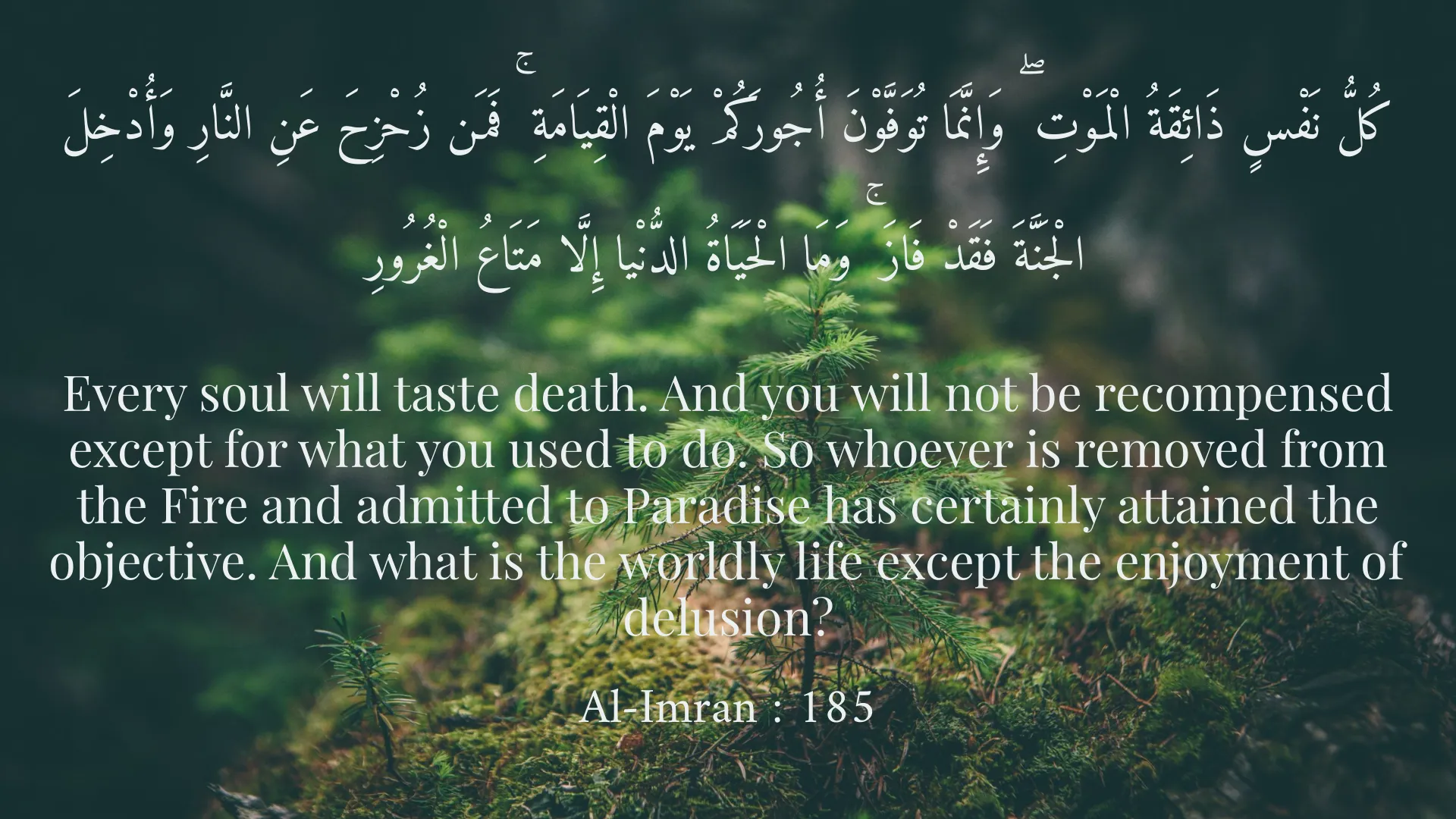
كُلُّ نَفْسٍ ذَائِقَةُ الْمَوْتِ ۖ وَإِنَّمَا تُوَفَّوْنَ أُجُورَكُمْ يَوْمَ الْقِيَامَةِ ۚ فَمَن زُحْزِحَ عَنِ النَّارِ وَأُدْخِلَ الْجَنَّةَ فَقَدْ فَازَ ۚ وَمَا الْحَيَاةُ الدُّنْيا إِلَّا مَتَاعُ الْغُرُورِ
Every soul will taste death. And you will not be recompensed except for what you used to do. So whoever is removed from the Fire and admitted to Paradise has certainly attained the objective. And what is the worldly life except the enjoyment of delusion?
Al-Imran : 185
الَّذِي خَلَقَ الْمَوْتَ وَالْحَيَاةَ لِيَبْلُوَكُمْ أَيُّكُمْ أَحْسَنُ عَمَلًا ۖ وَهُوَ الْعَزِيزُ الْغَفُورُ
Who created death and life to test you as to which of you is best in deed - and He is the Exalted in Might, the Forgiving.
Al-Mulk : 2
Short Story
In ancient times, a man named Hasan was reflecting on his life. He was thinking about death and felt he might get sad. But after a while, he asked himself, 'Can remembering death help me lead a better life?' He pondered over the Quran and realized that remembering death could guide him toward the right path and pursue positive goals. He decided to devote more of his time to worship and helping others, which led him to feel happier and more at peace.