Quranic Answer
The Holy Quran, considered the ultimate guide for millions of Muslims around the world, is rich with teachings and principles that encourage ethical behavior, compassion, and support for one another. Among these teachings, the importance of charity and helping others is emphasized repeatedly, urging individuals to lend a hand to those in need quietly and sincerely. Among the poignant verses that discuss this theme, Surah Al-Baqarah, verse 271 states: 'If you disclose your alms, it is well; but if you conceal them and give them to the poor, it is better for you, and it will atone for some of your bad deeds. And Allah is All-Aware of what you do.' This verse highlights a significant principle in the Islamic faith: the virtue of secret charitable acts. Believers are encouraged to perform acts of kindness without seeking recognition or applause, as the value of these actions increases when they are done quietly or discreetly. This teaching extends beyond mere religious dogma; it taps into the essence of genuine humanity and the integrity of one’s character. The obligation to assist others should not be performed with the intent of gaining social favor or personal glory. Instead, it should stem from a heartfelt desire to make a difference in the lives of others. This emphasis on sincerity reflects a broader ethical framework in Islam, where intentions play a critical role in determining the reward for actions. Another verse emphasizing this idea is found in Surah An-Nisa, verse 114, where Allah states: 'There is no good in much of their private conversation, except for those who enjoin charity or that which is right or conciliation among people. And whoever does that seeking means to the approval of Allah - then We will give him a great reward.' This verse draws attention to the importance of conversations and actions that lead to constructive outcomes in society, particularly highlighting charity as a key area of focus. The Quran reaffirms that such deeds, when pursued with sincerity, are met with divine recognition and reward. From these verses, it becomes evident that sincerity of intention and the manner in which good deeds are performed are of utmost importance in the eyes of Allah. Performing acts of kindness in the presence of others often comes with the temptation of seeking validation, thus detracting from the purity of the act. It can be contested that the more discreetly an action of goodwill is performed, the greater its value becomes. Consequently, secret help takes on a deeper significance, resonating on both personal and societal levels. On a personal level, engaging in charitable acts away from the eyes of others fosters authenticity. It cultivates a mindset of altruism where individuals prioritize the welfare of others over their desire for recognition. This intrinsic motivation strengthens the bond between individuals and the communities they serve. The act of helping others becomes a source of inner gratification and a reflection of one's selfless character. In addition, the aspect of secrecy in charity also nurtures a sense of mutual trust and confidentiality within communities. Individuals who give quietly do so without the expectation of receiving acknowledgment or reward, which perpetuates an environment of generosity and understanding. When one knows that their good actions are recognized by Allah alone, it fosters a humble attitude and encourages more charitable practices among peers. On a societal level, appreciating and encouraging secret acts of charity lays the foundation for a compassionate community. It initiates a cultural shift towards prioritizing collective responsibility, empathy, and support, as everyone becomes more inclined to engage in charitable behavior without fear of judgment or scrutiny. In a world where people are constantly in pursuit of status and social media recognition, fostering the fundamental principle of selfless giving can pave the way for a more harmonious and interconnected society. It is important to note that while private charity is commendable, it does not negate the value of public displays of generosity. Community engagement initiatives or public donations can also serve to inspire collective effort towards bettering society. These acts can motivate others to contribute and participate in various charitable causes. Thus, it becomes imperative to strike a balance between public acknowledgment and private charity; while the latter holds a special place in Islamic teachings, both forms can complement one another in their shared goal of enhancing societal welfare. In conclusion, the Quran's emphasis on the importance of charity underscores a fundamental principle that resonates throughout the Islamic faith: the need for sincerity in one’s intentions and the value of performing good deeds discreetly. The teachings from Surah Al-Baqarah and Surah An-Nisa illuminate the higher moral standards expected of individuals, which transforms the landscape of personal and societal interactions. The lesson to be learned is clear: true kindness does not seek recognition or accolades, but rather seeks the satisfaction of making a difference in the lives of those who need it most. Therefore, it is imperative for every believer to take heed of these teachings, seize every opportunity to perform good deeds, and recognize that Allah remains aware of our intentions and actions, rewarding us abundantly for acts of charity performed in humility and sincerity, even when they are carried out out of sight.
Related Verses
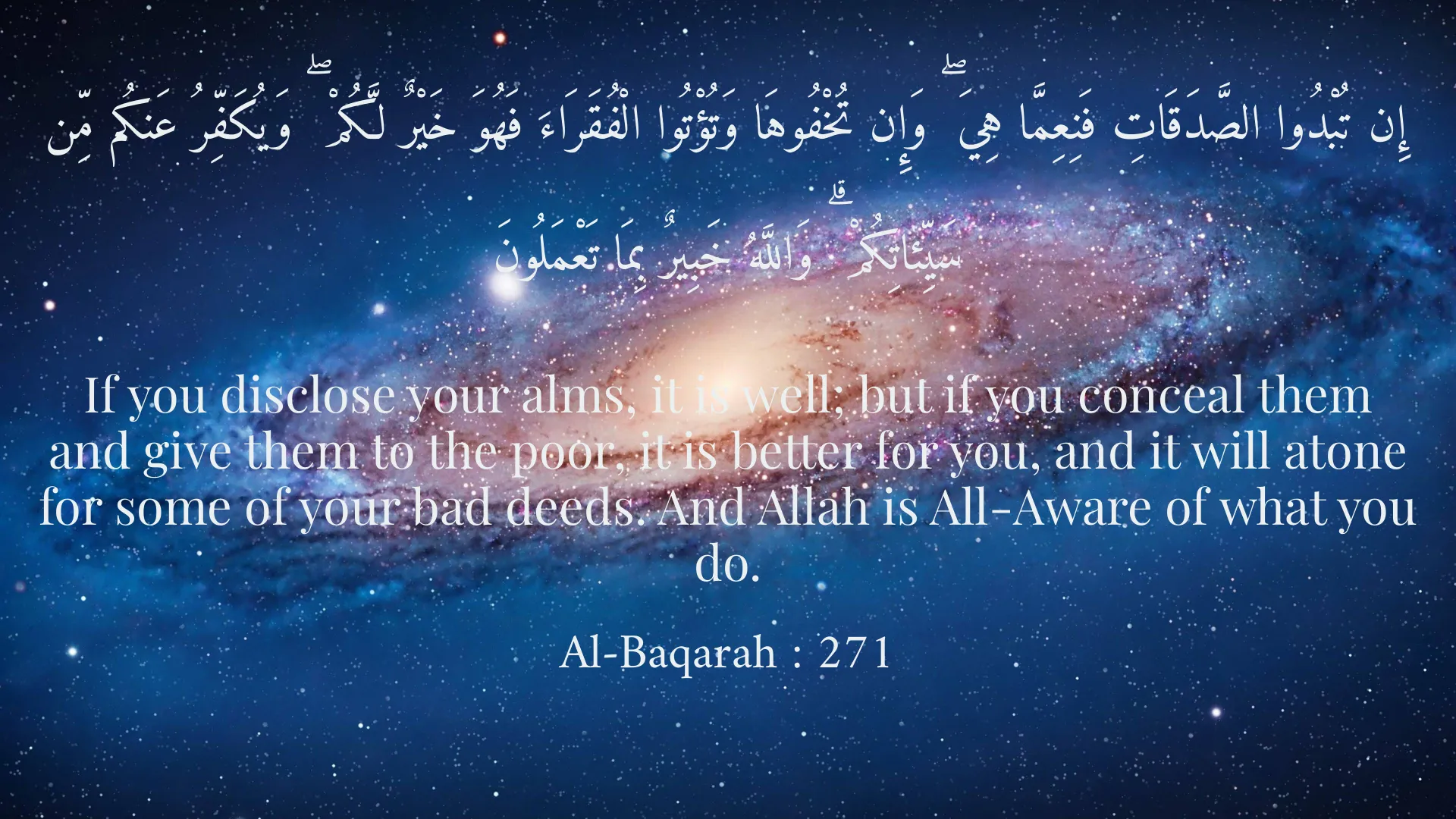
إِن تُبْدُوا الصَّدَقَاتِ فَنِعِمَّا هِيَ ۖ وَإِن تُخْفُوهَا وَتُؤْتُوا الْفُقَرَاءَ فَهُوَ خَيْرٌ لَّكُمْ ۖ وَيُكَفِّرُ عَنكُم مِّن سَيِّئاتِكُمْ ۗ وَاللَّهُ خَبِيرٌ بِمَا تَعْمَلُونَ
If you disclose your alms, it is well; but if you conceal them and give them to the poor, it is better for you, and it will atone for some of your bad deeds. And Allah is All-Aware of what you do.
Al-Baqarah : 271
لَّا خَيْرَ فِي كَثِيرٍ مِّن نَّجْوَاهُمْ إِلَّا مَنْ أَمَرَ بِصَدَقَةٍ أَوْ مَعْرُوفٍ أَوْ إِصْلاحٍ بَيْنَ النَّاسِ ۚ وَمَن يَفْعَلْ ذَٰلِكَ ابْتِغَاءَ مَرْضَاتِ اللَّهِ فَسَنُؤْتِيهِ أَجْرًا عَظِيمًا
There is no good in much of their private conversation, except for those who enjoin charity or that which is right or conciliation among people. And whoever does that seeking means to the approval of Allah - then We will give him a great reward.
An-Nisa : 114
Short Story
One day in a small village, a man named Hasan decided to help the orphans of the village. He secretly delivered financial assistance to them without ever revealing his name. One day, one of the orphans saw Hasan riding his bicycle and said to him, 'Sir! I know what you do. You help us a lot and I am very happy about this.' Hasan smiled and replied, 'My God is my witness, and that is enough for me.' This story shows how valuable secret help is.