Quranic Answer
The Quran provides a clear and profound answer to this question, articulating an intimate connection between human actions (sins) and their consequences, both in this worldly life and the hereafter. The Holy Quran explicitly demonstrates that sin and disobedience to Allah not only entail consequences in the afterlife but can also lead to blockages, difficulties in life's pathways, a reduction in blessings, and the loss of opportunities in this world. This 'closing of pathways' is not merely a physical obstruction but encompasses spiritual, economic, social, and even intellectual constraints that an individual faces due to their deeds; it is as if the doors of mercy, sustenance, peace, and success are closed off to them. One of the clearest verses in this regard is Surah Al-A'raf, verse 96, which states: “And if the people of the cities had believed and had Taqwa, We would have opened upon them blessings from the heaven and the earth; but they denied, so We seized them for what they used to earn.” This verse explicitly indicates that faith (Iman) and piety (Taqwa), which are antithetical to sin, lead to the opening of doors of blessings from the heavens and the earth. The concept of 'opening blessings' includes abundance in sustenance, tranquility, success in affairs, and ease in one's paths. Conversely, denial and disobedience (which is sin) lead to being 'seized' and deprived of these blessings, resulting in facing difficulties. This clearly shows that sin can cause the closing of channels of divine mercy and opportunities, placing the individual in a state of constriction. Furthermore, in Surah Ta-Ha, verse 124, we read: “But whoever turns away from My remembrance - indeed, he will have a difficult life, and We will gather him on the Day of Resurrection blind.” The phrase “ma'ishatan dhanka” or a 'difficult/constricted life' is one of the most prominent examples of closed pathways. This constriction can manifest in one's provision, in psychological tranquility, in social relations, or in an individual's ability to find solutions to their problems. This verse illustrates that turning away from the remembrance of Allah (which is the root of many sins) leads to hardships that burden an individual not only materially but also spiritually and emotionally. It is as if the paths ahead for them to achieve happiness and peace have been blocked, and they find themselves in a spiritual deadlock. Another verse that affirms this principle is Surah Ash-Shura, verse 30: “And whatever calamity befalls you, it is because of what your hands have earned, and He pardons much.” This verse establishes a general principle that many calamities and difficulties humans encounter are a direct result of their own actions and sins. Calamities and hardships can signify closed pathways, failures, illnesses, or lost opportunities. This verse, in a way, reminds humans of their responsibility for their problems and emphasizes that their roots often lie in our own deeds. However, the verse mercifully adds “and He pardons much,” showcasing Allah's vast mercy, indicating that He does not immediately punish for every misstep; otherwise, life would be impossible for anyone, and humanity would not be able to bear it. Therefore, sins can lead to the closure of pathways in several ways: 1. Spiritual and Emotional Blockage: Sins darken the heart and weaken an individual's connection with Allah. This leads to being deprived of divine guidance, making it difficult to discern right from wrong. It is as if their inner sight is blinded, and they can no longer perceive divine signs. This spiritual constriction and lack of inner peace is, in itself, the greatest impediment to progress and achieving true happiness. 2. Material and Sustenance Blockage: Although Allah is the ultimate Provider and sustains everyone, the Quran indicates that piety and obedience can increase material blessings, while sin may constrict one's provision or remove its blessing (barakah). This constriction in sustenance can manifest as reduced income, lack of blessing in possessions, or economic difficulties, such that despite great effort, the desired outcome is not achieved. 3. Social and Relational Blockage: Sins such as lying, betrayal, backbiting, and oppression erode the trust of others and damage human relationships. This can lead to isolation, cessation of cooperation, and loss of social support, which in turn amounts to the closing of many avenues for progress and assistance in society. 4. Blockage in Decision-Making and Rationality: Sins can negatively impact one's judgment, lead them towards incorrect decisions, and diminish their ability to think logically and solve problems. This type of blockage traps an individual in a cycle of errors and prevents them from making sound and constructive choices in their life. However, the most crucial point is that in Islam, the doors of mercy and repentance are always open. The Holy Quran repeatedly invites humanity to repent and return to Allah. Sincere repentance not only obliterates sins and removes their negative effects but can also undo knots, open closed pathways, and restore lost blessings. In Surah An-Nisa, verse 17, Allah says: “The repentance accepted by Allah is only for those who do wrong in ignorance [or carelessness] and then repent soon after. It is those to whom Allah will turn in forgiveness, and Allah is ever Knowing and Wise.” Repentance serves as a powerful key to unlock the chains of sin and reopens closed pathways for human beings. This golden opportunity demonstrates Allah's immense generosity and mercy, as He keeps the door open for His servants to return and make amends even after committing errors. In summary, from the Quranic perspective, sin can lead to 'the closing of pathways' in various aspects of life—be it spiritual, material, social, or psychological. This blockage is a natural and wise consequence of disobeying divine laws. However, this is not the end of the story; through sincere repentance, seeking forgiveness (Istighfar), and returning to the path of obedience and piety, these pathways can be reopened, and divine mercy and blessings can be attained once again. This message is both a warning and a source of hope, indicating that human destiny lies in their own hands and choices; a choice between the path of sin that leads to blockage, and the path of repentance and obedience that opens all doors.
Related Verses
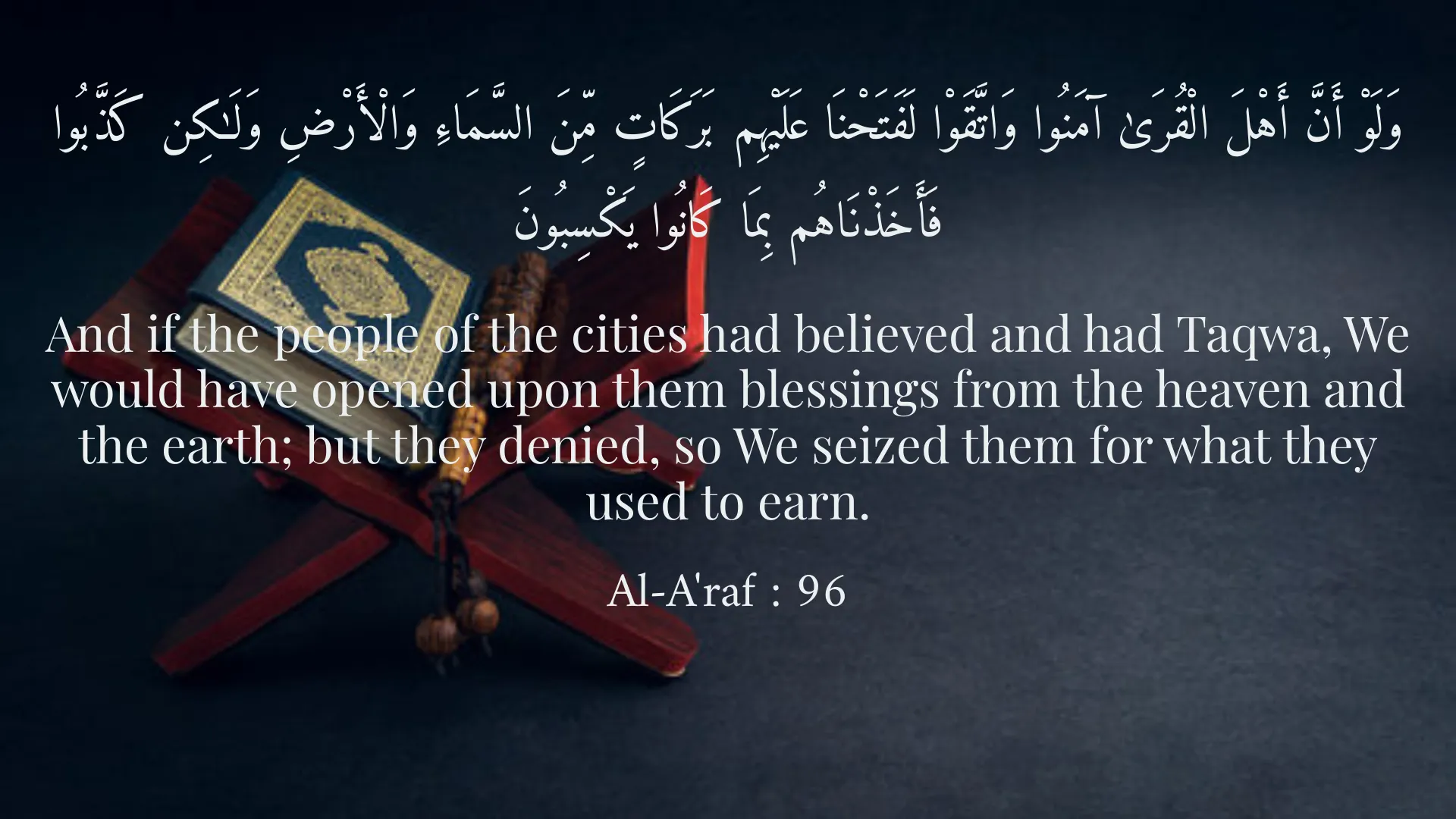
وَلَوْ أَنَّ أَهْلَ الْقُرَىٰ آمَنُوا وَاتَّقَوْا لَفَتَحْنَا عَلَيْهِم بَرَكَاتٍ مِّنَ السَّمَاءِ وَالْأَرْضِ وَلَٰكِن كَذَّبُوا فَأَخَذْنَاهُم بِمَا كَانُوا يَكْسِبُونَ
And if the people of the cities had believed and had Taqwa, We would have opened upon them blessings from the heaven and the earth; but they denied, so We seized them for what they used to earn.
Al-A'raf : 96
وَمَنْ أَعْرَضَ عَن ذِكْرِي فَإِنَّ لَهُ مَعِيشَةً ضَنكًا وَنَحْشُرُهُ يَوْمَ الْقِيَامَةِ أَعْمَىٰ
But whoever turns away from My remembrance - indeed, he will have a difficult life, and We will gather him on the Day of Resurrection blind.
Ta-Ha : 124
وَمَا أَصَابَكُم مِّن مُّصِيبَةٍ فَبِمَا كَسَبَتْ أَيْدِيكُمْ وَيَعْفُو عَن كَثِيرٍ
And whatever calamity befalls you, it is because of what your hands have earned, and He pardons much.
Ash-Shura : 30
Short Story
A story from Sa'di's Gulistan tells of an oppressive and unjust king. His subjects were weary of his tyranny, and their hearts had turned away from him. One day, a pious dervish passed by and observed that the king's affairs were becoming more difficult day by day, and his pathways were getting narrower. The king, seeing his own troubled state, asked the dervish, “O wise man, what has happened that no matter what I do, my affairs become entangled, and it seems as if all doors are closed to me?” The dervish replied, “O King! By oppressing your subjects, you have closed the doors of divine mercy upon yourself. The more you tyrannize, the more constriction you will experience. For Allah loves the hearts of the afflicted and is angered by oppressors. Your sins have blocked divine facilitation.” The king was moved by the dervish's words, repented, and ceased his oppression. After a while, he found that his affairs improved, blessings descended upon him, and the hearts of the people reconciled with him. This anecdote illustrates how tyranny and sin can close pathways, and how justice and repentance can open them.