Quranic Answer
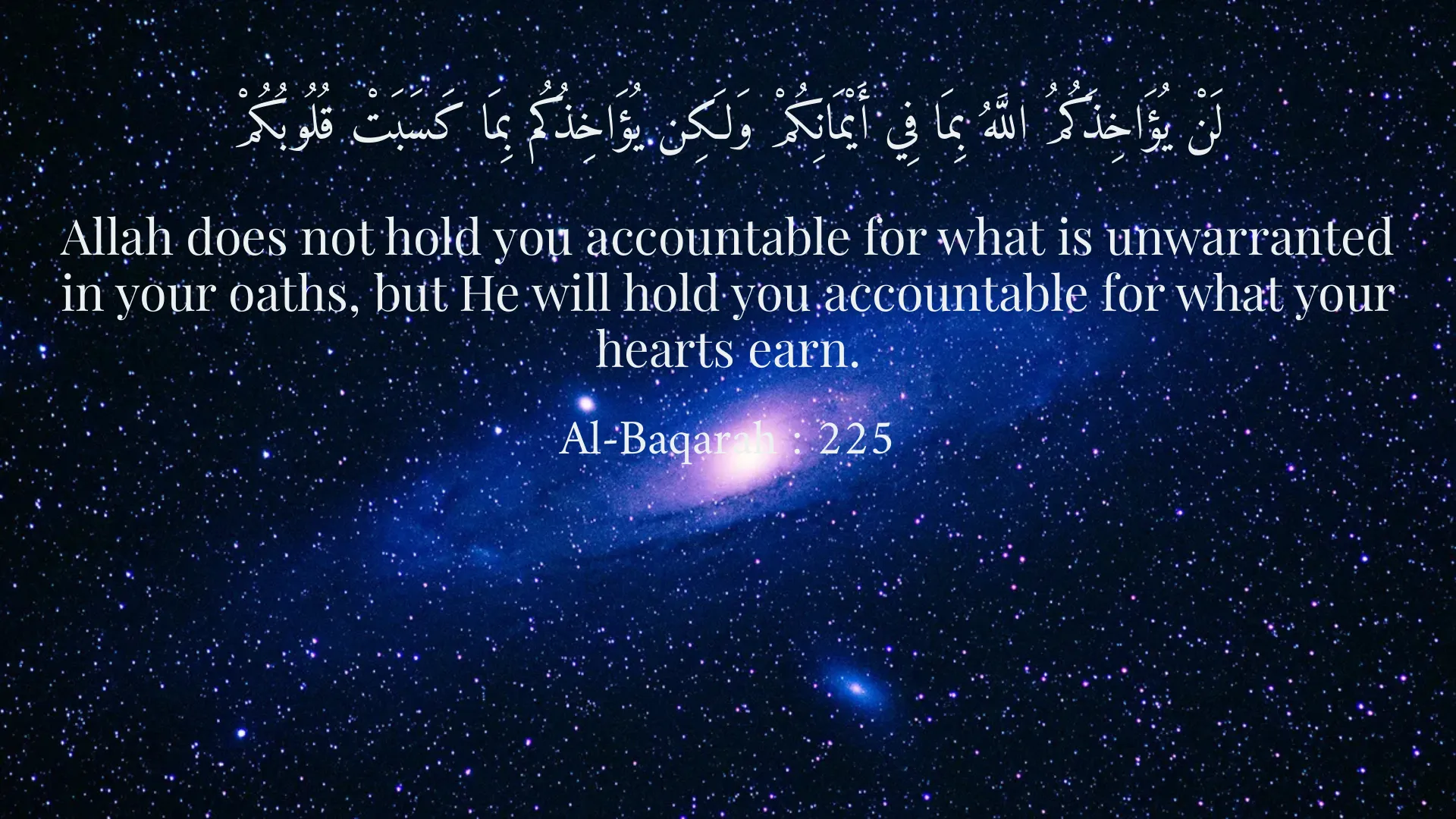
In the Holy Quran, the significance and weight of intention in human actions is a recurring theme that resonates throughout its verses. The Quran serves as both a spiritual guide and a moral compass for millions of Muslims around the world, and one of the foundational concepts it propagates is that the intention behind any action plays a vital role in determining its moral and spiritual value. Among various verses that elucidate this principle, Surah Al-Baqarah, verse 225 stands out prominently. In this verse, Allah states: 'God does not hold you accountable for what is unwarranted in your oaths, but He will hold you accountable for what your hearts earn.' This particular line encapsulates the essence of pure intention, indicating that it is not merely the action itself but the intention behind the action that weighs heavily in the eyes of God. To further understand the relevance of intention, it is essential to explore the nuances of this verse. The phrase 'what your hearts earn' implies a deep recognition that intentions are perceived by the Almighty as a reflection of an individual’s state of mind and heart. It suggests that even if one refrains from committing a sinful act but harbors the intention to do so, that internal struggle is significant. If someone intends to sin yet chooses to abstain from the act, they are indeed engaging in a moral battle, thus demonstrating awareness of their spiritual responsibilities. In this light, the very act of suppressing sinful desires can be construed as an act of righteousness and self-control, virtues that are greatly valued in Islamic teachings. Similarly, Surah Al-Ma'idah, verse 9 adds another layer to our understanding of intention and action with the declaration: 'This day [all] good foods have been made lawful, and the food of those who were given the Scripture is lawful for you...' This declaration does not merely provide guidelines on dietary laws; it reflects a broader principle regarding the nature of lawful versus unlawful actions. The verse emphasizes the allowance of certain actions while simultaneously asserting the importance of intention behind those actions. The inference here is that lawful actions should stem from pure intentions, and indulgence in them should not be merely aimed at satisfying bodily desires but should encompass a mindset rooted in gratitude and divine trust. The intrinsic relationship between intention and moral behavior is not only prevalent in religious contexts but extends to various facets of daily life. In engaging with others, for instance, a person's true intentions often come to light through their actions, words, and overall demeanor. Thus, cultivating pure intentions should be at the heart of personal development and character building. Additionally, intention plays an essential role in determining the overall outcomes of our interactions. When a person acts with sincerity and good intentions, they often elicit similar responses from others, fostering a community built on mutual respect, understanding, and forgiveness. Both verses we have examined reflect a profound understanding of human psychology. They articulate that the struggle to align one’s intentions with righteous actions constitutes a significant aspect of faith. An individual who grapples with negative thoughts yet exercises restraint in their actions is bound to experience an internal conflict—a relatable human experience that underscores the fallibility of mankind. This inner turmoil is a critical point at which individuals can nurture their spiritual growth, embracing the idea that striving for intention purity can lead to moral excellence. Furthermore, intention is not a static quality; it can evolve and transform based on one’s experiences, insights, and relationship with Allah. As a person’s understanding of faith deepens, so too can their intentions—driving them towards actions steeped in compassion and understanding rather than mere observance. The recognition that Allah considers intention a fundamental pillar of human action suggests that believers should continuously engage in self-reflection and strive toward elevating their inner motivations. In moments of vulnerability, individuals may find themselves grappling with undesirable thoughts, yet they should remember that the very acknowledgment of such impulses is a step toward overcoming them. Islam invites individuals to seek repentance, understanding that fluctuating thoughts and feelings are part of being human. However, the emphasis remains on the sincere effort to eradicate negativity and foster positive intentions. Moreover, there exists an ethical obligation for believers to cultivate an environment where positive intentions are encouraged. Within families, communities, and religious gatherings, open discussions that delve into the importance of intentions can lead to a collective upliftment of spiritual awareness. As people share their struggles and victories, they create a support system that bolsters the shared intention of guiding each other towards righteousness. Lastly, it is vital to note that within the Islamic framework, while intentions are foundational, actions will also have their significant role to play. The famous saying of the Prophet Muhammad (peace be upon him), 'Actions are judged by intentions,' underscores the intertwined nature of thought and behavior. However, intention must precede action; the sincerity behind the action creates a meaningful impact and resonates beyond the individual towards society at large. In conclusion, the comprehensive teachings of the Quran elucidate the importance of intention in determining the quality of one's actions and the spiritual state of individuals. Surah Al-Baqarah and Surah Al-Ma'idah invite us to reflect deeply on our inner motivations, reminding us that the essence of righteous living stems not solely from what we do, but from the purity of our intentions. As believers navigate their journey through life, prioritizing good intentions will ultimately lead to acts of integrity, gratitude, and compassion, fostering a healthy, spiritually connected community that thrives in the grace of Allah.
Related Verses
لَنْ يُؤَاخِذَكُمُ اللَّهُ بِمَا فِي أَيْمَانِكُمْ وَلَكِن يُؤَاخِذُكُم بِمَا كَسَبَتْ قُلُوبُكُمْ
Allah does not hold you accountable for what is unwarranted in your oaths, but He will hold you accountable for what your hearts earn.
Al-Baqarah : 225
الْيَوْمَ أُحِلَّتْ لَكُمُ الطَّيِّبَاتُ
This day [all] good foods have been made lawful...
Al-Ma'idah : 9
Short Story
Once upon a time, there was a young man named Amin. He faced many dilemmas in his life and sometimes contemplated sin. However, after some time, he told himself that he must strive to prevent negative thoughts. He decided to focus more on reciting the Quran and living by its verses. Gradually, Amin felt greater peace and realized that with good intentions and efforts to overcome negative thoughts, he could build a better life for himself.