Quranic Answer
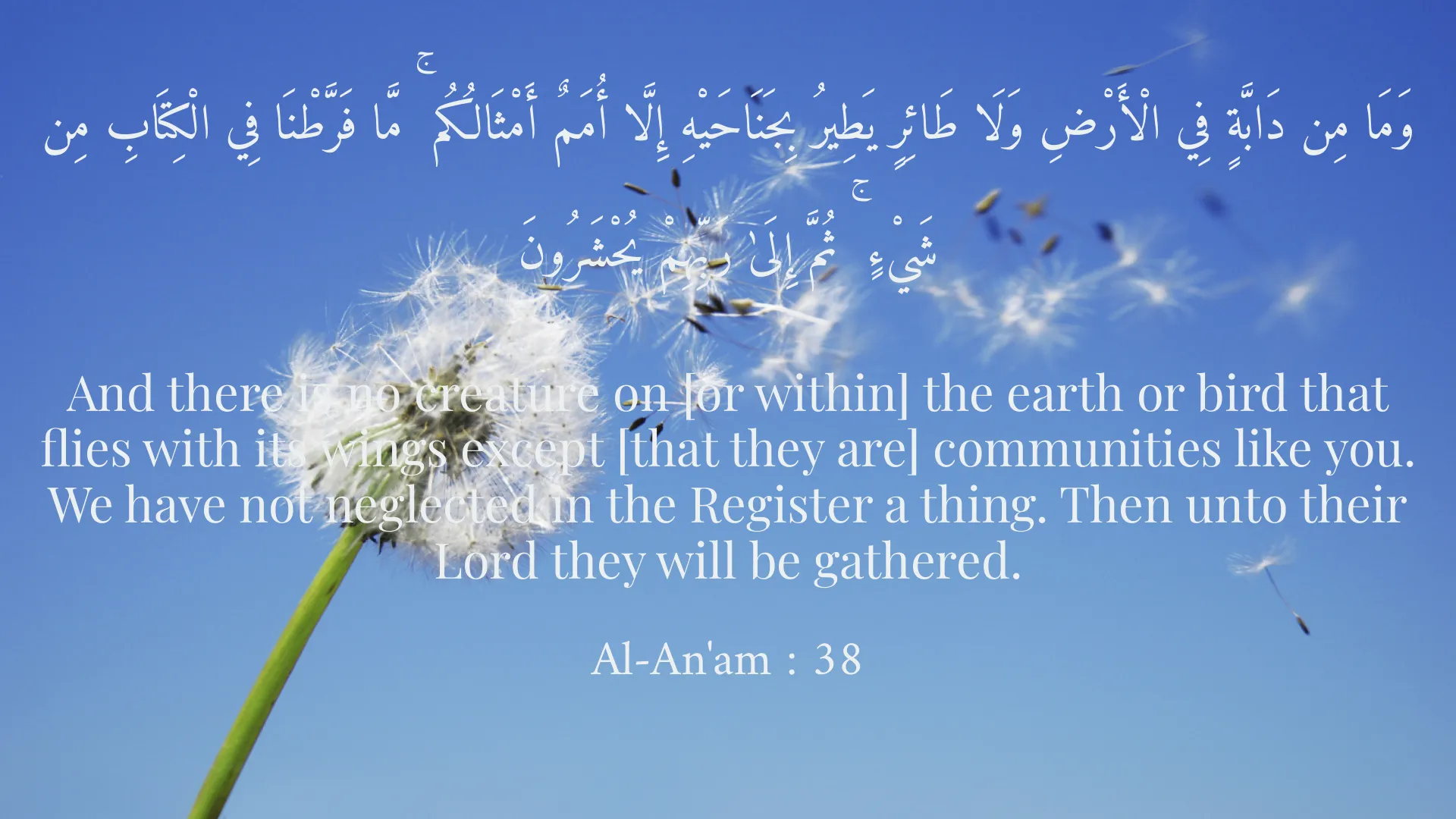
The Holy Quran, through its verses, profoundly and clearly addresses the responsibility of humans towards animals. The Quranic perspective on animals is comprehensive, ethical, and rooted in the understanding of their elevated status in divine creation. The Quran does not view animals merely as insignificant beings or simple tools for human use; rather, it introduces them as intelligent creatures, possessing communities, and as living signs of God's infinite power, wisdom, and mercy. This fundamental theological outlook places a significant responsibility upon humans, as vicegerents (Khalifa) and stewards of the Earth, a responsibility that extends beyond mere utilization and encompasses broad ethical and spiritual dimensions. One of the unique and profound principles articulated by the Quran regarding animals is that they are 'nations' or communities similar to humans. In Surah Al-An'am (The Cattle), verse 38, the divine word explicitly states: 'And there is no creature on [or within] the earth or bird that flies with its wings except [that they are] communities like you. We have not neglected in the Register a thing. Then unto their Lord they will be gathered.' This verse clearly indicates a form of awareness, social structure, and inherent value in the lives of animals. When God declares them to be 'nations like you,' it conveys a deep concept of coexistence and mutual respect. This implies that animals possess rights that must be observed by humans, rights stemming from their status as God's creations. The phrase 'Then unto their Lord they will be gathered' further emphasizes that animals will also experience a form of presence and return to their Creator in a realm beyond this world, which can imply divine accountability and justice even concerning human interactions with them. This perspective invalidates any form of cruelty, oppression, or disrespect towards animals. Furthermore, the Quran also acknowledges the various benefits and utilities that animals provide for humans. However, these benefits are never a license for oppression or abuse; rather, they are opportunities for gratitude and appreciation of God's blessings. In Surah An-Nahl (The Bee), verses 5 to 8, Allah states: 'And the grazing livestock - He has created them for you; in them is warmth and [other] benefits, and from them you eat. And for you in them is [the enjoyment of] beauty when you bring them in [to rest] and when you send them out [to pasture]. And they carry your loads to a land you could not have reached except with difficulty to yourselves. Indeed, your Lord is Kind and Merciful. And [He created] horses, mules and donkeys for you to ride and [as] adornment. And He creates that which you do not know.' These verses illustrate that animals are created with specific wisdom to serve humanity, providing sustenance, clothing, transportation, and even aesthetic pleasure. However, this service must be accompanied by care, kindness, and adherence to ethical principles. The mention of 'beauty' in these verses is particularly significant; it indicates that even the non-utilitarian and aesthetic aspects of animals should be appreciated and enjoyed, rather than treating them merely as inanimate tools. Additionally, the Quran generally emphasizes the principles of 'Adl (justice) and Ihsan (benevolence)' and the avoidance of 'Fasad fil-Ard (corruption on Earth),' which unequivocally apply to the treatment of animals. Any form of harassment, torture, starving, dehydrating, unjustified confinement, or any action that causes unnecessary suffering to an animal is in direct contradiction with Quranic teachings. Although there might not be a verse explicitly stating, "Do not harm animals" or "Observe animal rights," the overarching spirit of the Quranic message is built upon compassion, mercy, and the prevention of all forms of injustice and corruption on Earth. Allah does not love 'corruptors' (Surah Al-Qasas, verse 77), and corruption can certainly encompass environmental destruction, excessive hunting, and the mistreatment of living creatures. The Prophet Muhammad (peace be upon him), who was the ultimate interpreter and practical embodiment of the Quran, demonstrated countless examples of gentleness and kindness towards animals throughout his life, which are derived from these very Quranic principles and serve as their practical interpretation. Human responsibility towards animals also includes providing suitable living conditions for them. This means that if an animal is under human care, it must be provided with adequate food, clean water, and proper shelter to protect it from harsh weather and dangers. Moreover, the use of animals for purposes such as transportation, labor, or even scientific research (if necessary and conducted ethically) must be done in a manner that considers their capabilities, avoids overburdening them, and prevents unnecessary suffering. Even regarding the slaughter of animals for food, the Quran (and Prophetic Sunnah) provides very precise instructions aimed at minimizing the animal's suffering and preserving its dignity until the last moment. These instructions include using sharp instruments, ensuring a swift and humane slaughter, and avoiding slaughtering one animal in front of another – all of which highlight Islam's deep concern for observing animal rights. In conclusion, human responsibility towards animals is an integral part of the Islamic and Quranic worldview. Animals are not merely beings for exploitation; they are part of the divine order of creation, possessing rights. Caring for them and showing kindness towards them is itself an act of worship, an expression of gratitude to the Creator of existence, and a step towards fulfilling humanity's role as God's vicegerents on Earth. This responsibility encompasses all animals, both domestic and wild, and reminds humans that they are not the sole inhabitants of the Earth. They must interact with all of God's creations with compassion, justice, and a commitment to maintaining balance. This comprehensive and ethical approach not only contributes to the preservation of biodiversity and ecological balance but also fosters moral virtues such as empathy, mercy, and responsibility in humans, leading to a more humane and compassionate society. Therefore, it can be asserted definitively that the Holy Quran places significant emphasis on human responsibility towards animals, considering this responsibility an inseparable component of faith and righteous deeds.
Related Verses
وَمَا مِن دَابَّةٍ فِي الْأَرْضِ وَلَا طَائِرٍ يَطِيرُ بِجَنَاحَيْهِ إِلَّا أُمَمٌ أَمْثَالُكُم ۚ مَّا فَرَّطْنَا فِي الْكِتَابِ مِن شَيْءٍ ۚ ثُمَّ إِلَىٰ رَبِّهِمْ يُحْشَرُونَ
And there is no creature on [or within] the earth or bird that flies with its wings except [that they are] communities like you. We have not neglected in the Register a thing. Then unto their Lord they will be gathered.
Al-An'am : 38
وَالْأَنْعَامَ خَلَقَهَا ۗ لَكُمْ فِيهَا دِفْءٌ وَمَنَافِعُ وَمِنْهَا تَأْكُلُونَ
And the grazing livestock - He has created them for you; in them is warmth and [other] benefits, and from them you eat.
An-Nahl : 5
وَالْخَيْلَ وَالْبِغَالَ وَالْحَمِيرَ لِتَرْكَبُوهَا وَزِينَةً ۚ وَيَخْلُقُ مَا لَا تَعْلَمُونَ
And [He created] horses, mules and donkeys for you to ride and [as] adornment. And He creates that which you do not know.
An-Nahl : 8
Short Story
I heard that a man, parched with thirst in a desert, found a well. After he drank and quenched his thirst, he saw a dog with its tongue hanging out, licking the dust from extreme thirst. The man said to himself, "This dog is also thirsty, and if I don't quench its thirst, it will die." So he returned to the well, filled his shoe with water, and gave it to the dog until it was satiated. For this kind act, God Almighty forgave that man's sins and saved him. Saadi, the eloquent poet, said: "Whoever shows compassion to creation, God Most High shows him kindness." This delightful tale teaches us how much value showing kindness to any creature, even a thirsty animal, holds in the eyes of the Almighty, and how it can be the key to salvation and forgiveness.