Quranic Answer
The Holy Quran, as the primary religious text of Islam, provides profound moral guidance on various aspects of human life. One of the most significant topics it addresses is the importance of caring for orphans. Orphan care is not merely a charitable act in Islamic teachings; it holds a central place within the ethical framework of the religion. This emphasis is rooted deeply within the Qur'anic verses, which serve to remind believers of their moral obligations towards those who have lost their guardians and are vulnerable within society. In Surah Al-Baqarah, verse 220, Allah states: "And do good to orphans until they reach maturity. And if you know that they are good for you, then do not devour their property wasted." This particular verse underscores the dual commandment of doing good to orphans while also protecting their rights. The phrase 'do good' implies proactive engagement in the lives of orphans, encouraging caretakers and the community to provide emotional support, education, and financial assistance. Moreover, the directive not to 'devour their property wasted' serves as a stern warning against exploitation, indicating that individuals who take charge of an orphan's affairs must do so with integrity and responsibility. The Quran's emphasis on orphan care does not stop at providing basic needs. Instead, it encourages a comprehensive approach towards the well-being of orphans. In Surah Al-An'am, verse 152, Allah commands: "And do not approach the orphan’s property except in a way that is best until he reaches maturity." This directive illustrates the importance of handling an orphan's finances with the utmost care, ensuring that all actions taken are in the best interest of the orphan. It compels guardians and society to safeguard not just their material wealth but also their emotional and psychological well-being. A key aspect of these teachings is their focus on justice and the ethical treatment of orphans. Surah An-Nisa, verse 10, highlights the gravity of unjustly consuming the wealth of orphans, stating: "Indeed, those who consume the wealth of orphans unjustly are only consuming fire into their bellies, and they will be burned in a Blaze." This vivid imagery serves as a powerful deterrent against the exploitation of orphans, reflecting the severe punishment that awaits those who act unjustly. It defines clear moral boundaries and emphasizes that taking advantage of a vulnerable population represents one of the gravest sins one can commit. Furthermore, Quranic injunctions on orphan care align closely with the broader Islamic principle of compassion and social responsibility. In essence, looking after orphans is a collective duty that extends beyond the individual caretaker. Each member of society is called upon to support initiatives aimed at creating a safe and nurturing environment for orphans. Islam places a high moral and ethical value on community engagement, suggesting that the well-being of orphans is a barometer for the health of the society at large. The teachings of the Quran regarding orphans can massively contribute to building a compassionate society. When the community actively participates in caring for orphans, it fosters an atmosphere of kindness and support for vulnerable individuals. These principles can help reduce social inequality and injustice, giving orphans a sense of belonging rather than alienation. They, too, will feel valued, nurtured, and essential members of society, which is pivotal for their emotional development and future prospects. Additionally, there are numerous Hadiths (sayings) of the Prophet Muhammad (peace be upon him) that emphasize the rewards for those who care for orphans. In one such Hadith, the Prophet stated, "I and the person who looks after an orphan will be like this in Paradise," and he gestures with his two fingers, indicating closeness. This further encourages Muslims to engage in caring for orphans and highlights the spiritual benefits of such acts. Moreover, the adoption and support of orphans is a way to foster generosity and selflessness. It encourages individuals to look beyond their needs and recognize the plight of others. When communities come together to support orphans, they create networks of care that extend beyond mere survival, integrating orphans into society and providing avenues for personal and educational growth. Such integration is key to breaking the cycle of poverty and improving the lives of the next generation. Despite the clear directives in the Quran and Hadith regarding the care of orphans, various challenges persist in contemporary society. Many orphans still experience neglect, exploitation, and impoverished living conditions. While Islamic teachings provide a solid foundation for orphan care, it requires communal commitment and action to turn these teachings into reality. Awareness campaigns, fundraising efforts, and the establishment of orphanages and educational programs can play critical roles in this endeavor. Religious leaders and community organizations need to stress the importance of fulfilling one’s duty towards orphans, advocating for their support in both religious settings and wider society. In conclusion, the Quran underscores the profound responsibility that Muslims have in caring for orphans. The verses highlight ethical directives that not only protect the rights of orphans but also promote a compassionate and just society. As believers reflect on these teachings, they are reminded of the crucial role they play in shaping a society that prioritizes the well-being of its most vulnerable members. The implications of these teachings extend beyond individual acts of charity, encouraging communal responsibility towards achieving a more equitable society where orphans can thrive and feel valued. By adhering to these principles, we take steps towards building a compassionate society that embraces all its members, regardless of their circumstances.
Related Verses
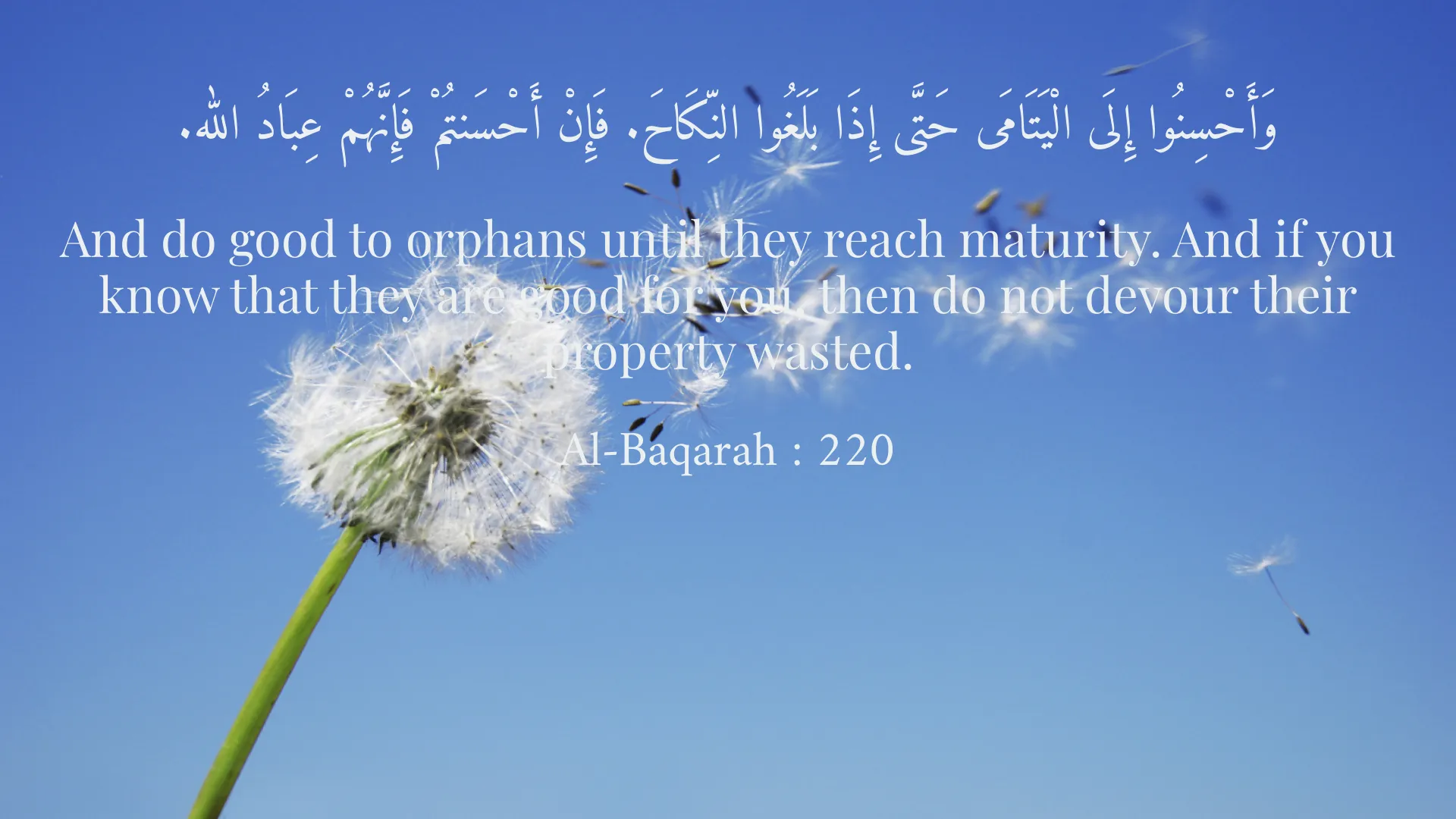
وَأَحْسِنُوا إِلَى الْيَتَامَى حَتَّى إِذَا بَلَغُوا النِّكَاحَ. فَإِنْ أَحْسَنتُمْ فَإِنَّهُمْ عِبَادُ الله.
And do good to orphans until they reach maturity. And if you know that they are good for you, then do not devour their property wasted.
Al-Baqarah : 220
وَلا تَقْرَبُوا مَالَ الْيَتِيمِ إِلَّا بِالَّتِي هِيَ أَحْسَنُ حَتَّى يَبْلُغَ أَشُدَّهُ.
And do not approach the orphan’s property except in a way that is best until he reaches maturity.
Al-An'am : 152
إن الذين يأكلون أموال اليتامى ظلماً إنما يأكلون في بطونهم ناراً وسيصلون سعيراً.
Indeed, those who consume the wealth of orphans unjustly are only consuming fire into their bellies, and they will be burned in a Blaze.
An-Nisa : 10
Short Story
Once upon a time in a small village, there lived a man named Hassan who thanked God for orphans. Every day he would go to the orphans' home and bring food and clothing for them. Hassan always said, "I treat orphans as my children." One day, one of the orphans asked him, "Why do you go through all this trouble for us?" Hassan kindly replied, "Because caring for orphans is akin to caring for God, and nothing is more valuable than love!" This story of Hassan quickly spread in the village, and people soon realized the importance of helping orphans.