Quranic Answer
The concept of performing good deeds, both openly and secretly, is profoundly emphasized in the Holy Quran, highlighting the importance of intention in our actions. The Quran, as a divine guide for humanity, offers insights into the motivations behind our deeds and the spiritual significance of altruism. In Surah Al-Baqarah, verse 271, Allah conveys that disclosing one's charitable spending can be good, but concealing it and offering aid to the needy is, in fact, better for the individual. This particular verse underscores the essence of altruism and its multifaceted nature. It illustrates that while public acts of charity can inspire and encourage others to contribute positively to society, the act of giving in secret is often held in higher esteem, as it signifies a purer form of altruism, free from the desire for recognition or reward. When individuals engage in acts of charity without seeking accolades, it reflects their sincerity and genuine intent to help others. This selflessness aligns with the values taught in the Quran, where the purity of one's intention takes precedence over the visibility of their good deeds. The deeper implication of this narrative is that secret charity not only serves the immediate needs of those who are less fortunate but also preserves their dignity and respect. In many cases, public acknowledgment of help can lead to humiliation or a sense of indebtedness for the recipients. Thus, when assistance is offered discreetly, it protects the dignity of those in need while allowing the giver to cultivate a sincere bond with their community through genuine acts of kindness. Moreover, the Quran further emphasizes the importance of community and relationships among believers. In Surah Al-Ma'idah, verse 55, Allah encourages believers to form friendships and collaborate on good deeds. This means that while individual deeds carry significant weight, the collective effort of the community towards virtue can produce even more profound impacts. Together, believers should work towards creating a supportive environment that nurtures good behaviors and fosters positive interactions. Therefore, both public and secret acts of kindness are valuable, as they contribute to establishing and maintaining healthy relationships within the community. In a society where social media plays an omnipresent role, the dynamics of charity have shifted dramatically. While platforms can be utilized to showcase charitable acts and spur others into action, there is also a risk of turning altruism into a competitive endeavor for validation and likes. This phenomenon underscores the necessity of returning to the core teachings of the Quran, which remind us of the paramount importance of intention. The idea that Allah knows what lies in our hearts acts as a reminder that authentic charity should not be clouded by the desire for social approval or personal gain. Our actions should emanate from a place of love and compassion rather than a desire to be seen as virtuous or self-righteous. An essential aspect to consider is the role of secrecy in maintaining the dignity of those receiving help. Many people facing financial hardship or struggling with other difficulties may feel embarrassed to ask for assistance. By providing help anonymously, we shield them from unnecessary shame and preserve their pride. The impact of such kindness can lead to profound changes in a person’s life, allowing them to regain their confidence and self-esteem without the burden of feeling indebted or exposed. Furthermore, engaging in secret acts of charity allows the giver to experience a unique emotional and spiritual connection to their faith. The act becomes a personal conversation between them and Allah, untainted by external influences. This private devotion cultivates a deeper sense of spirituality and reliance on God, reinforcing the belief that one’s actions should stem solely from the desire to please Him. As we navigate through our lives, we must continually reflect on our motivations when performing good deeds. Are we driven by a need for recognition or a desire to genuinely assist others? The Quran invites us to engage in this introspection, assuring us that our actions will be judged by the purity of our intentions. Thus, it is crucial to cultivate a mindset that prioritizes sincerity over visibility. In many ways, the values embedded within the Quran serve as guiding principles that can lead to a more profound and impactful engagement in charitable acts. In conclusion, the teachings of the Quran regarding secret and open altruism provide a holistic understanding of what it means to perform good deeds. Both forms of giving have their merits, with secrecy often holding greater value in terms of preserving dignity and nurturing genuine intentions. As we strive to live out these teachings, it is essential to remain mindful of our motivations and to focus on fostering positive relationships within our communities. By aligning our actions with sincere intentions, we contribute to a more compassionate and supportive world, ultimately reflecting the divine qualities that the Quran embodies. Let us embrace the teachings of the Quran and work towards becoming better individuals through our good deeds, celebrating the quiet generosity that reflects the true essence of altruism.
Related Verses
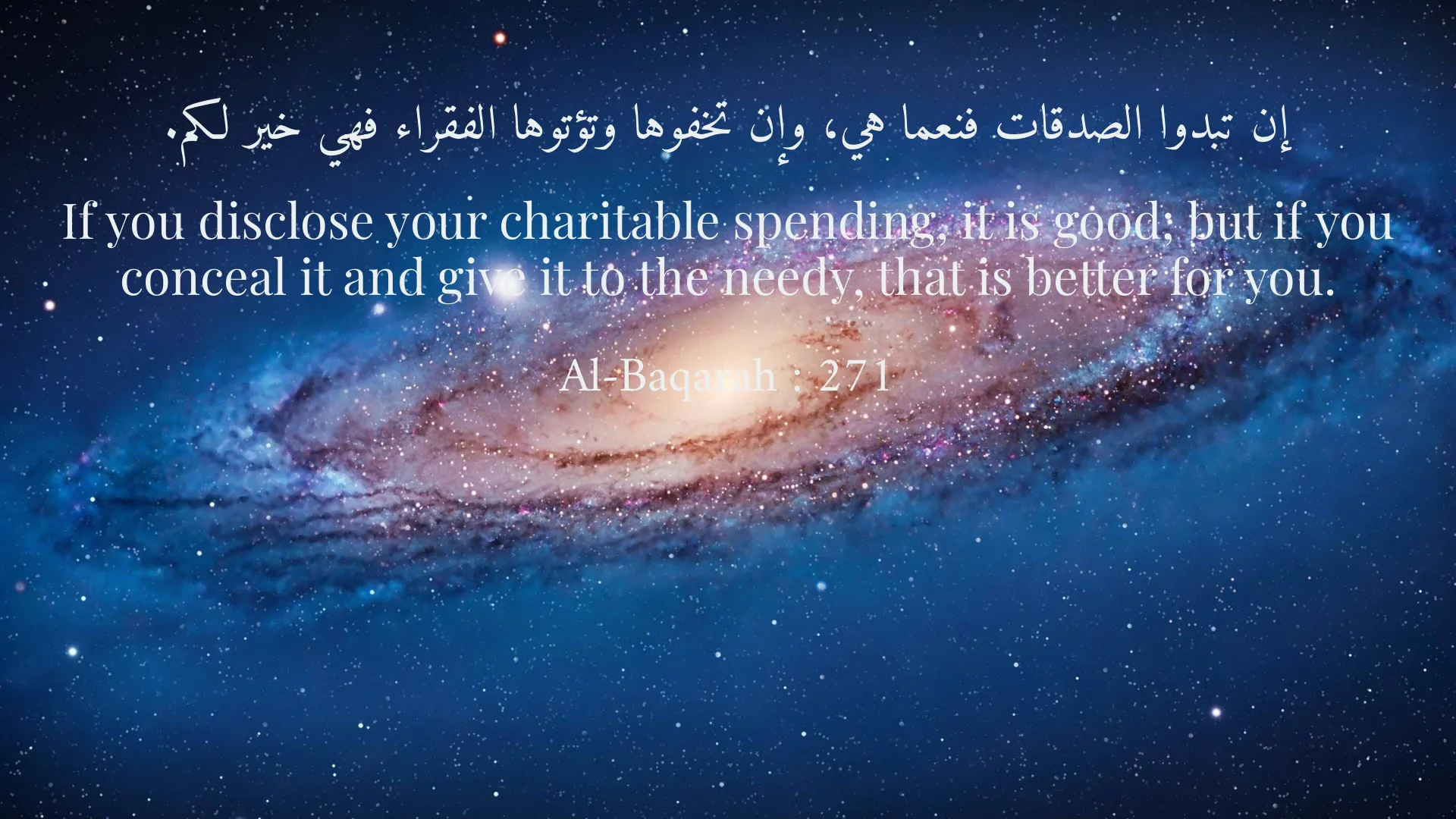
إن تبدوا الصدقات فنعما هي، وإن تخفوها وتؤتوها الفقراء فهي خير لكم.
If you disclose your charitable spending, it is good; but if you conceal it and give it to the needy, that is better for you.
Al-Baqarah : 271
إنما وليكم الله ورسوله والذين آمنوا الذين يقيمون الصلاة ويقیمون الزكاة هم الراكعون.
Your ally is none but Allah and His Messenger and those who have believed - those who establish prayer and give zakah, and they bow [in worship].
Al-Ma'idah : 55
Short Story
Once upon a time, there was a man named Hasan who always wanted to help others. He often pondered whether to showcase his good deeds or keep them private. After discussing with a friend who mentioned Quranic verses encouraging secrecy in good actions, he decided to perform some of his charitable acts secretly. This brought him immense joy, as he felt his intentions became purer and he was helping more people. He realized that, in certain situations, it was often better to keep his good deeds hidden.