Quranic Answer
The Holy Quran provides comprehensive guidance for a believing life, and nutrition is no exception. While the Quran does not offer specific dietary plans or precise medical recommendations regarding the "type" of food to eat in the modern sense (e.g., prescribing exact amounts of protein or carbohydrates), it establishes fundamental principles that form the bedrock of a healthy, balanced, and God-centered lifestyle. These principles emphasize not only what we eat, but also how we eat, and even our intention behind eating. The most crucial principle is the concept of "Halal" (lawful) and "Tayyib" (pure/good). The Quran repeatedly invites believers to consume from lawful and wholesome provisions. In Surah Al-Baqarah, verse 168, it states: "O mankind, eat from whatever is on earth [that is] lawful and good and do not follow the footsteps of Satan. Indeed, he is to you a clear enemy." This verse introduces two essential conditions for food: it must be Halal (legally and Islamically permissible, implying proper slaughter, absence of usurpation, etc.) and Tayyib (pure, wholesome, beneficial, and free from any impurity or harm). The concept of Tayyib goes beyond Halal; something might be Halal but not Tayyib, for instance, food that has spoiled or is harmful. This comprehensiveness in meaning demonstrates the Quran's attention to both physical and spiritual well-being. Furthermore, the Quran explicitly prohibits certain foods, which primarily include dead meat (carrion), blood, pork, and animals slaughtered without mentioning Allah’s name. These prohibitions are outlined in several verses, such as Surah Al-Baqarah, verse 173; Surah Al-Ma'idah, verse 3; and Surah Al-An'am, verse 145. The wisdom behind these prohibitions encompasses hygienic aspects (e.g., diseases from pork or carrion), ethical considerations (e.g., blood as a symbol of life and respect for it), and spiritual dimensions (e.g., avoiding what is sacrificed to other than Allah, which contradicts monotheism). Another vital principle is moderation and avoiding extravagance (Israf). The Quran encourages believers to eat and drink but immediately warns against excess. In Surah Al-A'raf, verse 31, it states: "O Children of Adam, take your adornment at every masjid, and eat and drink, but be not excessive. Indeed, He likes not those who commit excess." This verse is a golden rule for all aspects of consumption in a Muslim's life, including diet. Israf is not merely about wasting food but also includes overeating, consuming more than necessary, and indulging in expensive and luxurious foods purely for ostentation. Overeating can lead to illnesses and lethargy in performing religious duties, while moderation helps maintain health and vitality. The Holy Quran also emphasizes gratitude and appreciation for divine blessings. Every meal is an opportunity to remember the Provider and thank Him. This gratitude is expressed not only verbally but also through the proper utilization of the blessing and not showing ingratitude. In Surah An-Nahl, verse 114, it says: "So eat from what Allah has provided for you, lawful and good, and be grateful for the favor of Allah, if it is [indeed] Him that you worship." This verse links eating with worship, indicating that proper nutrition is part of worshipping God. Therefore, the Quranic recommendations regarding food transcend a mere strict, materialistic diet. They offer a philosophy of life where nutrition is a means to maintain physical and spiritual health, strengthen one's relationship with God, and participate in a system of justice and benevolence. Muslims are encouraged to eat consciously, pay attention to the source of their food, avoid extravagance, and always be grateful for Allah's abundant blessings. This comprehensive framework not only contributes to individual health but also impacts societal and environmental well-being. In today's world, where unhealthy eating patterns and related diseases are on the rise, the Quranic principles of moderation, consuming lawful and pure food, and gratitude offer timeless guidance for a healthy and blessed life. These directives help believers consider their nutrition not only from a physical perspective but also from spiritual and ethical dimensions, making it a part of their path toward closeness to Allah.
Related Verses
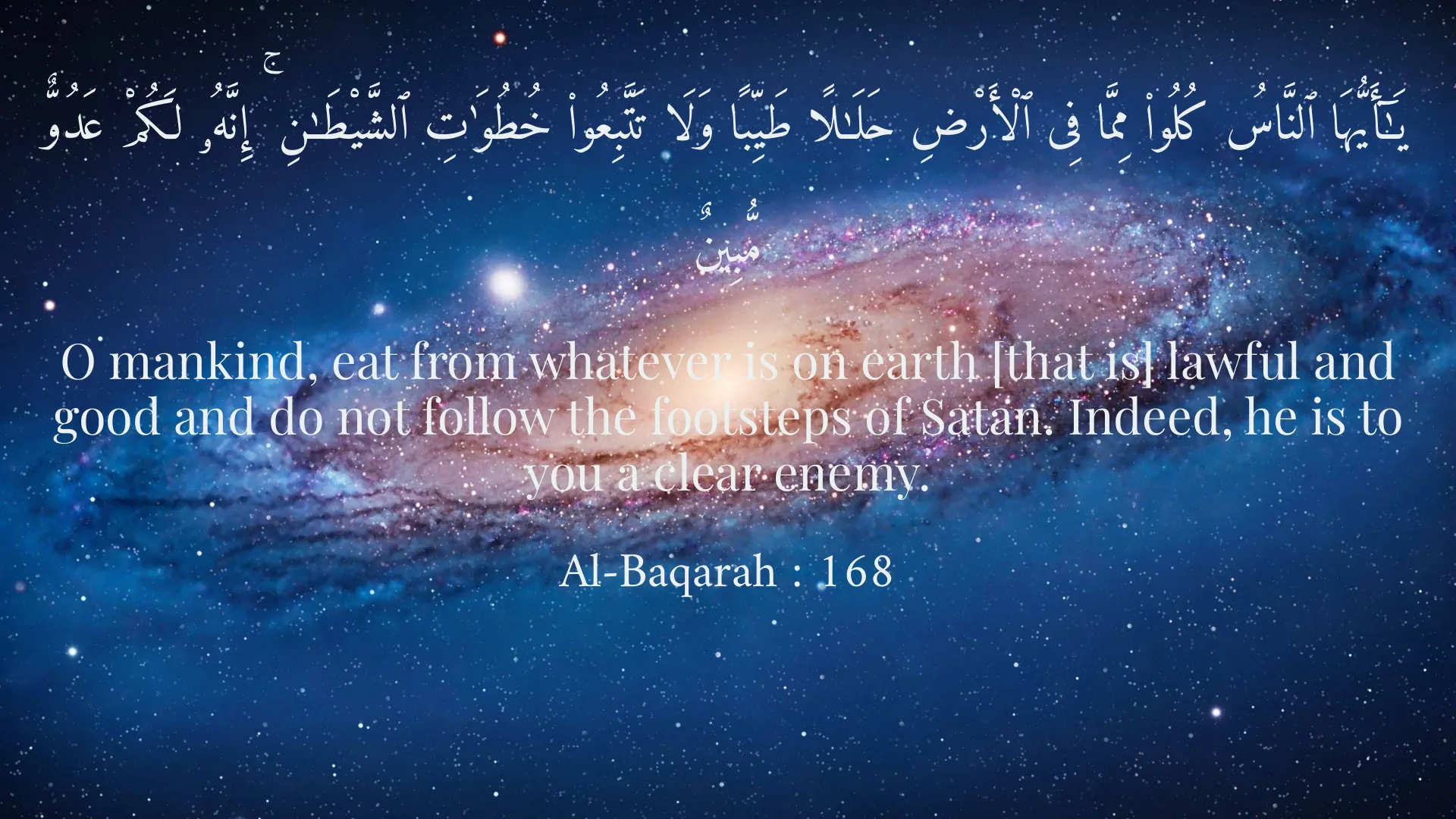
يَٰٓأَيُّهَا ٱلنَّاسُ كُلُوا۟ مِمَّا فِى ٱلْأَرْضِ حَلَٰلًا طَيِّبًا وَلَا تَتَّبِعُوا۟ خُطُوَٰتِ ٱلشَّيْطَٰنِ ۚ إِنَّهُۥ لَكُمْ عَدُوٌّ مُّبِينٌ
O mankind, eat from whatever is on earth [that is] lawful and good and do not follow the footsteps of Satan. Indeed, he is to you a clear enemy.
Al-Baqarah : 168
يَٰبَنِىٓ ءَادَمَ خُذُوا۟ زِينَتَكُمْ عِندَ كُلِّ مَسْجِدٍ وَكُلُوا۟ وَٱشْرَبُوا۟ وَلَا تُسْرِفُوٓا۟ ۚ إِنَّهُۥ لَا يُحِبُّ ٱلْمُسْرِفِينَ
O Children of Adam, take your adornment at every masjid, and eat and drink, but be not excessive. Indeed, He likes not those who commit excess.
Al-A'raf : 31
حُرِّمَتْ عَلَيْكُمُ ٱلْمَيْتَةُ وَٱلدَّمُ وَلَحْمُ ٱلْخِنزِيرِ وَمَآ أُهِلَّ لِغَيْرِ ٱللَّهِ بِهِۦ وَٱلْمُنْخَنِقَةُ وَٱلْمَوْقُوذَةُ وَٱلْمُتَرَدِّيَةُ وَٱلنَّطِيحَةُ وَمَآ أَكَلَ ٱلسَّبُعُ إِلَّا مَا ذَكَّيْتُمْ وَمَا ذُبِحَ عَلَى ٱلنُّصُبِ وَأَن تَسْتَقْسِمُوا۟ بِٱلْأَزْلَٰمِ ۚ ذَٰلِكُمْ فِسْقٌ ۗ ٱلْيَوْمَ يَئِسَ ٱلَّذِينَ كَفَرُوا۟ مِن دِينِكُمْ فَلَا تَخْشَوْهُمْ وَٱخْشَوْنِ ۚ ٱلْيَوْمَ أَكْمَلْتُ لَكُمْ دِينَكُمْ وَأَتْمَمْتُ عَلَيْكُمْ نِعْمَتِى وَرَضِيتُ لَكُمُ ٱلْإِسْلَٰمَ دِينًا ۚ فَمَنِ ٱضْطُرَّ فِى مَخْمَصَةٍ غَيْرَ مُتَجَانِفٍ لِّإِثْمٍ فَإِنَّ ٱللَّهَ غَفُورٌ رَّحِيمٌ
Prohibited to you are dead animals, blood, the flesh of swine, and that which has been dedicated to other than Allah, and [animals] strangled or beaten to death or from a high place or by the goring of horns, and what has been devoured by [wild] animals except what you [are able to] slaughter [before its death], and what has been sacrificed on stone altars, and [prohibited is] that you seek decision through divining arrows. That is grave disobedience. This day those who disbelieve have despaired of [defeating] your religion; so fear them not, but fear Me. This day I have perfected for you your religion and completed My favor upon you and have approved for you Islam as religion. But whoever is forced by severe hunger with no inclination to sin - then indeed, Allah is Forgiving and Merciful.
Al-Ma'idah : 3
Short Story
It is narrated that in ancient times, there was a king who, despite having access to all kinds of blessings and various foods, was never satisfied and constantly sought rare and delicious dishes. He would overeat, and consequently, he was always ill and suffering. A wise sage said to him: "O King! Your food should be the cure for your ailments, not an addition to them. Wisdom lies in eating so that you may live, not living merely to eat." The king took heed of this advice and thereafter adopted moderation. After some time, he found his body grew stronger, his mind clearer, and he was freed from illnesses. He then realized that the secret to health was not in the type of food, but in the quantity and intention of eating, and that the sage, through his words, had shown him a light from divine teachings that excess is not commendable.