Quranic Answer
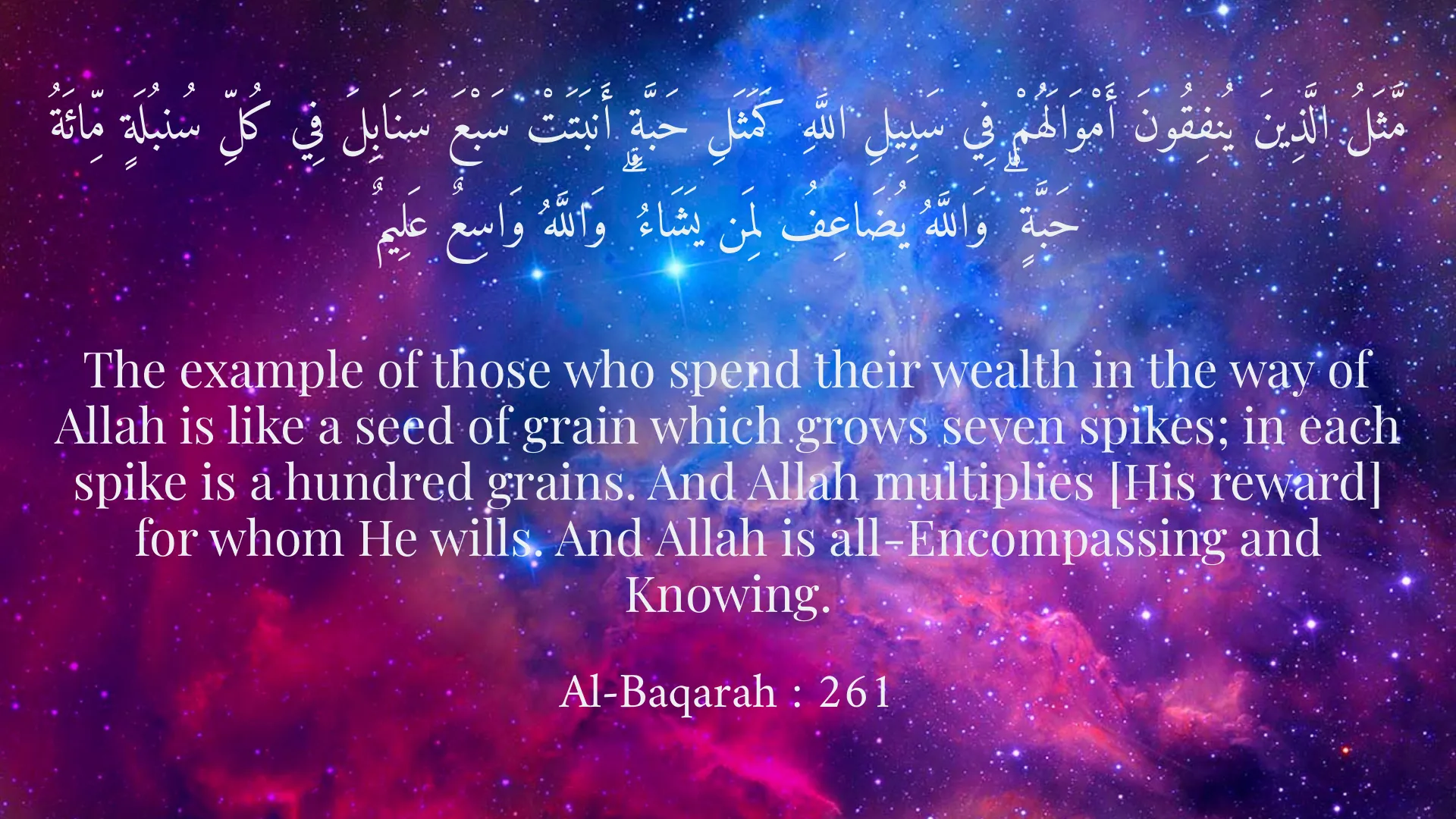
The Quran unequivocally and profoundly emphasizes financial generosity, making it a cornerstone of Islamic faith and practice. Far from being a mere suggestion, giving from one's wealth is presented as a fundamental duty, a means of purification, and a path to spiritual elevation. This emphasis permeates numerous chapters and verses, highlighting both the individual and societal benefits of open-handedness. At its core, financial generosity in Islam is known by various terms, each carrying specific nuances: "Infaq" (spending in the way of Allah), "Sadaqah" (voluntary charity), and "Zakat" (obligatory charity, a pillar of Islam). The Quran teaches that all wealth ultimately belongs to Allah, and humans are merely trustees. Therefore, spending a portion of this wealth in charity is seen as returning a trust to its rightful owner and demonstrating gratitude for Allah's blessings. This mindset transforms generosity from a burden into an act of worship and a joyful expression of faith. The spiritual rewards of financial generosity are repeatedly underscored. The Quran promises immense, often multiplied, returns for those who spend in the way of Allah. For instance, Surah Al-Baqarah, verse 261, vividly illustrates this concept: "The example of those who spend their wealth in the way of Allah is like a seed of grain which grows seven spikes; in each spike is a hundred grains. And Allah multiplies [His reward] for whom He wills. And Allah is all-Encompassing and Knowing." This verse is a powerful metaphor, assuring believers that their sincere contributions are not diminished but rather increased exponentially by divine grace. It encourages a mindset of investment in the hereafter, where every act of goodness, especially financial giving, yields abundant fruits. This spiritual reward is not merely about accumulating blessings in the afterlife; it also brings peace of mind, contentment, and a sense of purpose in this life. When individuals give generously, they detach themselves from the transient nature of worldly possessions and connect to a higher, eternal purpose, fostering a deep sense of inner tranquility and fulfillment. Beyond the spiritual recompense, the Quran highlights the transformative power of generosity on the giver's character. Giving purifies one's wealth and soul from greed, selfishness, and materialism. It fosters humility, compassion, and a deeper connection with humanity. Surah At-Tawbah, verse 103, instructs the Prophet Muhammad (PBUH) to "Take, [O Muhammad], from their wealth a charity by which you purify them and cause them increase, and invoke [Allah's blessings] upon them. Indeed, your invocations are reassurance for them. And Allah is Hearing and Knowing." This purification is not just material, cleansing wealth from any illicit gains or doubts, but also spiritual, cleansing the heart from attachment to the dunya (worldly life) and fostering a focus on the Akhirah (hereafter). It helps individuals overcome the natural human inclination to hoard and instead cultivate a spirit of sharing and collective well-being. This act of purification ensures that the wealth remaining with the individual is blessed and contributes to their overall spiritual growth, making them more righteous and devout. The Quran's emphasis on generosity also has profound societal implications. It aims to establish a just and equitable society where the needs of the poor and vulnerable are met. Zakat, as an obligatory annual levy on accumulated wealth, is explicitly designed to redistribute wealth, reduce poverty, and prevent its concentration in the hands of a few. Surah Al-Hashr, verse 7, states that wealth should not "be a perpetual [distribution] among the rich among you." This verse underscores the economic justice aspect of Islamic financial principles, ensuring that resources circulate throughout society, benefiting all its members, especially those in need. Voluntary charity (Sadaqah) complements Zakat by encouraging ongoing acts of kindness and support, fostering a strong sense of community and mutual responsibility. The Quran repeatedly urges believers to care for the needy, the orphans, the wayfarers, and those in distress, framing this care as an integral part of faith. It promotes social solidarity and empathy, creating a society where members support one another, bridging the gaps between the rich and the poor, and ensuring that no one is left behind. This collective responsibility strengthens social bonds and reduces social unrest, contributing to a stable and harmonious community. Furthermore, the Quran warns against the perils of stinginess and hoarding wealth. It condemns those who accumulate wealth without spending it in the way of Allah, describing their ultimate fate as regret and punishment. Such verses serve as a strong deterrent against greed and encourage a balanced approach to wealth, where it is seen as a means to achieve good in both this life and the next, rather than an end in itself. The Quran teaches that true prosperity is not merely about accumulating riches but about using them wisely and charitably for the benefit of oneself, one's family, and society at large. This balanced perspective ensures that material possessions do not become idols but remain tools for righteous living. This emphasis on giving is a continuous test of faith, demonstrating sincerity and trust in Allah's provision. It is a reminder that while striving for a livelihood is encouraged, attachment to wealth should never overshadow one's devotion to Allah and compassion for fellow human beings. Thus, financial generosity is not merely an act of kindness but a fundamental pillar of Islamic morality, fostering individual piety and social justice in equal measure. The extensive guidance in the Quran on this topic reflects its paramount importance in building a righteous individual and a just society.
Related Verses
مَّثَلُ الَّذِينَ يُنفِقُونَ أَمْوَالَهُمْ فِي سَبِيلِ اللَّهِ كَمَثَلِ حَبَّةٍ أَنبَتَتْ سَبْعَ سَنَابِلَ فِي كُلِّ سُنبُلَةٍ مِّائَةُ حَبَّةٍ ۗ وَاللَّهُ يُضَاعِفُ لِمَن يَشَاءُ ۗ وَاللَّهُ وَاسِعٌ عَلِيمٌ
The example of those who spend their wealth in the way of Allah is like a seed of grain which grows seven spikes; in each spike is a hundred grains. And Allah multiplies [His reward] for whom He wills. And Allah is all-Encompassing and Knowing.
Al-Baqarah : 261
خُذْ مِنْ أَمْوَالِهِمْ صَدَقَةً تُطَهِّرُهُمْ وَتُزَكِّيهِم بِهَا وَصَلِّ عَلَيْهِمْ ۖ إِنَّ صَلَاتَكَ سَكَنٌ لَّهُمْ ۗ وَاللَّهُ سَمِيعٌ عَلِيمٌ
Take, [O Muhammad], from their wealth a charity by which you purify them and cause them increase, and invoke [Allah's blessings] upon them. Indeed, your invocations are reassurance for them. And Allah is Hearing and Knowing.
At-Tawbah : 103
يَا أَيُّهَا الَّذِينَ آمَنُوا أَنفِقُوا مِن طَيِّبَاتِ مَا كَسَبْتُمْ وَمِمَّا أَخْرَجْنَا لَكُم مِّنَ الْأَرْضِ ۖ وَلَا تَيَمَّمُوا الْخَبِيثَ مِنْهُ تُنفِقُونَ وَلَسْتُم بِآخِذِيهِ إِلَّا أَن تُغْمِضُوا فِيهِ ۚ وَاعْلَمُوا أَنَّ اللَّهَ غَنِيٌّ حَمِيدٌ
O you who have believed, spend from the good things which you have earned and from that which We have produced for you from the earth. And do not aim for what is bad [and] spend from it while you would not take it yourselves except with closed eyes. And know that Allah is Free of need and Praiseworthy.
Al-Baqarah : 267
Short Story
In ancient times, there lived a merchant in Shiraz named Abdullah, renowned for his good character and generosity. Whenever he earned profitable wealth from his trade, he would give a large portion of it to the poor and needy, saying, "This wealth is a trust from God, and whoever is a good trustee, God will increase their sustenance." The people loved him, and blessings were evident in his work. One day, his ships at sea were caught in a violent storm. Abdullah placed his full trust in God and remembered the help he had extended to God's servants. The storm subsided, and his ships returned safely, while the ships of other merchants had been lost. Abdullah thanked God and continued to care for the needy even more diligently. His teacher, a former student of Sa'di, said to him, "Oh Abdullah! Your generosity not only purified your wealth but also saved your life and your ships from harm. For God does not waste the reward of those who do good, nor does He leave the prayers of the oppressed unanswered." And so, Abdullah, until the end of his life, remained an embodiment of the noble Quranic verse that considers spending in charity a means of blessing and comfort.