Quranic Answer
Yes, the Holy Quran emphatically emphasizes the importance of an individual's personal and inner experience of God. This emphasis is not only evident in its words and verses but also pervades the entire spirit of Quranic teachings. The Quran does not consider faith merely an intellectual belief or a dry set of rituals; rather, it introduces it as a living, dynamic, and deeply personal relationship between the Creator and the created. This personal experience is encouraged and elucidated in the Quran through various means, each opening a window to a deeper connection with God and helping individuals feel the Divine presence in their lives. This type of experience forms the foundation of true and profound faith, transcending mere imitation to reach personal insight and understanding. For this reason, the Quran constantly calls believers to contemplate and reflect, strengthening their bond with the Lord. Firstly and most prominently, the Quran invites to 'Tafakkur' (contemplation) and 'Tadabbur' (reflection) on the horizons (afāq) and within oneself (anfus). The Holy Quran repeatedly urges humanity to observe and ponder over the signs of God in the universe – from the movement of stars and the grandeur of mountains to the order governing nature and the life of beings. It also calls humanity to look within themselves to find signs of the unparalleled Creator in their own creation, in their existential complexities, and in their emotions and thoughts. This contemplation and observation is not merely an intellectual activity but an inner journey that leads to a deeper understanding of God's majesty and presence, bringing a personal and unique experience of Him to the individual. When a person gazes at the grandeur of creation and finds it to be evidence of God's infinite power and knowledge, they are, in fact, experiencing a part of the Divine attributes. This experience can evoke a sense of awe, gratitude, and even divine reverence in their heart, leading them to acknowledge God’s oneness and infinite power. This invitation to contemplation and reflection is clearly manifested in several verses, such as Surah Fussilat, verse 53: “We will show them Our signs in the horizons and within themselves until it becomes clear to them that it is the truth.” This verse explicitly underscores the importance of personal experience through observation and reflection. Secondly, a significant aspect is the concept of 'Taqwa' (God-consciousness) in the Quran. Taqwa is not just abstaining from sin but a state of perpetual vigilance and awareness of God's presence. It is an inner feeling that constantly reminds an individual that God is observing their actions and thoughts. This state of Taqwa leads to a personal and mindful relationship with God; the individual senses God's presence in solitude and in public, at every moment of life, and aligns their actions based on this awareness. This continuous feeling of divine oversight and accountability towards Him imprints a personal and profound experience of God upon the human soul. This inner awareness guides the individual towards goodness and away from evil, not merely out of fear of punishment, but out of love and reverence for the Divine essence that is ever-present and all-observing. Taqwa is a deep internal sense through which an individual perceives God as present and observant at every moment of their life, thereby guiding them towards ethical decisions and righteous behaviors. This profound connection forms the basis of a purposeful and meaningful life. Thirdly, a crucial way to experience God personally is the Quran's emphasis on 'Dhikr' (remembrance of God). Dhikr, in its true sense, is not merely the repetition of words but the presence of the heart and a continuous remembrance of God in all circumstances of life. The Quran states: “Those who have believed and whose hearts are assured by the remembrance of Allah. Unquestionably, by the remembrance of Allah hearts are assured.” (Surah Ar-Ra'd, verse 28). This verse clearly indicates that inner tranquility and reassurance of the heart, which is a completely personal and internal experience, is achieved through the remembrance of God. When a person, amidst the clamor of life or in the face of difficulties, remembers God and turns to Him with their whole being, a sense of peace and security emerges. This experience of tranquility is one of the most prominent examples of a personal experience of God's presence and mercy. Through Dhikr, an individual not only remembers God but sees themselves in His light, benefiting from His support and guidance. This continuous remembrance creates an unbreakable bond between the servant and their Lord, enabling the individual to feel God's power and support in their life at every moment. Fourthly, a key element is 'Du'a' (supplication and prayer). The Holy Quran considers the door of supplication always open, and God introduces Himself as 'Qarib' (near) to His servants: “And when My servants ask you, [O Muhammad], concerning Me - indeed I am near. I respond to the invocation of the supplicant when he calls upon Me.” (Surah Al-Baqarah, verse 186). This verse presents an image of a very intimate and unmediated relationship. A human being can speak directly with their Creator, present their needs, seek His help, and express gratitude for His blessings without any intermediary. The experience of having prayers answered, or even merely feeling that one's prayer has been heard, is a powerful and personal experience of God's presence and power. This one-on-one connection opens the heart towards the Divine essence and strengthens the feeling of closeness and intimacy with God. Du'a, in essence, is a direct and frank conversation with the Creator of the universe, in which the servant can fully open their heart before their Lord and, through it, attain inner peace and assurance. This experience transforms faith from a dry belief into a living, dynamic reality. Furthermore, the Quran places great emphasis on the role of the 'Qalb' (heart) as the center of understanding and faith. In Quranic terminology, the heart is not merely a physical organ but the core of insight, faith, and connection to truth. Many verses refer to 'sound hearts,' 'tranquil hearts,' and 'awakened hearts.' This focus on the heart indicates that faith and divine knowledge extend beyond dry, purely intellectual reasoning; rather, they require an inner reception and a profound experience rooted in the core of human existence – the heart. The heart serves as a gateway through which human beings can receive divine lights and attain higher spiritual ranks. The stories of the Prophets in the Quran are also replete with examples of personal experiences with God. From Prophet Abraham's (peace be upon him) quest to find his Lord through observing the stars, moon, and sun, to Prophet Moses' (peace be upon him) direct conversation with God on Mount Tur, where God spoke directly to him, and also the Mi'raj (ascension) of Prophet Muhammad (peace be upon him), which was the pinnacle of personal experience of the Divine presence – all testify that the relationship with God is an individual and experiential matter. These stories serve as archetypes, demonstrating how humans can establish a connection with God in their lives and personally experience His presence, thereby achieving spiritual perfection and divine knowledge. These historical examples illustrate the truth that God has always opened a way for a direct and deep connection with His servants. Even the trials and tribulations that occur in life, from the Quran's perspective, are opportunities to deepen one's personal experience of God. When a person finds no refuge in difficulties except God and seeks help only from Him, and then relief comes, this experience directly reveals God's power, mercy, and support to them. These moments are peak moments of personal experiences of God that transform faith from an abstract concept into a living reality, granting the individual a deep understanding of reliance and submission. These hardships are, in fact, opportunities to strengthen the foundation of faith and increase trust in Divine will. In conclusion, it can be said that, contrary to some perceptions that view the Quran merely as a book of laws and regulations, it strongly emphasizes the spiritual and inner dimensions of faith. The ultimate goal of many Islamic acts of worship and practices is not merely to perform a duty, but to cultivate this personal and inner relationship with God. Prayer must be accompanied by 'Khushu' (humility), fasting by 'Taqwa' (God-consciousness), and Hajj by 'Ikhlas' (sincerity); these are all concepts that indicate the inner and experiential dimension of these acts, showing that God values the quality and depth of a person's heartfelt connection with Him more than the outward appearance of their actions. Therefore, the Holy Quran, with its comprehensive and profound teachings, truly emphasizes the importance of a personal and dynamic experience of God for every believing individual, paving the way for this unique connection, so that each person can know their Lord not only with their intellect but also with their heart and entire being, and live with Him.
Related Verses
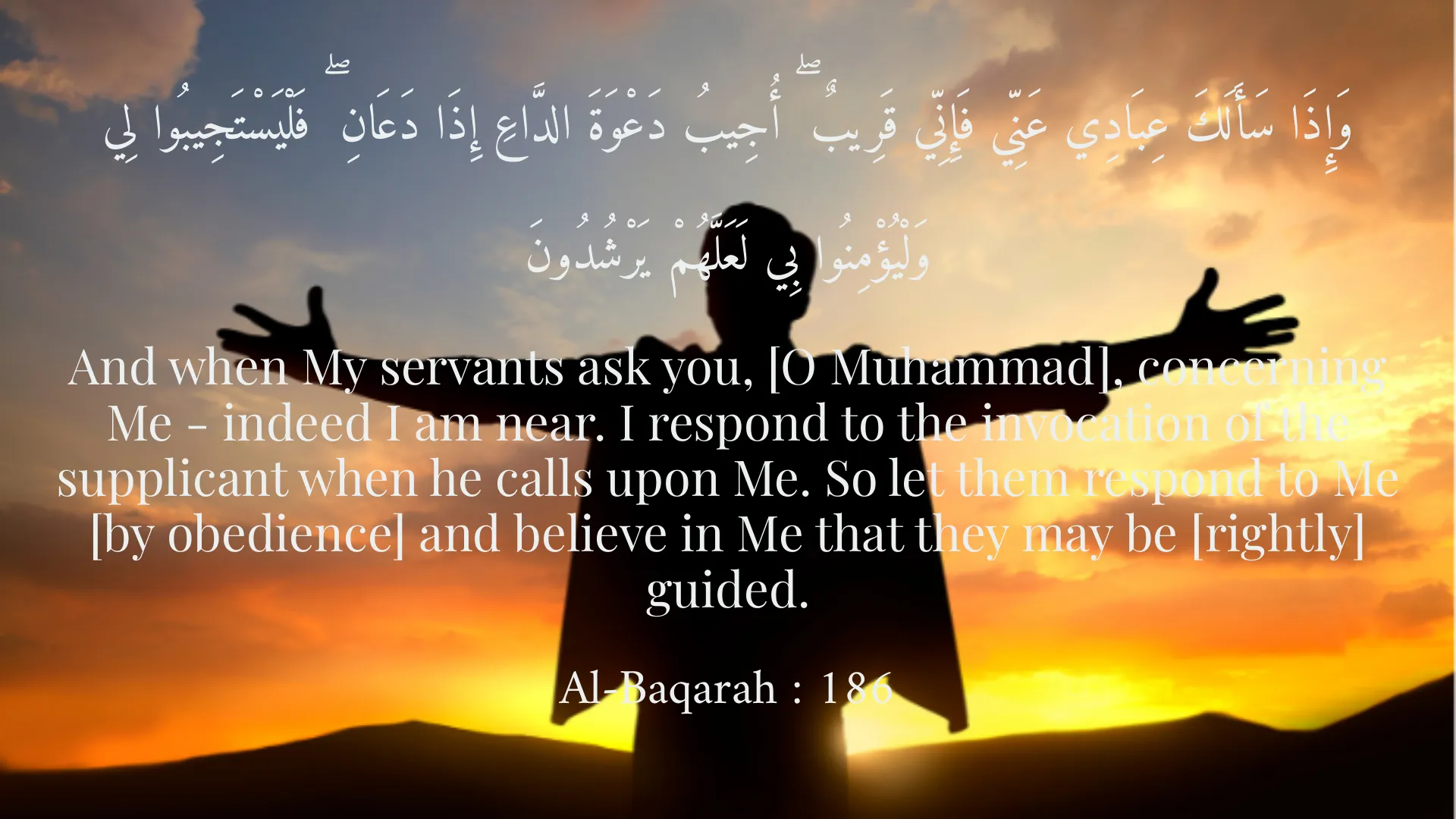
وَإِذَا سَأَلَكَ عِبَادِي عَنِّي فَإِنِّي قَرِيبٌ ۖ أُجِيبُ دَعْوَةَ الدَّاعِ إِذَا دَعَانِ ۖ فَلْيَسْتَجِيبُوا لِي وَلْيُؤْمِنُوا بِي لَعَلَّهُمْ يَرْشُدُونَ
And when My servants ask you, [O Muhammad], concerning Me - indeed I am near. I respond to the invocation of the supplicant when he calls upon Me. So let them respond to Me [by obedience] and believe in Me that they may be [rightly] guided.
Al-Baqarah : 186
سَنُرِيهِمْ آيَاتِنَا فِي الْآفَاقِ وَفِي أَنفُسِهِمْ حَتَّىٰ يَتَبَيَّنَ لَهُمْ أَنَّهُ الْحَقُّ ۗ أَوَلَمْ يَكْفِ بِرَبِّكَ أَنَّهُ عَلَىٰ كُلِّ شَيْءٍ شَهِيدٌ
We will show them Our signs in the horizons and within themselves until it becomes clear to them that it is the truth. But is it not sufficient concerning your Lord that He is, over all things, a Witness?
Fussilat : 53
الَّذِينَ آمَنُوا وَتَطْمَئِنُّ قُلُوبُهُم بِذِكْرِ اللَّهِ ۗ أَلَا بِذِكْرِ اللَّهِ تَطْمَئِنُّ الْقُلُوبُ
Those who have believed and whose hearts are assured by the remembrance of Allah. Unquestionably, by the remembrance of Allah hearts are assured.
Ar-Ra'd : 28
Short Story
They say that a dervish wandered for years through cities and mountains, seeking the truth and knowledge of God. Wherever he went, he searched for a sign of God – in temples, among mystics, and in books. One day, he met an old sage, who asked him: "O dervish, what are you engaged in?" The dervish replied: "I am searching for God, that I may see Him with the eye of my heart and experience His presence." The sage smiled and said: "For years you have searched outside yourself, while He is closer to you than your jugular vein. Look at the sky without pillars, at the colorful flowers, at the songs of birds, and at the pulse of your own being. Are these not His signs? Each of these is a window to a personal experience of His unparalleled essence, if only you open the eyes of your heart." Upon hearing these words, the dervish came to his senses and understood that the experience of God is within and around him, and there is no need for long journeys, but rather for deep contemplation and understanding of the signs. From then on, he constantly told himself: "He is with me, and I am with Him." And from every particle, he experienced a light of the Beloved's presence, and his heart found peace.