Quranic Answer
The Holy Quran is a fundamental text for Muslims, providing them with guidance on every aspect of life, including moral conduct, social justice, and the respect for the rights of others. Among its many teachings, the Quran highlights the importance of fairness and justice in interpersonal relationships, emphasizing that these virtues are essential for the well-being of any community. In Surah An-Nisa (4:35), Allah commands believers to ensure that decisions are made with a sense of balance, equity, and impartiality, reinforcing the idea that justice should be the cornerstone of social interactions. The significance of justice in Islam transcends personal or individual matters; it extends into the collective fabric of society. The commandment in Surah An-Nisa serves as a reminder that a just society thrives when the rights of all individuals—regardless of their social standing, race, or gender—are recognized and upheld. This foundational principle is vital for preventing conflict and ensuring harmony among different segments of the community. The Quran’s insistence on justice as a primary value reflects its deep understanding of human nature and the complexities of social relations. Moreover, in Surah Al-Ma'idah (5:8), another crucial aspect of respect for others' rights is brought to light. This verse urges believers to uphold the trusts and responsibilities that others have placed upon them. The directive also cautions against engaging in slander and bearing false witness, which can severely damage the reputation and honor of individuals. These instructions are crucial for maintaining trust and integrity within society. In a world where rumors and falsehoods can spread rapidly, the Quran’s admonition to avoid slander highlights the ongoing relevance of these teachings. By promoting practices that prioritize truth and respect, the Quran encourages a community where individuals interact with honesty and honor. In addition to these teachings, the Quran addresses the importance of wealth and property, emphasizing that individuals should not exploit the possessions of others for personal gain. Surah Al-Imran (3:180) warns against the unjust acquisition of others' wealth and encourages honest dealings. This principle is integral to the Islamic financial ethics that call for fair trade, honesty in transactions, and respect for others' rights concerning their possessions. When people engage in business or any financial dealings, they are reminded to do so with transparency and fairness, creating a marketplace that is both just and equitable for all participants. The emphasis on ethical behavior and respect for individual rights found throughout the Quran reflects the core of Islamic teaching. By placing such a strong focus on these principles, the Quran serves as a guide not just for Muslims, but for everyone seeking to lead a life of integrity and honor. It offers a comprehensive approach to human rights, urging individuals to actively engage in protecting and advocating for their rights and the rights of others. This call to action is crucial for fostering a community in which everyone can coexist peacefully. Furthermore, the Quran's focus on these principles is not limited to just the actions of individuals but extends to societal structures and governance as well. The establishment of just laws and the promotion of fair governance are seen as essential components of a flourishing society, where the rights of all individuals are safeguarded. The teachings encourage leaders and authorities to act in accordance with justice and equity, fostering an environment where rights are defended and upheld. This holistic approach to justice is woven throughout Islamic teachings and serves as a blueprint for enhancing social cohesion and human dignity. In light of the Quran’s teachings, it becomes apparent that the ethical foundation laid out for Muslims is deeply intertwined with the advancement of human rights. Upholding respect for the rights of others is not merely a recommendation but an obligation, one that is integral to the practice of Islam. This moral framework ensures that Muslims actively contribute to creating a fair and just society, one that prioritizes the welfare of all its members. Ultimately, the Quran presents a powerful and encompassing message concerning human rights and social justice. The guidance offered through various verses compels Muslims to reflect on their actions, hold themselves accountable to high moral standards, and actively promote the rights and dignity of every individual. These tenets of justice, respect, and equality are essential for maintaining a harmonious society where peace can thrive, reinforcing the timeless relevance of the Quran in modern world discourse on human rights. A true understanding and implementation of these principles not only elevate individual behavior but also strengthen societal bonds, ensuring that all community members can share in the common pursuit of a dignified and just existence.
Related Verses
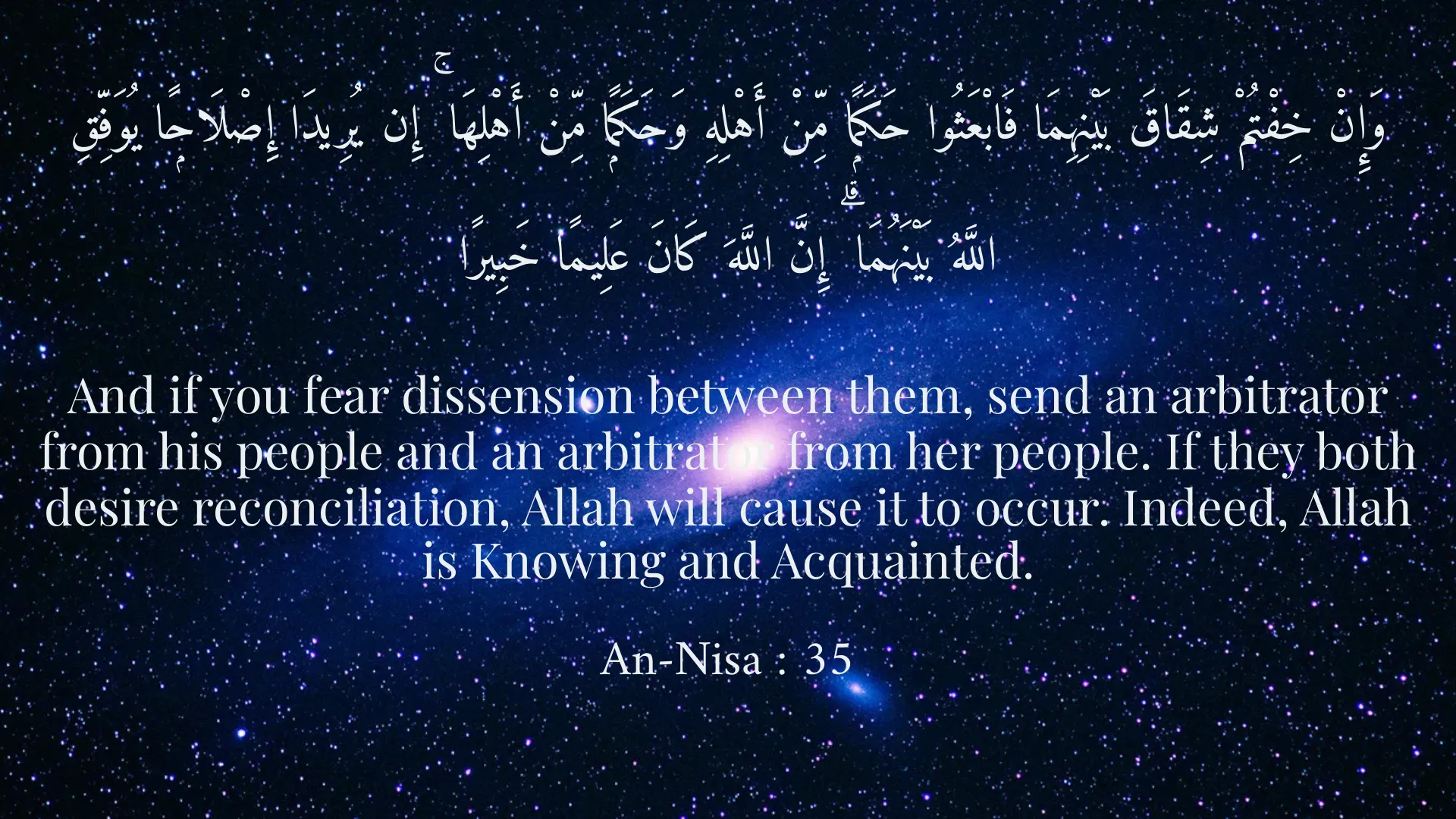
وَإِنْ خِفْتُمْ شِقَاقَ بَيْنِهِمَا فَابْعَثُوا حَكَمًۭا مِّنْ أَهْلِهِ وَحَكَمًۭا مِّنْ أَهْلِهَا ۚ إِن يُرِيدَا إِصْلَاحًۭا يُوَفِّقِ اللَّهُ بَيْنَهُمَا ۗ إِنَّ اللَّهَ كَانَ عَلِيمًا خَبِيرًا
And if you fear dissension between them, send an arbitrator from his people and an arbitrator from her people. If they both desire reconciliation, Allah will cause it to occur. Indeed, Allah is Knowing and Acquainted.
An-Nisa : 35
يَا أَيُّهَا الَّذِينَ آمَنُوا كُونُوا قَوَّامِينَ بِالْقِسْطِ شُهَدَاءَ لِلَّهِ وَإِنْ عَلَى أَنفُسِكُمْ أَوِ الْوَالِدَيْنِ وَالأَقْرَبِينَ ۚ إِن يَكُن غَنِيًّا أَوْ فَقِيرًا فَاللَّهُ أَوْلَى بِهِمَا ۖ فَلَا تَتَّبِعُوا الْهَوَى أَن تَعْدِلُوا ۚ وَإِنْ تَلْوُوا أَوْ تُعْرِضُوا فَإِنَّ اللَّهَ كَانَ بِمَا تَعْمَلُونَ خَبِيرًا
O you who have believed, be persistently standing firm in justice, witnesses in the cause of Allah, even if it be against yourselves or parents and relatives. Whether one is rich or poor, Allah is more worthy of both. So follow not [personal] inclination, lest you not be just. And if you distort [your testimony] or refuse [to give it], then indeed Allah is Acquainted with what you do.
Al-Ma'idah : 8
وَلَا يَحْسَبَنَّ الَّذِينَ بَخِلُوا بِمَا آتَاهُمُ اللَّهُ مِنْ فَضْلِهِمْ هُوَ خَيْرًۭا لَّهُمْ ۖ بَلْ هُوَ شَرٌّۭ لَّهُمْ ۖ سَتُطَوَّقُ أَعْنَاقُهُمْ مَّا بَخِلُوا بِهِ يَوْمَ الْقِيَامَةِ ۗ وَلِلَّهِ مِيرَاثُ السَّمَاوَاتِ وَالْأَرْضِ ۗ وَكَانَ اللَّهُ خَبِيرًا بِمَا تَعْمَلُونَ
And let not those who withhold selectively of what Allah has given them of His favor think that it is better for them; rather, it is worse for them. Their necks will be tied around with what they withheld on the Day of Resurrection. And to Allah belongs the heritage of the heavens and the earth. And Allah is Acquainted with what you do.
Al-Imran : 180
Short Story
One day, a man named Hassan encountered a young man in the market who had harmed someone. Remembering the Quranic verses that emphasize respecting the rights of others, Hassan told the young man that this behavior was wrong and that he should stop. The young man was influenced by Hassan's words and decided to apologize and adopt better behavior. This change in the young man's attitude brought joy to Hassan and others, reminding him that with just one good word, a person's life can be transformed.