Quranic Answer
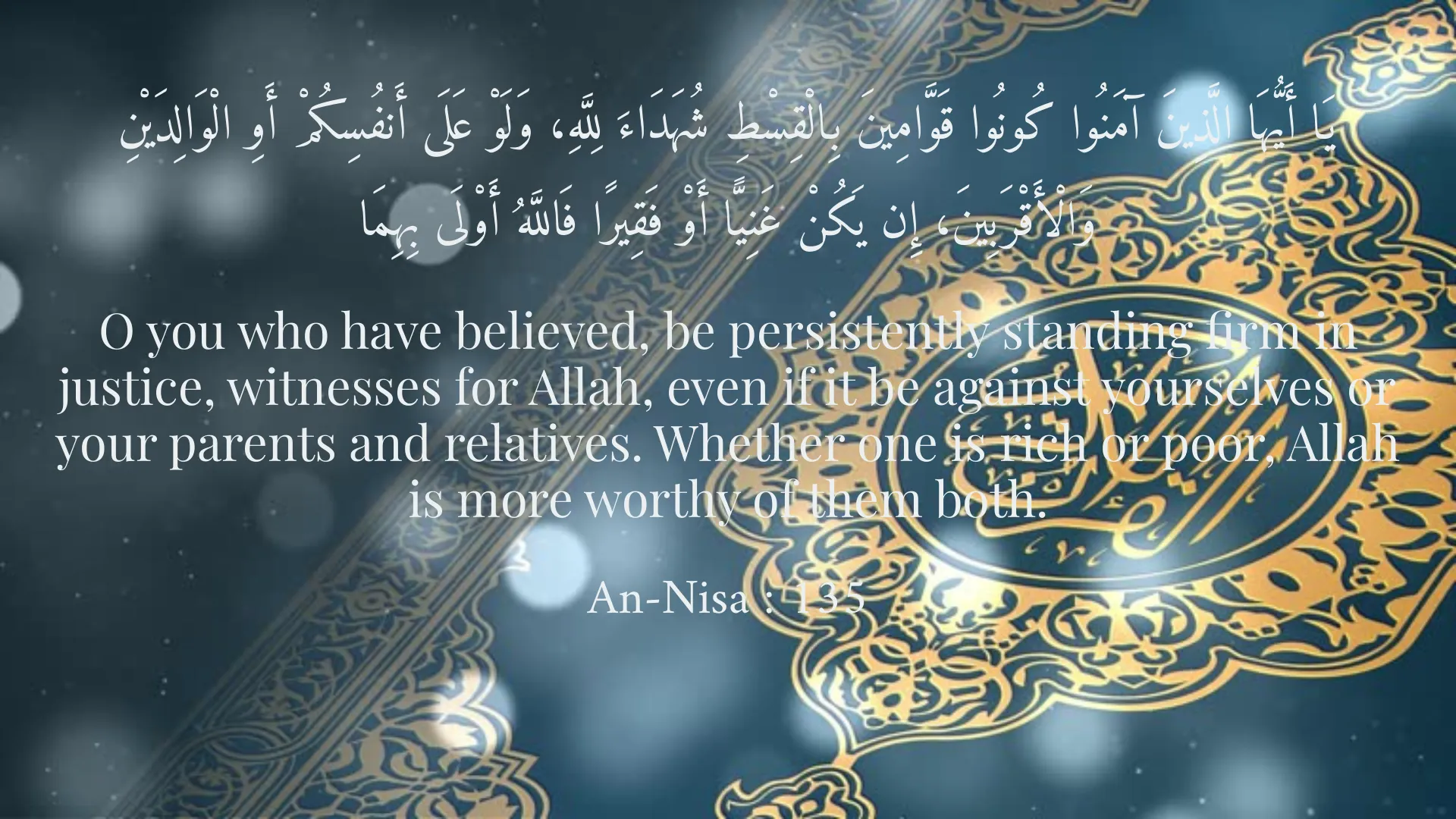
The Quran serves as not just a religious guide for millions around the world, but also a powerful advocate for social justice and the rights of the oppressed. The verses within this sacred text emphasize the importance of upholding the principles of justice and protecting those who are marginalized and mistreated. Among the various passages, two significant verses encapsulate the core Islamic teaching regarding justice and support for the oppressed. In Surah An-Nisa, verse 135, the Quran states: "O you who have believed, be persistently standing firm in justice, witnesses for Allah, even if it be against yourselves or your parents and relatives. Whether one is rich or poor, Allah is more worthy of them both." This verse is striking in its call for integrity and fairness, no matter the personal cost involved. Here, believers are urged to be unwavering advocates of justice, even when it conflicts with their own interests or those of their close family members. The importance of this verse extends beyond mere adherence to fairness; it reflects a profound moral principle that prioritizes divine justice over personal bias. It challenges the individual to rise above personal relationships and societal pressure to ensure that justice prevails. In this context, the oppressed are not merely looked upon with compassion; they become the focal point of moral duty. The implications are clear—supporting the oppressed is not optional; it is a fundamental requirement for anyone who professes faith. Moreover, in Surah Al-Ma'idah, verse 8, the Quran asserts: "O you who have believed, be persistently standing firm for justice, witnesses for Allah. And do not let the hatred of a people prevent you from being just." This verse adds another layer to the discourse on justice and support for the oppressed. It highlights the complicated nature of human emotions—specifically, how feelings of animosity can cloud our judgment and actions toward others. Regardless of personal feelings or biases towards another group, this verse demands that believers uphold justice without hesitation or selective considerations. This call for impartiality in justice underscores the Quran's commitment to fairness across all demographics—friends, foes, neighbors, and strangers alike. It presents an important narrative: justice is not a privilege afforded to those we like or understand but a fundamental right that must be extended to everyone. Observing this principle can help foster a community where equality thrives, and the rights of all individuals are respected and protected. The Quran's emphasis on standing with the oppressed resonates deeply within Islamic teachings. Numerous sayings of the Prophet Muhammad (peace be upon him) further reinforce the significant role that Muslims have in supporting those who suffer from injustice and oppression. Narrations depict the Prophet as a champion of the marginalized, consistently standing up against tyranny and advocating for those who were unable to do so for themselves. An instance worth noting is the Prophet's unwavering stance against the Quraysh tribe's mistreatment of the weak and the vulnerable, often stating that 'the best among you are those who are the best to their families and who stand against injustice, regardless of who the oppressor is.' He advocated tirelessly for social justice, demonstrating through his actions that compassion and mercy are essential qualities of a true believer. Furthermore, the Quran reminds believers that God is always present for the oppressed. In many verses, it is reiterated that He is the protector, the supporter, and the ultimate avenger of those wronged. This belief provides a source of hope and strength for the oppressed, reinforcing the notion that their suffering has a divine purpose and that they are not alone in their struggles. The relationship between God and the oppressed is one built on compassion and assurance, and this spiritual alliance emphasizes that seeking refuge in God is a valid response to persecution. Supporting the oppressed is not just an abstract moral concept in Islam; it extends into the realm of practical action. Muslims are encouraged to engage in community service, advocate for the rights of the marginalized, and take tangible steps to alleviate the suffering of those victimized by injustice. This proactive approach is crucial in building a just society—where the needs of all individuals are addressed and the rights of the vulnerable are safeguarded. In recognizing the teachings of the Quran, commitment to justice becomes an essential part of one's identity as a Muslim. Supporting the oppressed goes beyond direct assistance; it includes embodying the values of empathy, understanding, and advocacy in everyday life. Each believer has a role—a sacred duty to uphold justice and extend support to the disadvantaged, while simultaneously fostering a culture of fairness and equity in their communities. In conclusion, the call for justice found within the Quran is not only a spiritual imperative but a communal responsibility for Muslims. The emphasis on supporting the oppressed, as articulated in Surah An-Nisa and Surah Al-Ma'idah, reflects a broader vision of an equitable society. Upholding justice, regardless of personal biases, is a commitment that each believer is encouraged to engage with profoundly. Through their actions, Muslims can embody the spirit of the Quran, demonstrating to the world the profound significance of justice and the moral obligation to stand with the oppressed.
Related Verses
يَا أَيُّهَا الَّذِينَ آمَنُوا كُونُوا قَوَّامِينَ بِالْقِسْطِ شُهَدَاءَ لِلَّهِ، وَلَوْ عَلَى أَنفُسِكُمْ أَوِ الْوَالِدَيْنِ وَالْأَقْرَبِينَ، إِن يَكُنْ غَنِيًّا أَوْ فَقِيرًا فَاللَّهُ أَوْلَى بِهِمَا
O you who have believed, be persistently standing firm in justice, witnesses for Allah, even if it be against yourselves or your parents and relatives. Whether one is rich or poor, Allah is more worthy of them both.
An-Nisa : 135
يَا أَيُّهَا الَّذِينَ آمَنُوا كُونُوا قَوَّامِينَ لِلَّهِ شُهَدَاءَ بِالْقِسْطِ، وَلَا يَجْرِمَنَّكُمْ شَنَآنُ قَوْمٍ أَلَّا تَعْدِلُوا
O you who have believed, be persistently standing firm for justice, witnesses for Allah. And do not let the hatred of a people prevent you from being just.
Al-Ma'idah : 8
Short Story
On one autumn day, a man named Hasan was walking in the market when he suddenly heard the cries of a child. He walked toward the sound and saw a little girl sitting on the ground, crying. Hasan approached her and asked, "Why are you crying?" The girl said, "Someone bullied me and took my rights." Upon hearing this, Hasan remembered the verses of the Quran and decided to support the girl. He approached the bully and asked him to return the girl’s rights. With a heart full of kindness and sincerity, Hasan said, "God has commanded us to support the oppressed. If we do wrong, we will not have a good end." In the end, the bully embarrassedly returned the girl's rights, and Hasan walked home with a smile on his face.