Quranic Answer
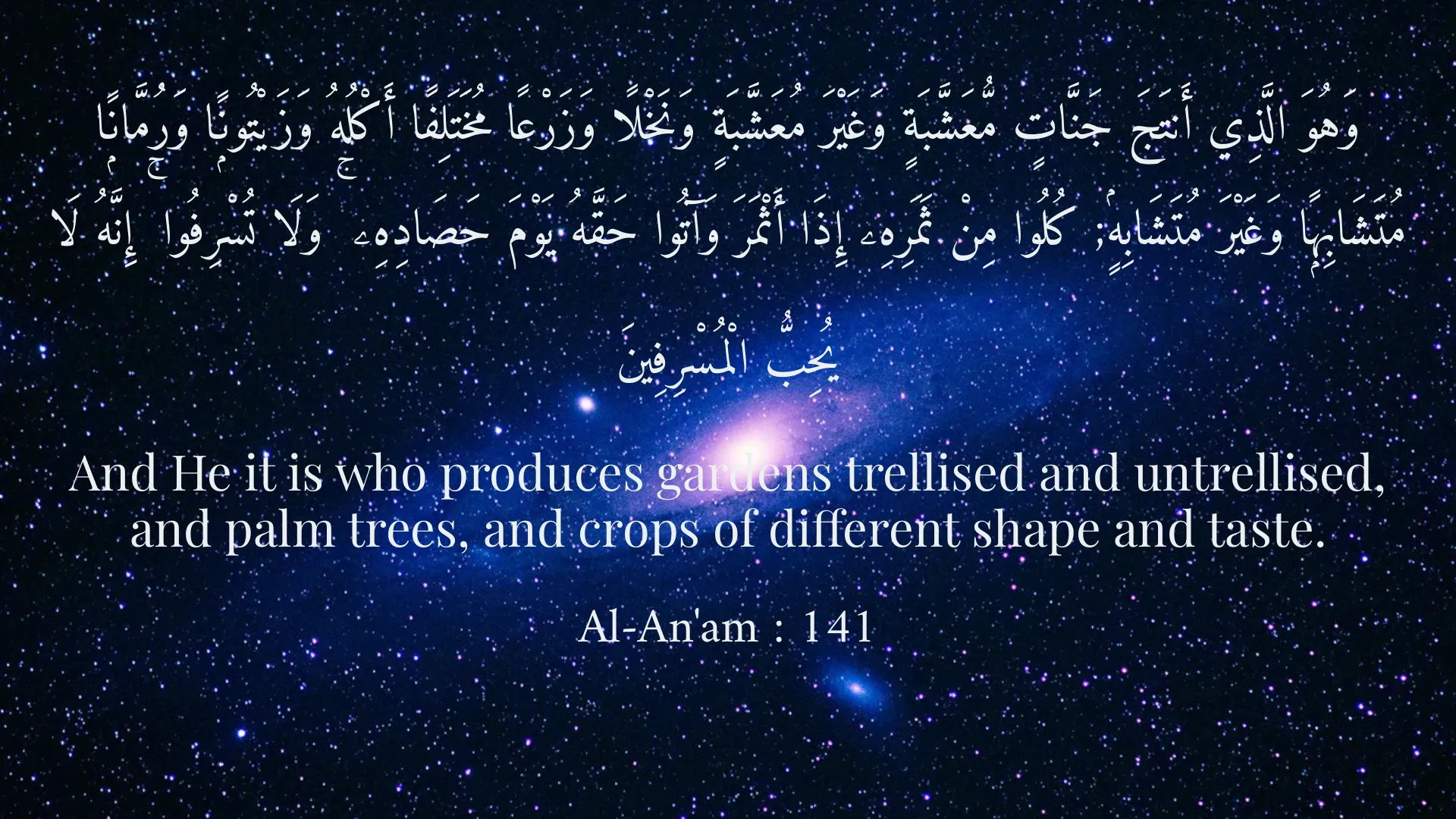
The relationship between humanity and nature has been a focal point of discourse across various cultures and religions. Among these, the Holy Quran stands out for its profound insights and teachings regarding the environment and the intrinsic responsibility bestowed upon humanity to protect it. The Quran, revered by Muslims as the literal word of God revealed to the Prophet Muhammad (peace be upon him), implicitly emphasizes the importance of preserving nature, drawing attention to the awe-inspiring creations of the natural world, while compelling humanity to take responsibility for the environment that sustains life. In Surah Al-An'am, verse 141, Allah proclaims, "And He it is who produces gardens trellised and untrellised, and palm trees, and crops of different shape and taste, and olives, and pomegranates, similar (in kind) and different (in taste)." This verse serves as a reminder of the divine blessings bestowed upon humankind through the provision of bountiful harvests and diverse forms of nourishment. The imagery of gardens and fruit-bearing trees paints a vivid picture of the beauty and variety in creation. It invites humans to not merely consume these bounties but to recognize their significance and the obligation that comes with such prosperity — the duty of preservation. The Quranic exhortation goes beyond mere acknowledgment of nature's beauty. It instills in its followers an awareness that humans must act as stewards of the Earth. In this context, the idea of stewardship implies a moral responsibility to protect and nurture the environment. When Allah mandates humanity to benefit from nature, it intertwines with the expectation that such blessings are not to be exploited but preserved. This perspective cultivates a sense of ethical engagement with the environment, stressing that neglect or harm to nature reflects a lack of appreciation for God's creations. Moreover, in Surah Fussilat, verse 53, God states, "We will show them Our signs in the horizons and within themselves until it becomes clear to them that it is the truth." This verse emphasizes the importance of recognizing the signs of the divine in the natural world. Our surroundings provide insights into the truth of existence, urging a deeper understanding and respect for the environment. The invitation to observe and reflect upon these divine signs suggests that our connection with nature is integral to our faith; indeed, to disregard nature is to undermine our spiritual principles and responsibilities. The Quran's message is a call to awareness, fostering an understanding that the natural world is a reflection of the Creator's will. The intricate systems of ecosystems, seasons, and the balance of life showcase the wisdom behind creation. The divine mandate is not merely to enjoy these signs but to engage with them thoughtfully and responsibly. Such engagement is seen as a pivotal aspect of faith, as it challenges believers to align their actions with ethical considerations regarding environmental conservation. An equally instructive verse found in Surah Al-Baqarah, verse 164, states, "Indeed, in the creation of the heavens and the earth, and the alternation of the night and the day are signs for those of understanding." Here, the Quran encourages believers to observe and reflect on the natural phenomena that surround them. The cycles of day and night and the vastness of the universe serve as reminders of God's majesty and the transient nature of existence. This verse suggests that understanding nature is vital for those seeking wisdom, urging them to take action in safeguarding the delicate balance of the environment. Furthermore, the Quran's teachings about nature extend beyond simple observance. They call for active participation in preserving the environment. For instance, the concept of "Mizan" or balance is integral to Quranic philosophy. The natural world operates within a delicate equilibrium, and humanity's actions can either affirm or disrupt that balance. When humans engage in activities that harm the environment, such as excessive consumption, pollution, and deforestation, they violate the principles of balance established by God. Therefore, there lies a dual responsibility: to appreciate and respect the intricacies of creation while also ensuring that human activities do not lead to environmental degradation. There is also the dimension of sustainability in Islamic theology. Sustainable practices draw from the Quranic principles that not only encourage the enjoyment of God's creation but also emphasize moderation and care. The encouragement to plant trees, conserve resources, and cherish biodiversity aligns with the Quranic call to maintain the environment. The Prophet Muhammad (peace be upon him) further emphasized environmental ethics through his teachings and actions, which encouraged planting trees, treating animals with kindness, and conserving water even in abundance. Moreover, the Quranic perspective on the environment encourages a holistic approach to living. It fosters a connection between spirituality and environmental responsibility, challenging individuals to see their actions as part of a greater divine framework. When one respects nature, they acknowledge divine majesty and fulfill their role as guardians of the Earth. Individual actions towards preservation, combined with collective efforts for sustainability, echo the Quran's vision of a harmonious existence with the natural world. In conclusion, the Holy Quran profoundly articulates the importance of preserving nature and affirms humanity's responsibility for the environment. Through various verses, it not only recognizes the blessings inherent in creation but also emphasizes moral accountability and ethical stewardship. As the world faces unprecedented environmental challenges, the Quran's timeless guidance remains relevant, calling on believers to honor their sacred duty to protect and sustain the natural world. This commitment not only enriches spiritual life but also serves as a foundation for fostering a sustainable future, aligning human activities with the divine design of the universe.
Related Verses
وَهُوَ الَّذِي أَنتَجَ جَنَّاتٍ مُّعَشَّبَةٍ وَغَيْرَ مُعَشَّبَةٍ وَنَخْلًا وَزَرْعًا مُخَتَلِفًا أَكْلُهُ وَزَيْتُونًۭا وَرُمَّانًۭا مُتَشَابِهًۭا وَغَيْرَ مُتَشَابِهٍۢ; كُلُوا مِنْ ثَمَرِهِۦ إِذَا أَثْمَرَ وَآتُوا حَقَّهُ يَوْمَ حَصَادِهِۦ ۚ وَلَا تُسْرِفُوا ۚ إِنَّهُ لَا يُحِبُّ الْمُسْرِفِينَ
And He it is who produces gardens trellised and untrellised, and palm trees, and crops of different shape and taste.
Al-An'am : 141
سَنُرِيهِمْ آيَاتِنَا فِي الْآفَاقِ وَفِي أَنفُسِهِمْ حَتَّى يَتَبَيَّنَ لَهُمْ أَنَّهُ الْحَقُّ ۚ أَوَلَمْ يَكْفِ بِرَبِّكَ أَنَّهُ عَلَى كُلِّ شَيْءٍ شَهِيدٌ
We will show them Our signs in the horizons and within themselves until it becomes clear to them that it is the truth.
Fussilat : 53
إِنَّ فِي خَلْقِ السَّمَاوَاتِ وَالْأَرْضِ وَاخْتِلَافِ اللَّيْلِ وَالنَّهَارِ لَآيَاتٍ لِّأُولِي الْأَلْبَابِ
Indeed, in the creation of the heavens and the earth, and the alternation of the night and the day are signs for those of understanding.
Al-Baqarah : 164
Short Story
One day, trees stood beside a large green field. Every year, the rain would fall and nourish the earth. The trees said to each other, 'We must value and respect this nature.' One tree added, 'If we neglect it, we will no longer have this beauty.' So they decided to take responsibility and care for the field. This story reminds us that we too should protect our natural environment, as preserving it gives us life and tranquility.