Quranic Answer
Does the Holy Quran, the divine scripture and guide for humanity, address critical and contemporary issues such as the climate crisis and environmental preservation? While the answer may not be found in direct, modern terminology, a deep exploration of its luminous verses unequivocally reveals that the Quran provides a powerful and comprehensive ethical and practical framework for human interaction with nature and the preservation of the environment. Indeed, the climate crisis and environmental degradation are direct consequences of humanity's failure to adhere to the principles and teachings outlined by the Quran centuries ago for human well-being and the sustainability of life on Earth. One of the most pivotal Quranic concepts in this regard is "Khilafah," or stewardship. In Surah Al-Baqarah, verse 30, Allah explicitly states: "وَإِذْ قَالَ رَبُّكَ لِلْمَلَائِكَةِ إِنِّي جَاعِلٌ فِي الْأَرْضِ خَلِيفَةً" (And [mention, O Muhammad], when your Lord said to the angels, "Indeed, I will make upon the earth a successive authority."). This verse establishes the fundamental responsibility of humanity towards the Earth. Humans are not absolute owners of the Earth but are rather vicegerents and trustees of Allah on it. This vicegerency implies responsible utilization, care, and maintenance of natural balance. A khalifah (steward) is obliged to protect what has been entrusted to them in the best possible way, preserving it for future generations. This perspective stands in stark contrast to the exploitative and destructive approaches that have led to today's environmental crises. As stewards, humans are meant to be guardians and developers, not destroyers. This concept implicitly includes future generations, as the duty of a khalifah extends not only to the present but also to the sustainability and survival of life over time. Another crucial principle is "Mizan," or balance. In Surah Ar-Rahman, verses 7-9, Allah says: "وَالسَّمَاءَ رَفَعَهَا وَوَضَعَ الْمِيزَانَ (٧) أَلَّا تَطْغَوْا فِي الْمِيزَانِ (٨) وَأَقِيمُوا الْوَزْنَ بِالْقِسْطِ وَلَا تُخْسِرُوا الْمِيزَانَ (٩)" (And the heaven He raised and imposed the balance. That you may not transgress [the limits of] the balance. And establish weight in justice and do not make the balance deficient.). These verses refer not only to social justice but also to cosmic justice and the preservation of balance throughout creation. Nature is created with meticulous order and astonishing balance, from the water cycle to complex ecosystems. Any excessive and unregulated human intervention disrupts this balance, leading to "transgression" (tughyan) in the divine balance. The climate crisis is precisely a result of this transgression: global warming, altered precipitation patterns, and loss of biodiversity are all signs of this disrupted natural balance that the Quran prohibits. The Quran emphasizes the importance of preserving this order and balance in every aspect of life, including how we interact with nature. Furthermore, the Quran strongly condemns "Fasad" (corruption or mischief) and "Israaf" (extravagance or excess) on Earth. In Surah Al-A'raf, verse 56, we read: "وَلَا تُفْسِدُوا فِي الْأَرْضِ بَعْدَ إِصْلَاحِهَا" (And cause not corruption upon the earth after its reformation.). Corruption on Earth includes any destruction or damage to natural resources, pollution, and the destruction of ecosystems. This verse reminds us that the Earth was initially created in a healthy and balanced state, and our duty is to preserve this health and not cause corruption within it. The climate crisis is clearly a widespread "fasad" imposed on the Earth by human hands. Similarly, in numerous verses, extravagance and excess are forbidden, such as in Surah Al-A'raf, verse 31: "كُلُوا وَاشْرَبُوا وَلَا تُسْرِفُوا ۚ إِنَّهُ لَا يُحِبُّ الْمُسْرِفِينَ" (Eat and drink, but do not be extravagant; indeed, He does not like those who are extravagant.). This principle extends not only to eating and drinking but to the consumption of all resources. Excessive use of energy, water, and other natural resources is a clear example of israaf that directly contributes to the climate crisis. The Quran calls us to moderation and to avoid wasting resources, as they are limited resources and divine blessings that should be appreciated. The Quran also emphasizes the concept of "Shukr," or gratitude for divine blessings. All that is in the heavens and on Earth are blessings from Allah, created for human benefit. Responsible and sustainable use of these blessings is a sign of gratitude, while destroying and wasting them is considered ungratefulness. In Surah Ibrahim, verse 34, it states: "وَآتَاكُم مِّن كُلِّ مَا سَأَلْتُمُوهُ ۚ وَإِن تَعُدُّوا نِعْمَتَ اللَّهِ لَا تُحْصُوهَا ۗ إِنَّ الْإِنسَانَ لَظَلُومٌ كَفَّارٌ" (And He has given you from all you asked of Him. And if you should count the favor of Allah, you would not enumerate them. Indeed, mankind is [generally] most unjust and ungrateful.). This verse reminds us of the abundance of blessings and simultaneously our responsibility towards them. Any environmental destruction is a form of ingratitude towards the Creator and His blessings. Finally, the Quran explicitly refers to the consequences of human actions on Earth. Surah Ar-Rum, verse 41, states: "ظَهَرَ الْفَسَادُ فِي الْبَرِّ وَالْبَحْرِ بِمَا كَسَبَتْ أَيْدِي النَّاسِ لِيُذِيقَهُم بَعْضَ الَّذِي عَمِلُوا لَعَلَّهُمْ يَرْجِعُونَ" (Corruption has appeared on land and sea by [reason of] what the hands of people have earned so He may let them taste part of [the consequence of] what they have done that perhaps they will return [to righteousness].). This verse clearly indicates that environmental destruction is a direct result of human actions, and this corruption, in turn, will bring severe consequences upon humanity itself. The climate crisis, global warming, droughts, floods, and severe storms are all clear examples of humanity "tasting" the results of their actions, as mentioned in the Quran. This verse is an invitation to return to the right path and correct behavior before it is too late. Based on these profound and foundational concepts, it can be concluded that the Quran not only has a perspective on the environment and the climate crisis but also offers comprehensive and complete guidance for preventing and addressing it. These guidelines are based on human responsibility, maintaining the balance of creation, refraining from corruption and extravagance, and expressing gratitude for divine blessings. Adhering to these principles not only helps preserve the health of our planet but also leads to the well-being and peace of humanity. This Quranic perspective offers a holistic and ethical approach to the relationship between humans and nature, which can inspire sustainable solutions for today's environmental challenges.
Related Verses
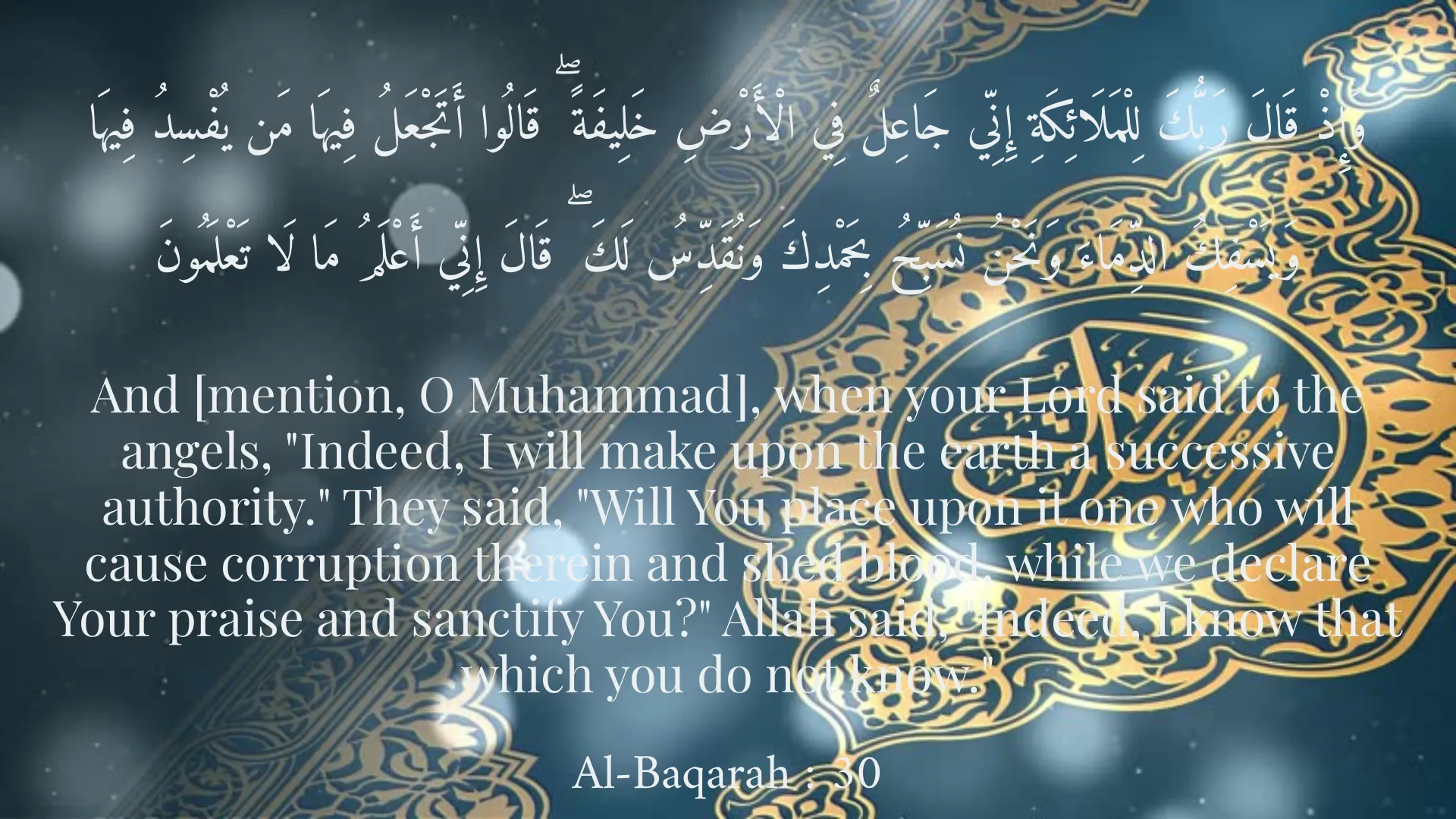
وَإِذْ قَالَ رَبُّكَ لِلْمَلَائِكَةِ إِنِّي جَاعِلٌ فِي الْأَرْضِ خَلِيفَةً ۖ قَالُوا أَتَجْعَلُ فِيهَا مَن يُفْسِدُ فِيهَا وَيَسْفِكُ الدِّمَاءَ وَنَحْنُ نُسَبِّحُ بِحَمْدِكَ وَنُقَدِّسُ لَكَ ۖ قَالَ إِنِّي أَعْلَمُ مَا لَا تَعْلَمُونَ
And [mention, O Muhammad], when your Lord said to the angels, "Indeed, I will make upon the earth a successive authority." They said, "Will You place upon it one who will cause corruption therein and shed blood, while we declare Your praise and sanctify You?" Allah said, "Indeed, I know that which you do not know."
Al-Baqarah : 30
وَلَا تُفْسِدُوا فِي الْأَرْضِ بَعْدَ إِصْلَاحِهَا وَادْعُوهُ خَوْفًا وَطَمَعًا ۚ إِنَّ رَحْمَتَ اللَّهِ قَرِيبٌ مِّنَ الْمُحْسِنِينَ
And cause not corruption upon the earth after its reformation. And invoke Him in fear and aspiration. Indeed, the mercy of Allah is near to the doers of good.
Al-A'raf : 56
وَالسَّمَاءَ رَفَعَهَا وَوَضَعَ الْمِيزَانَ
And the heaven He raised and imposed the balance.
Ar-Rahman : 7
أَلَّا تَطْغَوْا فِي الْمِيزَانِ
That you may not transgress [the limits of] the balance.
Ar-Rahman : 8
وَأَقِيمُوا الْوَزْنَ بِالْقِسْطِ وَلَا تُخْسِرُوا الْمِيزَانَ
And establish weight in justice and do not make the balance deficient.
Ar-Rahman : 9
ظَهَرَ الْفَسَادُ فِي الْبَرِّ وَالْبَحْرِ بِمَا كَسَبَتْ أَيْدِي النَّاسِ لِيُذِيقَهُم بَعْضَ الَّذِي عَمِلُوا لَعَلَّهُمْ يَرْجِعُونَ
Corruption has appeared on land and sea by [reason of] what the hands of people have earned so He may let them taste part of [the consequence of] what they have done that perhaps they will return [to righteousness].
Ar-Rum : 41
Short Story
In Saadi's tales, the value of moderation and the consequences of greed are often highlighted. Once, in a certain land, there were two neighbors, each possessing an orchard. One, in the manner of the wise, tended to his orchard with love and moderation; each year, he would harvest only what was needed from its fruits, gently caring for the trees so they would bear fruit again. His orchard was always lush and bountiful, as if in gratitude for his care, it bestowed its blessings more generously. However, the other neighbor, driven by greed and haste, wished to harvest all the fruits of his garden at once in a single season to become rich. He mercilessly dug up and uprooted the trees, even breaking branches in his eagerness. What was the outcome? The wise neighbor's orchard continued to bear fruit for many years, providing peace and sustenance for him and his children. But the greedy neighbor's orchard, stripped bare and damaged, withered away and yielded no more. Saadi, with his eloquent words, offers us a timeless lesson: the Earth, like a generous orchard, requires thoughtful stewardship and care, not ruthless exploitation. Those who only consider their immediate profit and ignore the Earth's tomorrow, ultimately deprive themselves of its blessings. Preserving and maintaining divine bounties is the guarantee of continued life and prosperity.