Quranic Answer
The Holy Quran, as the central religious text of Islam, places immense significance on the themes of poverty and wealth, addressing these crucial social issues with profound moral directives. It presents a holistic perspective on how individuals should navigate the often-complicated relationship between material prosperity and ethical responsibility. In a world where economic inequality is rampant, the Quran's teachings serve as a timeless guide for believers, reminding them not only of the blessings of wealth but also of the immense responsibilities that accompany it. One of the most pivotal references found in the Quran addressing this matter is located in Surah Al-Baqarah, specifically verses 267 to 273. These verses encapsulate the essence of charitable practice, instructing believers to ‘spend from the good things which you have earned and from that which We have produced for you.’ Here, Allah emphasizes the importance of generosity, calling upon Muslims to utilize their wealth in a manner that reflects their appreciation for the divine blessings in their lives. This invitation to generosity is not merely a suggestion but rather a commandment, underscoring the significance of using one’s resources for the benefit of others, particularly those who are less fortunate. In depth, these verses articulate a clear understanding of the nature of wealth as a means to serve a higher purpose. Wealth is not presented as an end in itself but as a tool through which believers can demonstrate their gratitude towards Allah. Engaging in philanthropy, sharing one’s earnings, and utilizing resources for the collective good emerge as fundamental principles of building a compassionate and equitable society. This perspective shifts the focus from the accumulation of wealth to the significance of its distribution—a concept that is vital in contemporary discussions about social justice and community responsibility. Furthermore, Surah Al-Imran, verse 92, adds another layer of understanding by stating that ‘you will not attain righteousness until you spend from that which you love.’ This verse challenges individuals to delve deep into their desires and attachments, urging them to give from their most cherished belongings. The implication is profound: true righteousness and moral excellence are achieved not just through obligatory giving or token gestures but through sacrifices that reflect one’s commitment to others' welfare. The act of giving, particularly when it involves personal sacrifices, is portrayed as a manifestation of strong faith and an expression of benevolent intentions. By encouraging believers to part with what they hold dear, the Quran fosters a culture of selflessness and empathy. In addition to the call for individual charitable acts, Surah Al-Hashr, verse 7, highlights the structural aspects of wealth distribution. It states that wealth should not only circulate among the wealthy but must also reach the needy, thus aiming to eliminate disparities within society. This directive is revolutionary; it implies that a fair and balanced society can only be created when the resources of the wealthy are shared with those lacking basic necessities. The Quran’s recognition of this dynamic introduces a societal responsibility towards economic equity, suggesting that those who possess wealth have an ethical obligation to support the impoverished and marginalized. The emphasis on charity and support for the needy is woven throughout the fabric of the Quran, framing it as a foundational pillar of faith. The Quran teaches Muslims that wealth is not just a personal blessing, but a communal resource that should be leveraged for the collective upliftment of humanity. As such, wealth serves a dual purpose: it is a reward for hard work and a means of fostering social harmony and compassion. In addressing poverty, the Quran does not merely highlight the obligation to give but also instills a sense of accountability within believers. This accountability engenders a responsible attitude towards earning and spending, urging individuals to reflect on their financial decisions and their impact on society. By linking wealth to ethical conduct and social responsibility, the Quran positions financial success as inseparable from moral integrity. Moreover, the Quranic view on wealth transcends mere economics; it encompasses spirituality, urging believers to see their financial endeavors as part of their faith journey. When Muslims engage in acts of charity, they are not only fulfilling a religious duty but also strengthening their spiritual connection to Allah. Every act of giving is a step toward deeper faith, reinforcing the principle that spiritual growth and material success are intertwined. The teachings of the Quran on wealth and poverty are significant in the context of modern society, where economic disparities continue to widen. The Quran advocates for active engagement in charitable activities, urging believers to contribute to the welfare of their communities, regardless of their financial status. It provides a framework for creating a more inclusive society, where the resources of the affluent serve to elevate the living conditions of the less fortunate. Moreover, through the concept of Zakat (obligatory almsgiving) and voluntary charity (Sadaqah), the Quran offers practical mechanisms for wealth redistribution, reminding Muslims that a portion of their wealth is not solely theirs but a trust from Allah that must be shared. This system not only alleviates poverty but also cultivates a sense of community among individuals, reinforcing the bonds of brotherhood and sisterhood. In conclusion, the Holy Quran articulates a comprehensive approach to wealth and poverty, urging believers to recognize their responsibilities towards one another. It reinforces the notion that wealth is a temporary trust from Allah and insists upon its utility as a means to achieve social justice. By following these divine directives, Muslims are called to channel their resources toward charitable acts, ensuring that wealth flows to the neediest, thereby fostering a society where compassion and equity prevail. Ultimately, the Quran serves not just as a moral guide but as a blueprint for achieving a just and harmonious social order, rooted in the principles of sharing and caring.
Related Verses
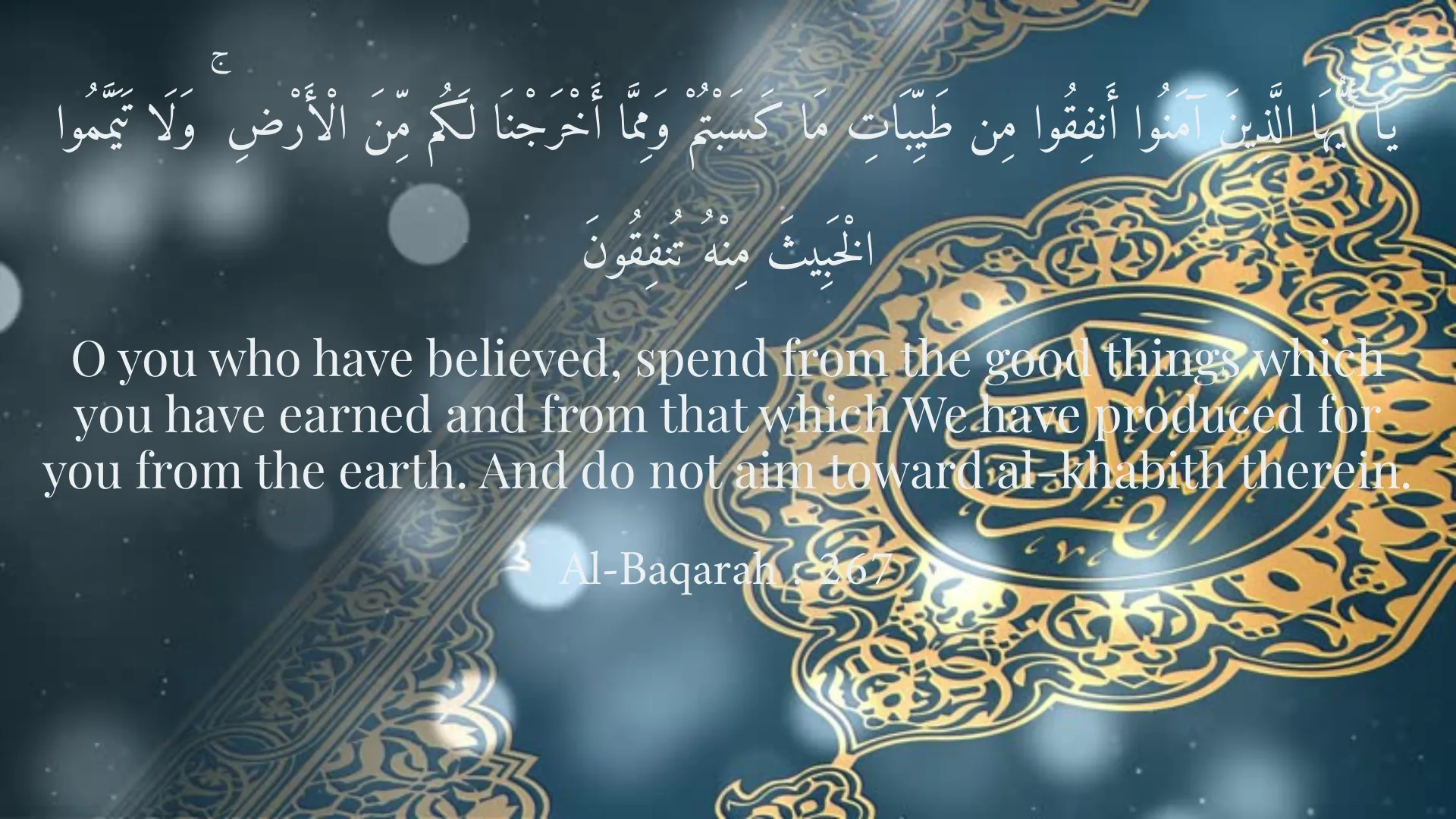
يَا أَيُّهَا الَّذِينَ آمَنُوا أَنفِقُوا مِن طَيِّبَاتِ مَا كَسَبْتُمْ وَمِمَّا أَخْرَجْنَا لَكُم مِّنَ الْأَرْضِ ۚ وَلَا تَيَمَّمُوا الْخَبِيثَ مِنْهُ تُنفِقُونَ
O you who have believed, spend from the good things which you have earned and from that which We have produced for you from the earth. And do not aim toward al-khabith therein.
Al-Baqarah : 267
لَن تَنَالُوا الْبِرَّ حَتَّى تُنفِقُوا مِمَّا تُحِبُّونَ
You will not attain righteousness until you spend from that which you love.
Al-Imran : 92
مَا أَفَاءَ اللَّهُ عَلَى رَسُولِهِ مِنْ أَهْلِ الْقُرَى فَلِلَّهِ وَلِلرَّسُولِ وَلِذِي الْقُرْبَى وَالْيَتَامَى وَالْمَسَاكِينِ وَابْنِ السَّبِيلِ
Whatever Allah has given as spoil to His Messenger from the people of the towns - it is for Allah and for the Messenger and for [his] near relatives and the orphans, the needy, and the traveler.
Al-Hashr : 7
Short Story
One day, a wealthy man was selling in the market and was proud of his wealth. A poor person asked for his help, but he dismissed him with a contemptuous look. After a while, that wealthy man realized that money could not buy peace and happiness. He then decided to devote part of his wealth to helping the needy. The peace and joy he achieved through his charity reminded him of the Quranic verses that say, 'spend from that which you love to gain blessings'.