Quranic Answer
The Holy Quran, as a divine guide, does not directly employ the modern term 'capitalism,' as this concept emerged from specific historical and economic developments. However, this does not imply that the Quran is silent on economic matters. On the contrary, the Quran provides a comprehensive and profound ethical and legal framework for all aspects of human life, including economic activities. This framework can serve as a robust basis for analyzing and evaluating various economic systems. The Quranic perspective on economics goes beyond mere production and distribution of wealth; it strongly emphasizes its ethical and social dimensions, viewing them as inseparable from individual and collective responsibilities towards God and society. One of the most central economic principles in the Quran is the principle of 'Justice' (Adl). The Quran vehemently opposes any form of oppression, exploitation, or inequality in economic transactions. Numerous verses emphasize the necessity of observing justice and fairness in weighing, measuring, contracts, and all forms of exchange. This justice is not only individually important but also socially significant; meaning, the economic system should not allow wealth to accumulate in the hands of a select few, depriving large segments of society. In Surah Al-Hashr, verse 7, Allah states: "So that it [wealth] may not be circulated among the rich from among you." This verse highlights the need for equitable wealth distribution and the prevention of its monopolization by a privileged few. Another crucial principle is the 'Prohibition of Usury' or interest (Riba). The Quran explicitly forbids usury, equating it to waging war against Allah and His Messenger (Al-Baqarah, verse 279). This prohibition stems from the exploitative nature of Riba, which leads to an unjust increase in wealth for some and poverty and debt for others. It hinders the healthy circulation of wealth and productive investment in society. In contrast to usury, the Quran encourages 'trade' and lawful earnings acquired through mutual consent and fairness. This signifies that earning profit through legitimate and socially beneficial activities is not only permissible but encouraged, provided it is conducted through just and ethical means. 'Zakat' (obligatory charity) and 'Sadaqah' (voluntary charity) are also fundamental pillars of the Quranic economic system. Zakat is a mandatory financial obligation levied on the wealth of the rich, which is then distributed to the poor, the needy, debtors, and other categories specified in the Quran. This system is not merely a tool for wealth redistribution; it also purifies an individual's wealth and soul, preventing avarice and stinginess. Sadaqat (voluntary spending in charity) are also highly encouraged, reinforcing the idea that wealth is a trust from Allah, and a portion of it must be spent in His way and to assist those in need. These compulsory and voluntary charitable acts play a vital role in fostering social solidarity, alleviating poverty, strengthening human bonds, and preventing the excessive accumulation of wealth. 'Lawful Earning' (Halal) and 'Avoidance of Extravagance and Wastefulness' (Israf and Tabdhir) are other significant ethical principles in Islamic economics. The Quran emphasizes that individuals must earn their livelihood through legitimate and lawful means, avoiding any form of fraud, deception, hoarding, bribery, theft, or illicit transactions. Furthermore, the Quran strongly prohibits extravagance and Tabdhir (reckless squandering of wealth and resources). This prohibition applies not only to excessive personal consumption but also implicitly to the responsible use of public resources and the environment. The Quranic economy is a productive and beneficial economy where wealth should be utilized for fulfilling societal needs and sustainable development, rather than for luxury and destruction. In conclusion, unlike capitalism, which often emphasizes individual profit maximization and unrestrained competition (often without regard for ethical and social consequences), the Quran presents a comprehensive and ethics-centric view of economics. This perspective is founded on principles such as justice, the prohibition of usury, the obligation of Zakat, lawful earning, social responsibility, and moderation in consumption. Its ultimate goal is not merely material prosperity but the spiritual and social well-being of the entire community. In other words, the Quran seeks an economic system that both acknowledges economic freedom and confines it within ethical and social frameworks to prevent severe inequalities, oppression, and exploitation, thereby moving towards a balanced, cohesive, and virtuous society. These principles do not permit unbridled capitalism but rather bind it to divine criteria, ensuring that individual and collective interests develop in harmony.
Related Verses
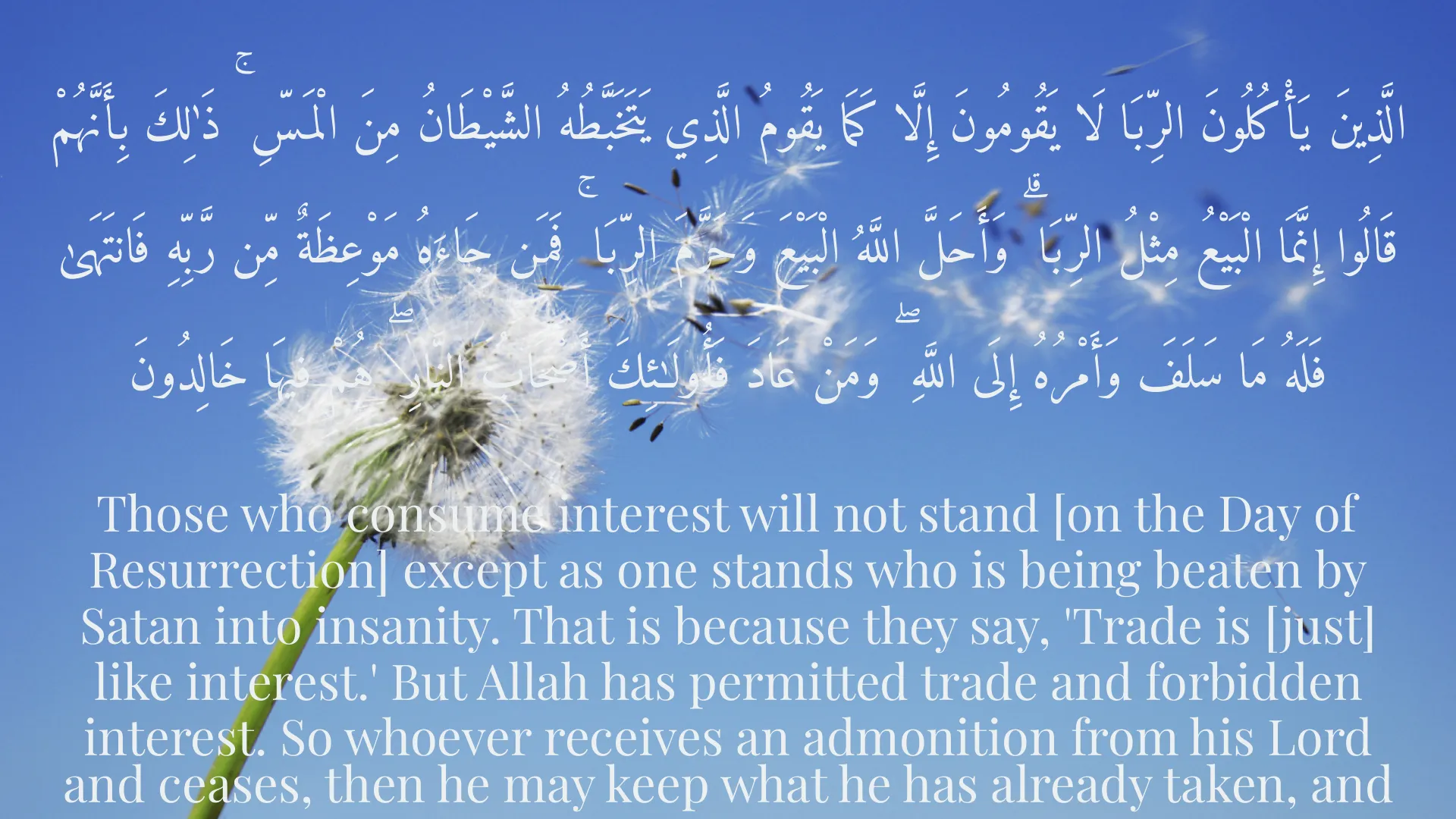
الَّذِينَ يَأْكُلُونَ الرِّبَا لَا يَقُومُونَ إِلَّا كَمَا يَقُومُ الَّذِي يَتَخَبَّطُهُ الشَّيْطَانُ مِنَ الْمَسِّ ۚ ذَٰلِكَ بِأَنَّهُمْ قَالُوا إِنَّمَا الْبَيْعُ مِثْلُ الرِّبَا ۗ وَأَحَلَّ اللَّهُ الْبَيْعَ وَحَرَّمَ الرِّبَا ۚ فَمَن جَاءَهُ مَوْعِظَةٌ مِّن رَّبِّهِ فَانتَهَىٰ فَلَهُ مَا سَلَفَ وَأَمْرُهُ إِلَى اللَّهِ ۖ وَمَنْ عَادَ فَأُولَٰئِكَ أَصْحَابُ النَّارِ ۖ هُمْ فِيهَا خَالِدُونَ
Those who consume interest will not stand [on the Day of Resurrection] except as one stands who is being beaten by Satan into insanity. That is because they say, 'Trade is [just] like interest.' But Allah has permitted trade and forbidden interest. So whoever receives an admonition from his Lord and ceases, then he may keep what he has already taken, and his affair is [now] with Allah. But whoever returns [to dealing in interest] - those are the companions of the Fire; they will abide eternally therein.
Al-Baqarah : 275
مَّثَلُ الَّذِينَ يُنفِقُونَ أَمْوَالَهُمْ فِي سَبِيلِ اللَّهِ كَمَثَلِ حَبَّةٍ أَنبَتَتْ سَبْعَ سَنَابِلَ فِي كُلِّ سُنبُلَةٍ مِّائَةُ حَبَّةٍ ۗ وَاللَّهُ يُضَاعِفُ لِمَن يَشَاءُ ۗ وَاللَّهُ وَاسِعٌ عَلِيمٌ
The example of those who spend their wealth in the way of Allah is like a seed [of grain] which grows seven spikes; in each spike is a hundred grains. And Allah multiplies [His reward] for whom He wills. And Allah is all-Encompassing and Knowing.
Al-Baqarah : 261
يَا أَيُّهَا الَّذِينَ آمَنُوا لَا تَأْكُلُوا أَمْوَالَكُم بَيْنَكُم بِالْبَاطِلِ إِلَّا أَن تَكُونَ تِجَارَةً عَن تَرَاضٍ مِّنكُمْ ۚ وَلَا تَقْتُلُوا أَنفُسَكُمْ ۚ إِنَّ اللَّهَ كَانَ بِكُمْ رَحِيمًا
O you who have believed, do not consume one another's wealth unjustly but only [in lawful] trade by mutual consent. And do not kill yourselves [or one another]. Indeed, Allah is to you ever Merciful.
An-Nisa : 29
وَآتِ ذَا الْقُرْبَىٰ حَقَّهُ وَالْمِسْكِينَ وَابْنَ السَّبِيلِ وَلَا تُبَذِّرْ تَبْذِيرًا
And give the relative his right, and [also] the poor and the traveler, and do not spend wastefully.
Al-Isra : 26
إِنَّ الْمُبَذِّرِينَ كَانُوا إِخْوَانَ الشَّيَاطِينِ ۖ وَكَانَ الشَّيْطَانُ لِرَبِّهِ كَفُورًا
Indeed, the wasteful are brothers of the devils, and ever has Satan been to his Lord ungrateful.
Al-Isra : 27
Short Story
It is narrated that during the reign of a just king, there lived a merchant who was exceedingly shrewd and calculating in his dealings, always striving to maximize his profits, sometimes even resorting to methods that slightly deviated from the path of justice. The king, having heard of this merchant's acumen and wealth, summoned him one day and said: "I have heard that you are very capable in business and possess vast wealth. But have you ever considered that lawful wealth and blessings are attained through justice and fairness?" The merchant bowed his head and replied: "Your Majesty, we merchants strive our utmost for greater profit." The king smiled and added with a warm, fatherly tone: "Yes, profit and prosperity in business are good, but not at the cost of trampling on others' rights, or through hoarding and usury. Wealth not accompanied by justice and generosity is like water held in a fist; sooner or later, it will slip through the fingers. Do not let greed take the blessings out of your wealth." The merchant took the king's advice to heart and subsequently changed his business practices. He learned that observing fairness and fulfilling the rights of the poor and needy not only did not diminish his wealth but made it more blessed and enduring, bringing him an indescribable peace of mind.