Quranic Answer
While the Holy Quran does not explicitly use the modern terms 'meditation' or 'mind calming,' it offers profound concepts and clear guidance that directly lead to inner peace, tranquility of the heart, and mental clarity, effectively functioning much like what is expected from modern meditation practices. Quranic teachings provide a comprehensive and integrated approach to human spiritual and psychological well-being, going beyond mere relaxation techniques. They foster a deep connection with the Creator, enabling the primary source of peace to blossom within an individual. From the Quranic perspective, true peace stems from connecting with Allah and remembering Him. This is not merely a moral recommendation but an existential truth reiterated in various verses throughout the Quran. One of the most central concepts in this regard is 'Dhikr Allah' (remembrance of Allah). In Surah Ar-Ra’d, verse 28, Allah explicitly states: "الَّذِينَ آمَنُوا وَتَطْمَئِنُّ قُلُوبُهُم بِذِكْرِ اللَّهِ ۗ أَلَا بِذِكْرِ اللَّهِ تَطْمَئِنُّ الْقُلُوبُ" (Those who have believed and whose hearts are assured by the remembrance of Allah. Unquestionably, by the remembrance of Allah hearts are assured). This verse articulates a fundamental principle: the remembrance of Allah is the primary source of tranquility and inner peace. Dhikr is not just the repetition of words; it encompasses any action, thought, or state that draws a person's attention to Allah and His greatness. This can include Salah (prayer), recitation of the Quran, supplication (Du'a), contemplation of creation, and even performing daily tasks with a divine intention. When a person acknowledges Allah's presence and reliance on Him at every moment of their life, anxieties and worries stemming from worldly attachments diminish, and a deep sense of serenity and peace envelops their heart. Salah (prayer) is another fundamental pillar that plays a significant role in calming the mind and heart. Prayer is a moment of pause and detachment from worldly clamor, offering a direct connection to the Originator of existence. In prayer, with complete humility and focus, one communicates with Allah, seeks His help, and expresses gratitude. This sincere connection instills a sense of security, strength, and peace. The Quran states in Surah Al-Ankabut, verse 45: "إِنَّ الصَّلَاةَ تَنْهَىٰ عَنِ الْفَحْشَاءِ وَالْمُنْكَرِ ۗ وَلَذِكْرُ اللَّهِ أَكْبَرُ" (Indeed, prayer prohibits immorality and wrongdoing, and the remembrance of Allah is greater). This verse indicates that prayer, beyond its devotional aspect, also has an educational and purifying function. By distancing individuals from spiritual impurities, it prepares the ground for mental clarity and peace. The concept of 'Sabr' (patience) is also repeatedly emphasized in the Quran and plays a vital role in managing stress and maintaining mental tranquility. Patience in the face of life's difficulties, hardships, and adversities does not mean passive submission to divine decree; rather, it signifies perseverance, steadfastness, and maintaining inner peace despite challenges. In Surah Al-Baqarah, verse 153, we read: "يَا أَيُّهَا الَّذِينَ آمَنُوا اسْتَعِينُوا بِالصَّبْرِ وَالصَّلَاةِ ۗ إِنَّ اللَّهَ مَعَ الصَّابِرِينَ" (O you who have believed, seek help through patience and prayer. Indeed, Allah is with the patient). This verse identifies patience and prayer as two essential tools for confronting difficulties and maintaining emotional balance. A patient person experiences less distress and anxiety in the face of adverse events, knowing that all matters are in Allah's hands and every hardship holds a wisdom. 'Tawakkul' (trust in Allah) is another Quranic teaching that directly leads to mental peace. Tawakkul means entrusting one's affairs to Allah after exerting all possible efforts. When a person believes that Allah is their best supporter and guardian, the heavy burdens of worry and fear of the future are lifted from their shoulders. In Surah At-Talaq, verse 3, it is stated: "وَمَن يَتَوَكَّلْ عَلَى اللَّهِ فَهُوَ حَسْبُهُ" (And whoever relies upon Allah - then He is sufficient for him). This assurance of divine sufficiency is a tremendous source of tranquility and reassurance that frees the mind from overthinking and anxieties. Furthermore, 'Tadabbur in the Quran' (contemplation of the Quran) and 'Tafakkur in Creation' (reflection on creation) are significant methods encouraged by the Quran that contribute to peace and clarity of mind. Tadabbur involves deep reflection on the meanings and divine messages of the Quran, which grants insight and wisdom, diverting the mind from scattered and useless thoughts. Reflecting on the creation of the heavens and the earth, the astonishing order of the universe, and the divine signs in nature leads to a deeper understanding of Allah and an increase in faith, which itself is a source of peace. In Surah Al-Imran, verse 191, Allah refers to 'Ulul-Albab' (those of understanding) who "الَّذِينَ يَذْكُرُونَ اللَّهَ قِيَامًا وَقُعُودًا وَعَلَىٰ جُنُوبِهِمْ وَيَتَفَكَّرُونَ فِي خَلْقِ السَّمَاوَاتِ وَالْأَرْضِ" (who remember Allah while standing or sitting or [lying] on their sides and reflect upon the creation of the heavens and the earth). This continuous reflection and remembrance constitute a form of active meditation that both calms and focuses the mind, leading to deeper insight. In summary, the Holy Quran offers a comprehensive path to inner peace and mental tranquility through concepts such as Dhikr, Salah, Sabr, Tawakkul, Tadabbur, and Tafakkur. These teachings are not merely temporary techniques but propose a divine way of life in which the human heart finds solace in the remembrance of Allah, and the mind is freed from distress. This path involves a continuous and profound connection with the ultimate source of peace and truth, with its results manifesting in all aspects of individual and social life, bringing about psychological well-being and spirituality.
Related Verses
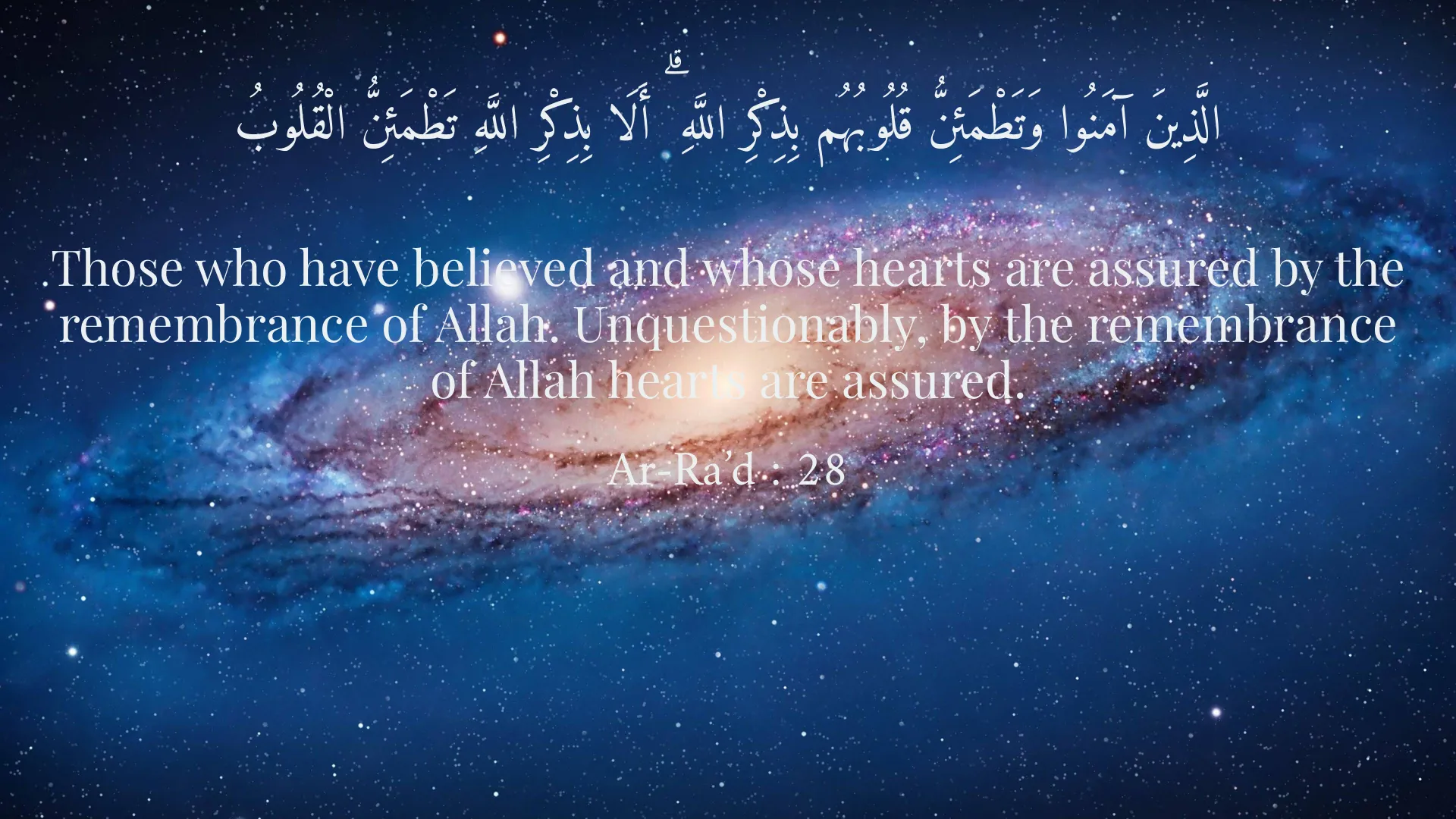
الَّذِينَ آمَنُوا وَتَطْمَئِنُّ قُلُوبُهُم بِذِكْرِ اللَّهِ ۗ أَلَا بِذِكْرِ اللَّهِ تَطْمَئِنُّ الْقُلُوبُ
Those who have believed and whose hearts are assured by the remembrance of Allah. Unquestionably, by the remembrance of Allah hearts are assured.
Ar-Ra’d : 28
يَا أَيُّهَا الَّذِينَ آمَنُوا اسْتَعِينُوا بِالصَّبْرِ وَالصَّلَاةِ ۚ إِنَّ اللَّهَ مَعَ الصَّابِرِينَ
O you who have believed, seek help through patience and prayer. Indeed, Allah is with the patient.
Al-Baqarah : 153
وَمَن يَتَوَكَّلْ عَلَى اللَّهِ فَهُوَ حَسْبُهُ ۚ إِنَّ اللَّهَ بَالِغُ أَمْرِهِ ۚ قَدْ جَعَلَ اللَّهُ لِكُلِّ شَيْءٍ قَدْرًا
And whoever relies upon Allah - then He is sufficient for him. Indeed, Allah will accomplish His purpose. Allah has already set for everything a [decreed] extent.
At-Talaq : 3
Short Story
It is related in Saadi's Gulistan that a just king had a swift servant who, morning and evening, without any complaint, fetched water from the mountain. One day the king asked him, "O servant! What has made you so calm and patient in this arduous task?" The servant replied, "O King! I know that this water is for quenching the thirst of people and animals, and in this work, I seek the pleasure of God. Whenever I see the jug full of water and reflect on God's pleasure, it is as if the mountain beneath my feet becomes as light as cotton, and my heart fills with peace." The king was amazed by this wise saying and realized that true tranquility lies not in physical ease, but in the heart's contentment and connection with the Almighty, even in the most difficult tasks.