Quranic Answer
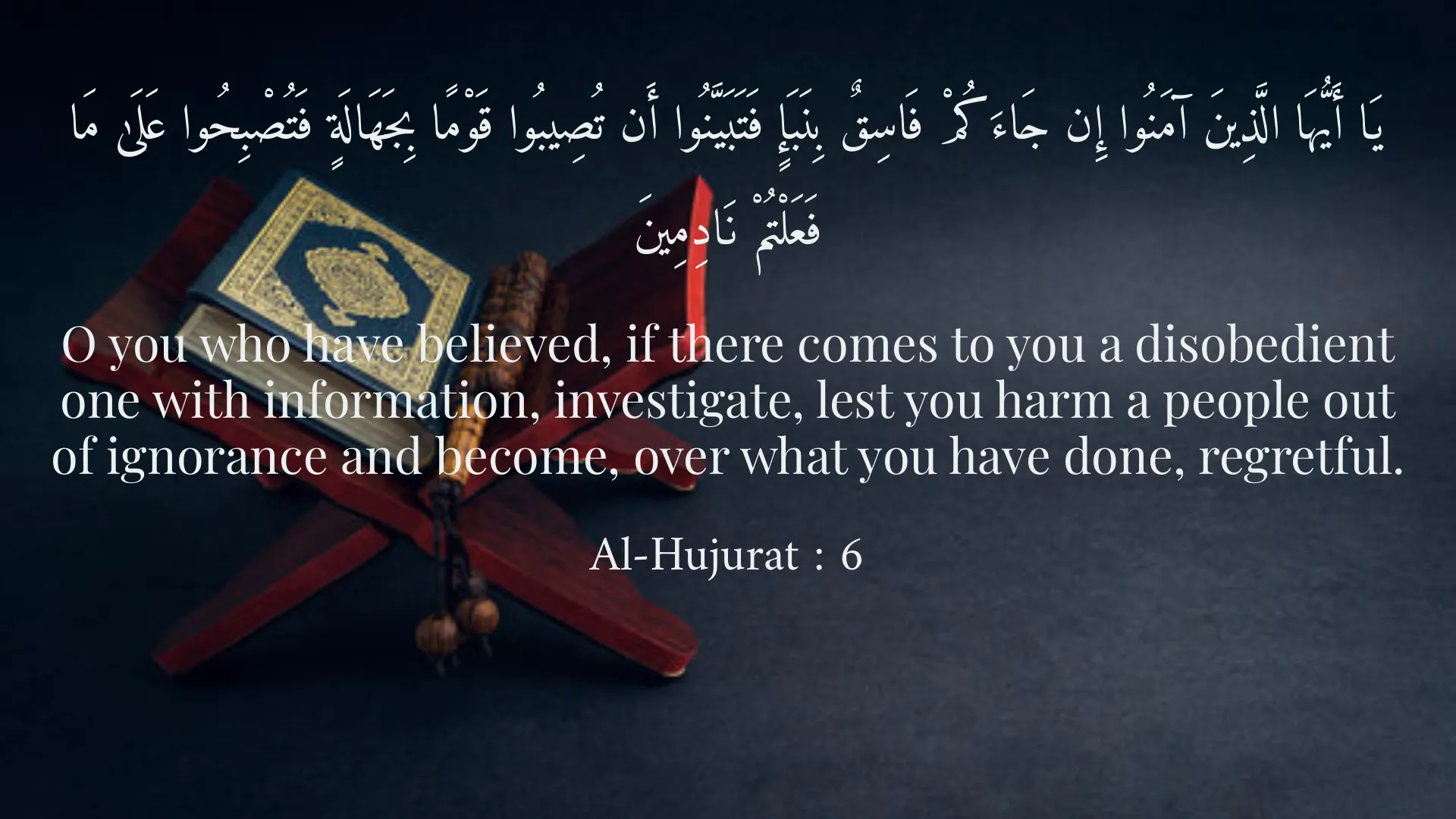
The Holy Quran, as a divine revelation, serves as a comprehensive and timeless guide for humanity. However, it’s important to note that the Quran was revealed over 1400 years ago, during an era when contemporary communication technologies, such as virtual space and online relationships, were not even conceivable. Therefore, a direct and explicit answer to the question of whether the Quran specifically mentions 'virtual space' or 'online relationships' is no. The Quran does not delve into the specifics of these modern technologies, primarily because they did not exist at the time of its revelation. Yet, this does not imply an absence of Quranic guidance for navigating these phenomena. On the contrary, the beauty and comprehensiveness of Quranic teachings lie in their ability to establish moral and behavioral principles that are universal and timeless, applicable to every aspect of human life, including interactions within virtual environments. The Quran provides a set of directives and principles that form the foundation of a healthy, ethical, and spiritual life. These principles are not limited to face-to-face interactions but extend to every form of human communication, including those that take place in virtual settings. For instance, the Quran places significant emphasis on the importance of 'truthfulness' (صدق) and 'verification' (تحری حقیقت). In the virtual space, where the possibility of concealing one’s true identity and disseminating false information is remarkably high, the Quranic principle of truthfulness gains magnified importance. In Surah Al-Hujurat, verse 6, Allah states: “O you who have believed, if there comes to you a disobedient one with information, investigate, lest you harm a people out of ignorance and become, over what you have done, regretful.” This verse serves as a golden rule for online interactions. Before sharing a piece of news, an image, or a rumor, we must verify its authenticity, as the dissemination of false information can severely damage individuals' reputations, dignity, and even lives. This Quranic injunction forms the basis of media literacy in the digital age. Furthermore, the Quran strongly condemns 'backbiting' (غیبت), 'slander' (تهمت), and 'gossiping' (سخنچینی). In Surah Al-Hujurat, verse 12, Allah says: “O you who have believed, avoid much [negative] assumption. Indeed, some assumption is sin. And do not spy or backbite one another. Would one of you like to eat the flesh of his brother when dead? You would detest it. And fear Allah; indeed, Allah is Accepting of repentance and Merciful.” This verse clearly emphasizes the protection of individuals' privacy and the avoidance of spying and backbiting. In the virtual space, where sharing photos, videos, and other personal information is easily done, these Quranic guidelines become even more crucial. 'Spying' in the online context can mean hacking, unauthorized access to personal accounts, or even secretly monitoring others' online activities. 'Backbiting,' just as it is reprehensible in physical gatherings, is even more so in chats, groups, and social networks, as its scope of dissemination is far wider. The Quran also places great emphasis on 'modesty' (حیا) and 'chastity' (عفت) in behavior and speech. Although these commands were initially revealed for physical interactions, their spirit extends to online relationships. The verses in Surah An-Nur (24:30-31), which advise men and women to lower their gaze and guard their chastity, can be interpreted as a prohibition from viewing inappropriate content and engaging in illicit online relationships. Emotional and friendly relationships formed in virtual spaces must adhere to Islamic legal and ethical boundaries. This means avoiding the sending of inappropriate images, provocative conversations, and any behavior that contradicts modesty and chastity. The objective of these directives is to preserve human dignity and prevent moral corruption, which, in the virtual space, due to the lack of physical presence and a sense of hiddenness, can become more prevalent. In conclusion, while the Quran does not explicitly name virtual space or online relationships, it provides a robust ethical framework through principles such as truthfulness, trustworthiness, privacy protection, avoidance of backbiting and slander, upholding modesty and chastity, and responsibility in speech and action. These teachings instruct us on how to use these powerful tools for our benefit and the benefit of society, and how to remain safe from their harms. The virtual space can be a powerful tool for spreading knowledge, goodness, and beneficial connections, but without adhering to these principles, it risks becoming a breeding ground for sin, corruption, and psychological and social harm. Muslims are obliged to represent Quranic and Islamic values in the virtual world, just as they do in real life, ensuring their conduct reflects piety and good ethics.
Related Verses
يَا أَيُّهَا الَّذِينَ آمَنُوا إِن جَاءَكُمْ فَاسِقٌ بِنَبَإٍ فَتَبَيَّنُوا أَن تُصِيبُوا قَوْمًا بِجَهَالَةٍ فَتُصْبِحُوا عَلَىٰ مَا فَعَلْتُمْ نَادِمِينَ
O you who have believed, if there comes to you a disobedient one with information, investigate, lest you harm a people out of ignorance and become, over what you have done, regretful.
Al-Hujurat : 6
يَا أَيُّهَا الَّذِينَ آمَنُوا اجْتَنِبُوا كَثِيرًا مِّنَ الظَّنِّ إِنَّ بَعْضَ الظَّنِّ إِثْمٌ ۖ وَلَا تَجَسَّسُوا وَلَا يَغْتَب بَّعْضُكُم بَعْضًا ۚ أَيُحِبُّ أَحَدُكُمْ أَن يَأْكُلَ لَحْمَ أَخِيهِ مَيْتًا فَكَرِهْتُمُوهُ ۚ وَاتَّقُوا اللَّهَ ۚ إِنَّ اللَّهَ تَوَّابٌ رَّحِيمٌ
O you who have believed, avoid much [negative] assumption. Indeed, some assumption is sin. And do not spy or backbite one another. Would one of you like to eat the flesh of his brother when dead? You would detest it. And fear Allah; indeed, Allah is Accepting of repentance and Merciful.
Al-Hujurat : 12
قُل لِّلْمُؤْمِنِينَ يَغُضُّوا مِنْ أَبْصَارِهِمْ وَيَحْفَظُوا فُرُوجَهُمْ ۚ ذَٰلِكَ أَزْكَىٰ لَهُمْ ۗ إِنَّ اللَّهَ خَبِيرٌ بِمَا يَصْنَعُونَ
Tell the believing men to reduce [some] of their vision and guard their private parts. That is purer for them. Indeed, Allah is Acquainted with what they do.
An-Nur : 30
وَقُل لِّلْمُؤْمِنَاتِ يَغْضُضْنَ مِنْ أَبْصَارِهِنَّ وَيَحْفَظْنَ فُرُوجَهُنَّ وَلَا يُبْدِينَ زِينَتَهُنَّ إِلَّا مَا ظَهَرَ مِنْهَا ۖ وَلْيَضْرِبْنَ بِخُمُرِهِنَّ عَلَىٰ جُيُوبِهِنَّ ۖ وَلَا يُبْدِينَ زِينَتَهُنَّ إِلَّا لِبُعُولَتِهِنَّ أَوْ آبَائِهِنَّ أَوْ آبَاءِ بُعُولَتِهِنَّ أَوْ أَبْنَائِهِنَّ أَوْ أَبْنَاءِ بُعُولَتِهِنَّ أَوْ إِخْوَانِهِنَّ أَوْ بَنِي إِخْوَانِهِنَّ أَوْ بَنِي أَخَوَاتِهِنَّ أَوْ نِسَائِهِنَّ أَوْ مَا مَلَكَتْ أَيْمَانُهُنَّ أَوِ التَّابِعِينَ غَيْرِ أُولِي الْإِرْبَةِ مِنَ الرِّجَالِ أَوِ الطِّفْلِ الَّذِينَ لَمْ يَظْهَرُوا عَلَىٰ عَوْرَاتِ النِّسَاءِ ۖ وَلَا يَضْرِبْنَ بِأَرْجُلِهِنَّ لِيُعْلَمَ مَا يُخْفِينَ مِن زِينَتِهِنَّ ۚ وَتُوبُوا إِلَى اللَّهِ جَمِيعًا أَيُّهَ الْمُؤْمِنُونَ لَعَلَّكُمْ تُفْلِحُونَ
And tell the believing women to reduce [some] of their vision and guard their private parts and not expose their adornment except that which [necessarily] appears thereof and to draw over their headcovers over their bosoms and not expose their adornment except to their husbands, their fathers, their husbands' fathers, their sons, their husbands' sons, their brothers, their brothers' sons, their sisters' sons, their [Muslim] women, what their right hands possess, or those male attendants having no physical desire, or children who are not yet aware of the private aspects of women. And let them not stamp their feet to make known what they conceal of their adornment. And turn to Allah all of you, O believers, that you might succeed.
An-Nur : 31
Short Story
In ancient times, there lived a merchant renowned for his honesty and integrity, whose good reputation had spread far and wide. One day, an acquaintance, secretly harboring envy, spread a false rumor about him in a gathering, believing no one would know the truth. The news, like a leaf carried by the wind, passed from tongue to tongue, reaching the ears of the market folk and causing suspicion towards the merchant. When the merchant learned of this backbiting and slander, he, with wisdom and patience, calmly approached his acquaintance. He gently requested him to reveal the truth in the presence of witnesses and to compare what he had heard with what he knew of the merchant himself. The acquaintance, now certain of the merchant's honesty and purity, and ashamed of his own speculation, confessed the truth and dispelled the misunderstanding. This story teaches us that a word is like an arrow released from a bow, and in the virtual world, this arrow flies with unprecedented speed. So, before spreading any word, we must ensure its truthfulness and accuracy, otherwise we may wound hearts and bring about regret, just as Saadi said: 'As long as you do not speak, the word rides upon you; once spoken, you ride upon it.'