Quranic Answer
Gratitude is a universal human emotion, yet in the Holy Quran, it is emphasized as a fundamental and essential value that people are instructed to practice diligently. The concept of gratitude transcends mere acknowledgment of blessings; it embodies a deep appreciation that influences one's relationship not only with God but also with the world and individuals around them. This essay seeks to explore the multifaceted dimensions of gratitude as highlighted in the Holy Quran, its implications for spiritual growth, and its psychological benefits, ultimately shedding light on why gratitude can be considered a pathway to salvation and an integral part of human life. ### Gratitude in the Quran: A Divine Commandment The Holy Quran, regarded as the literal word of God by Muslims, provides explicit instructions on the importance of gratitude. Surah Ibrahim, verse 7 states: 'And [mention] when your Lord proclaimed, 'If you are grateful, I will surely increase your favor upon you; but if you deny, indeed, My punishment is severe.' This profound verse emphasizes that gratitude is not simply a recommended practice but a commandment from God. Here, the relationship between gratitude and blessings is established: the more we express gratitude for what we have, the more we will receive. This divine promise serves as a motivational force, urging believers to recognize and acknowledge the countless blessings bestowed upon them by God. When individuals practice gratitude, they align themselves with a positive moral and spiritual framework that facilitates a deeper connection with God. Conversely, the warning of severe punishment for denial serves as a cautionary reminder of the spiritual consequences of ingratitude. ### The Countless Blessings of God Further emphasizing the significance of gratitude, Surah An-Nahl, verse 18 states: 'And if you should count the favors of Allah, you could not enumerate them.' This verse signifies the abundance and variety of God's blessings, which are so numerous that attempting to quantify them would be futile. Such recognition challenges the human tendency to overlook or take for granted what has been given. The Quran encourages believers to cultivate an attitude of gratitude, reminding them that even amidst challenges and hardship, blessings continue to flow in various forms. This perspective fosters resilience and hope, empowering individuals to see the light in troubling times. ### Gratitude as a Pathway to Salvation Gratitude stands as a bridge between the human soul and divine mercy. It can be likened to a spiritual currency; the more one is grateful, the richer one's spiritual life becomes. Gratitude not only strengthens one’s connection with God but also serves as an instrument for salvation. When one acknowledges God's blessings sincerely through gratitude, it invites more of His mercy and satisfaction into one's life. This connection between gratitude and salvation is not limited to the spiritual realm; rather, it resonates within the context of everyday life. Grateful individuals often find themselves in a state of contentment, experiencing peace amidst chaos. Their reliance on God’s mercy influences their choices, urging them to live a life that reflects love, compassion, and understanding towards others. ### Psychological Benefits of Practicing Gratitude The teachings of the Quran about gratitude align with findings in modern psychology, which highlight the mental health benefits of practicing gratitude. Studies have shown that expressing gratitude can lead to improved emotional well-being, greater life satisfaction, and lower levels of depression and anxiety. The act of focusing on the positive aspects of one’s life creates a mental shift that encourages hope, happiness, and optimism. Gratitude also fosters healthier relationships. When individuals express appreciation, they strengthen their connections with others, thus creating a cycle of positivity. The importance of community and compassion emphasized in Islam further complements these findings, promoting an environment where gratitude flourishes. ### Gratitude and Tranquility Moreover, gratitude brings psychological peace and happiness. By recognizing the blessings in one's life, individuals can transcend the noise of dissatisfaction and yearning for more. Instead, they find themselves anchored in the present, appreciating moments that often go unnoticed. This ability to pause and express thanks can lead to tranquility and calmness—a state that many seek yet find elusive in today’s fast-paced world. In a world filled with challenges and uncertainties, the practice of gratitude offers stability and security. Believers who regularly engage in gratitude often report a heightened sense of well-being, illustrating the profound impact gratitude has on mental health. This tranquility is not merely a byproduct of acknowledging blessings; rather, it is a deliberate practice that invites God's mercy and encourages individuals to cultivate a positive outlook on life. ### Conclusion In conclusion, the concept of gratitude is underscored throughout the Holy Quran and serves as a vital aspect of a believer’s relationship with God and others. The verses explored illuminate the boundless blessings one receives through gratitude and the importance of acknowledging these favors. As a spiritual imperative, gratitude strengthens the connection with God, leading to mercy, salvation, and a profound sense of peace in life. The multifaceted nature of gratitude encompasses not only a recognition of blessings but also psychological benefits that enhance general well-being and foster healthy relationships. Ultimately, gratitude is much more than a mere acknowledgment; it is a transformative practice that brings individuals closer to divine mercy, guiding them toward a life of tranquility and fulfillment. Thus, embracing gratitude can be seen as embracing a divine commandment that lifts the human spirit and enriches the essence of life.
Related Verses
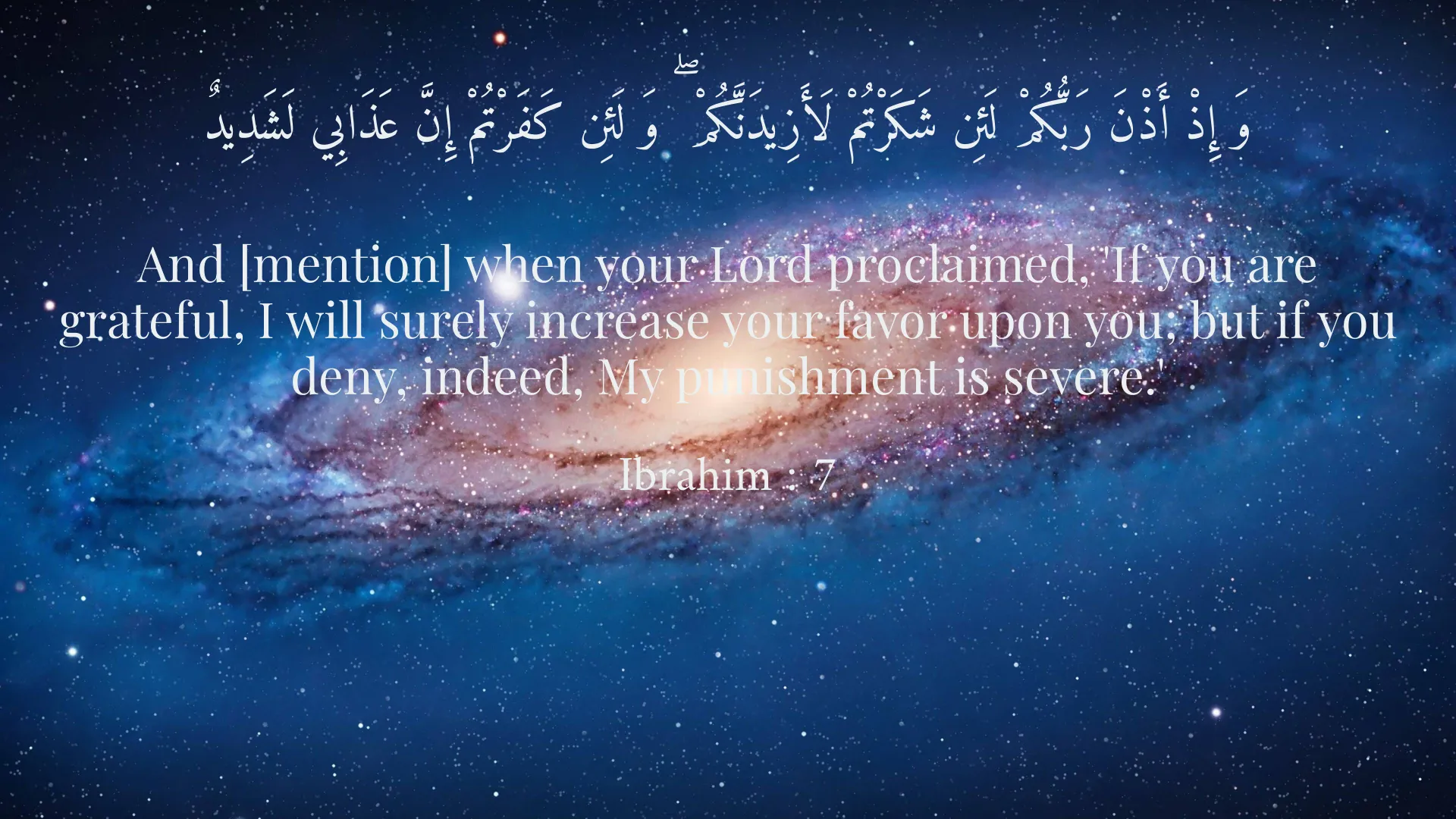
وَ إِذْ أَذْنَ رَبُّكُمْ لَئِن شَكَرْتُمْ لَأَزِيدَنَّكُمْ ۖ وَ لَئِن كَفَرْتُمْ إِنَّ عَذَابِي لَشَدِيدٌ
And [mention] when your Lord proclaimed, 'If you are grateful, I will surely increase your favor upon you; but if you deny, indeed, My punishment is severe.'
Ibrahim : 7
وَ إِن تَعدُّوا نِعْمَةَ اللَّهِ لَا تُحْصُوهَا
And if you should count the favors of Allah, you could not enumerate them.
An-Nahl : 18
Short Story
Once upon a time, there was a man named Zakariya who faced many hardships in his life. He was always hopeless and sad until, with the advice of a friend, he began to practice gratitude and reflect on Allah's blessings each day for a few minutes. Zakariya realized that by appreciating the blessings, he felt better and gained more peace. From that day on, he made gratitude a part of his life and always remembered how it could bring him closer to God.