Quranic Answer
Depression stemming from career setbacks is a painful and increasingly common experience in modern life. In a world where human worth is often measured by material success and professional status, any failure in this domain can deal a deep blow to one's spirit and psyche. However, the Holy Quran, with its comprehensive outlook that transcends worldly appearances, offers profound and foundational solutions to cope with such challenges. These solutions not only provide temporary relief but also lay the groundwork for fundamental inner transformation. Quranic teachings present a different perspective on success and failure, trials and tribulations, and humanity's place in existence, which can serve as a guiding light in the darkness of despair. The foremost and most crucial principle the Quran introduces when facing hardships and setbacks is the principle of 'Sabr' (patience) and 'Tawakkul' (trust in God). Sabr, in the Quranic view, is not merely passive endurance but active steadfastness, perseverance on the path of truth, and self-restraint in the face of adversity. The Holy Quran repeatedly calls upon believers to be patient and promises that Allah is with the patient. A career setback can be an opportunity to practice this great virtue; a chance for introspection, reflection, and self-reconstruction. Alongside patience, 'Salah' (prayer), as the pillar of faith and a direct means of communication with the Creator, serves as a safe haven for broken hearts. Moments of solitude with the Lord in prayer grant peace, strength, and deep insight, allowing one to view problems from a divine perspective and realize that no effort in the path of truth will go unrewarded. On the other hand, 'Tawakkul' means absolute reliance on God and entrusting one's affairs to Him after having exerted effort. A true believer knows that Allah is the ultimate provider and that the management of all affairs is in His hands. This conviction lifts the heavy burden of worry and anxiety, bringing peace, for one understands that if one door closes, divine wisdom will open others. Furthermore, the Quran places great emphasis on 'Dhikr' (remembrance of Allah). The verse, 'Unquestionably, by the remembrance of Allah hearts are assured' (Surah Ar-Ra'd, verse 28), explicitly states that only through the remembrance of God do hearts find tranquility. During periods of depression caused by setbacks, the mind often gets caught in negative and self-blaming thoughts. The remembrance of Allah, whether through reciting the Quran, glorifying God, or contemplating divine verses, diverts the mind from these toxic thoughts and guides it towards hope, gratitude, and connection to the boundless source of power. This continuous reminder of God's greatness and mercy helps individuals break free from limiting thoughts and realize their true place in the cosmic order. Another key Quranic teaching is the perspective on 'Dunya' (worldly life) and 'Akhira' (hereafter). The Quran repeatedly reminds us that worldly life is fleeting and temporary, and the ultimate goal is to attain eternal bliss in the afterlife. This perspective helps individuals not to view worldly failures, including career setbacks, as the end of the road. In fact, a setback in a worldly domain might be an opportunity for spiritual growth and greater attention to the spiritual and moral dimensions of life. The Quran teaches us that excessive attachment to worldly wealth and status can be a source of much sorrow and distress. By reducing this attachment and focusing on more enduring values, we can achieve greater inner peace. This does not mean refraining from striving for worldly success, but rather approaching it with a realistic perspective and without excessive attachment. Moreover, the Holy Quran clearly elucidates the concept of 'trials and tribulations' (Ibtila). Life in this world is full of tests, and setbacks are an integral part of this divine examination. These trials are designed not for punishment but for human growth and elevation. From a Quranic perspective, a career setback can be a test of one's patience, reliance on God, gratitude, and faith. In this process, individuals can discover their hidden capacities, learn valuable lessons, and achieve greater spiritual maturity through a deeper understanding of themselves and their Lord. This outlook, instead of leading to despair, instills motivation for effort and forward movement, because every experience, even the most unpleasant, can be a stepping stone towards perfection. Finally, the Quran, by encouraging 'righteous deeds' (Amal Salih) and serving humanity, offers a practical way out of the isolation of depression. When individuals move beyond self-centeredness and focus on helping others, they not only gain a greater sense of self-worth but also embark on a path of spiritual growth. Helping the needy, participating in charitable acts, and engaging with the community can restore lost morale and strengthen a sense of purpose. These actions not only please Allah but also psychologically contribute to the individual's well-being. The Quran reminds us that Allah's mercy is vast and that indeed, with hardship comes ease. This hope and assurance in divine promises are the strongest motivations to rise again and start a new chapter in life, a chapter where failures transform into invaluable lessons and the path to eternal felicity becomes smoother. With this perspective, depression due to career setbacks transforms from an end into an opportunity for transformation and a closer relationship with Allah.
Related Verses
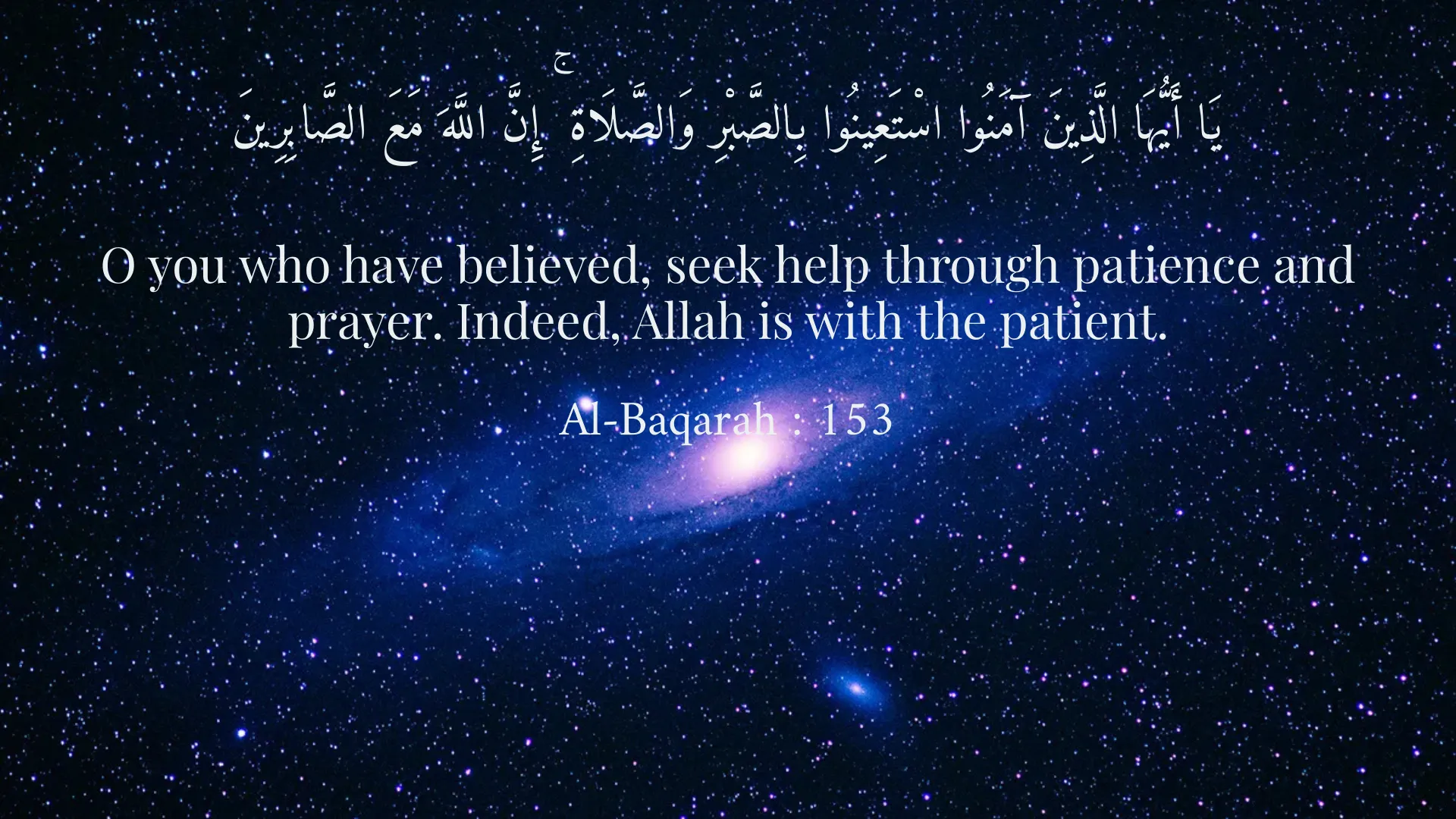
يَا أَيُّهَا الَّذِينَ آمَنُوا اسْتَعِينُوا بِالصَّبْرِ وَالصَّلَاةِ ۚ إِنَّ اللَّهَ مَعَ الصَّابِرِينَ
O you who have believed, seek help through patience and prayer. Indeed, Allah is with the patient.
Al-Baqarah : 153
الَّذِينَ آمَنُوا وَتَطْمَئِنُّ قُلُوبُهُم بِذِكْرِ اللَّهِ ۗ أَلَا بِذِكْرِ اللَّهِ تَطْمَئِنُّ الْقُلُوبُ
Those who have believed and whose hearts are assured by the remembrance of Allah. Unquestionably, by the remembrance of Allah hearts are assured.
Ar-Ra'd : 28
فَإِنَّ مَعَ الْعُسْرِ يُسْرًا
For indeed, with hardship [will be] ease.
Ash-Sharh : 5
إِنَّ مَعَ الْعُسْرِ يُسْرًا
Indeed, with hardship [will be] ease.
Ash-Sharh : 6
وَمَن يَتَوَكَّلْ عَلَى اللَّهِ فَهُوَ حَسْبُهُ ۚ إِنَّ اللَّهَ بَالِغُ أَمْرِهِ ۚ قَدْ جَعَلَ اللَّهُ لِكُلِّ شَيْءٍ قَدْرًا
And whoever relies upon Allah - He is sufficient for him. Indeed, Allah will accomplish His purpose. Allah has already set for everything a [decreed] extent.
At-Talaq : 3
Short Story
Once upon a time, in the city of Shiraz, there lived a wealthy merchant named 'Nik-khu' (Good-natured). Nik-khu's trade flourished, and he amassed countless riches. But one day, a violent storm at sea sank his cargo ships, and he lost everything. Overwhelmed by profound grief, Nik-khu became reclusive out of despair. A wise old friend named 'Hakim' (Sage), learning of his plight, came to visit him and said: "O Nik-khu, I know this calamity has struck you hard, but do you not reflect that in this transient world, nothing lasts forever? Do you recall those days when you suffered from poverty and were grateful to God for merely having enough to sustain yourself?" Nik-khu, with a broken heart, replied: "Yes, but how can I find peace now?" Hakim smiled and said: "As the sweet-tongued Sa'di says: 'In every sorrow, ease appears.' This sorrow, like its predecessors, will pass, and ease will follow. Arise, and instead of grieving over what you have lost, look at what you possess: health, intellect, and another chance to strive. Rely on the Creator of existence, for sustenance is from His treasury, and He never abandons His servant. Whoever trusts in Divine grace will never be helpless." Nik-khu took heed of Hakim's words. He understood that regretting the past was not the solution. So he rose, started anew, and with reliance on God and utilizing his knowledge, he began a new business. With patience and effort, gradually his life improved, and he found a peace deeper than his former wealth; a peace derived from less attachment to the world and greater trust in the Lord. Whenever he faced a problem, he remembered Hakim's words: 'Indeed, with hardship comes ease.'