Quranic Answer
Yes, the Holy Quran explicitly and emphatically proposes numerous ways to achieve mental peace and tranquility of the heart. In fact, one of the primary purposes of the Quran's revelation is to guide humanity towards true well-being and lasting peace, which guarantees happiness not only in this world but also in the Hereafter. This profound peace is attained through a deep connection with the Creator of the universe, understanding one's place within creation, and adhering to divine teachings. The foremost and most central Quranic solution for acquiring mental peace is 'Dhikr Allah' or the remembrance of God. In a famous and comforting verse, the Quran states: 'أَلَا بِذِكْرِ اللَّهِ تَطْمَئِنُّ الْقُلُوبُ' (Surah Ar-Ra'd, verse 28); which translates to: 'Unquestionably, by the remembrance of Allah hearts are assured.' This verse reveals a fundamental truth: the main source of anxiety and turmoil is heedlessness of God and an excessive attachment to material possessions and worldly ties. The remembrance of Allah goes beyond mere repetition of words; it encompasses reflecting on His greatness, acknowledging His presence in every moment of life, reciting His verses, and acting upon His commands. When a person knows that they are constantly under the care and observation of a merciful God, who is the most powerful refuge, their fears and worries dissipate. This remembrance bestows light and assurance upon the heart, as the individual realizes that an infinite power is their supporter and protector, who will never leave them alone and is aware of all their affairs. This belief eradicates the root causes of anxiety such as fear of the future, failure, or loneliness, and instead cultivates a sense of security and continuous connection. The second solution is 'Tawakkul ala Allah,' or reliance upon God. Tawakkul means entrusting one's affairs to God after putting forth one's best efforts and planning. When a person exerts their utmost effort and then commits the outcome to God, they are freed from the heavy burden of future anxieties. The Quran states: 'وَمَن يَتَوَكَّلْ عَلَى اللَّهِ فَهُوَ حَسْبُهُ' (Surah At-Talaq, verse 3); which means: 'And whoever relies upon Allah – then He is sufficient for him.' This verse is a divine guarantee for those who sincerely place their trust in God. Tawakkul grants profound peace to individuals because they know that Allah is the best Disposer of affairs and the most excellent Protector, and He will never abandon them. This belief liberates the mind from the obsessions stemming from the uncontrollability of matters, replacing them with inner submission and contentment. The one who relies on God knows that whatever is decreed for them is ultimately good, even if it appears unpleasant at first. The third important factor is 'Sabr and Salat,' or patience and prayer. The Quran, in Surah Al-Baqarah, verse 153, says: 'يَا أَيُّهَا الَّذِينَ آمَنُوا اسْتَعِينُوا بِالصَّبْرِ وَالصَّلَاةِ ۚ إِنَّ اللَّهَ مَعَ الصَّابِرِينَ'; meaning: 'O you who have believed, seek help through patience and prayer. Indeed, Allah is with the patient.' Patience is not merely enduring hardships; it also means steadfastness on the path of truth and self-restraint from sins. Patience empowers individuals to withstand pressures and prevents restlessness, providing them with a long-term perspective to view current problems in light of life's greater objectives. Prayer, as the pillar of religion, is the pinnacle of a servant's connection with the Creator. Prayer is an opportunity to disconnect from worldly clamor and immerse oneself in the ocean of divine tranquility. During prayer, one sees oneself in the presence of infinite majesty, and by whispering to their Lord, they remove all worries and sorrows from their heart. The repetition of prayers at five prescribed times provides a structured routine for returning to peace and focusing on spirituality, saving individuals from daily heedlessness and confusion. Prayer also reminds a person that they are not alone in facing difficulties and can always seek help from the infinite power of Allah. The fourth pathway is 'Recitation and Reflection upon the Quran.' The Quran itself is a source of healing and mercy. 'وَنُنَزِّلُ مِنَ الْقُرْآنِ مَا هُوَ شِفَاءٌ وَرَحْمَةٌ لِّلْمُؤْمِنِينَ' (Surah Al-Isra, verse 82); meaning: 'And We send down of the Qur'an that which is healing and mercy for the believers.' Recitation with contemplation of the verses allows a person to become intimately familiar with divine words, understand the truths of existence, and illuminate their life's path with divine guidance. This understanding and connection are the wellspring of deep peace, originating from the knowledge of truth. Listening to Quranic verses, even without a profound understanding of their meanings, can also have a calming effect on the soul and mind, clearing the heart of anxieties. The Word of God is light, and the light that shines upon the heart dispels the darkness of despair and hopelessness. The fifth path involves 'Good Deeds and Service to Creation.' When an individual acts kindly towards others, especially those in need, they experience a sense of purpose and inner satisfaction. Helping others, self-sacrifice, and striving for justice not only uplift society but also purify the human soul, freeing it from selfishness and egoistic temptations that generate anxiety. The Quran repeatedly emphasizes performing good deeds and charity, stating that their reward is peace and divine pleasure. Performing good deeds also strengthens faith and the sense of connection with the believing community, which in itself is a factor contributing to peace. The feeling of being useful and contributing to the collective good brings a deep peace that transcends worldly pleasures. The sixth factor is 'Acceptance of Divine Decree (Qada wal-Qadar) and Submission to God's Will.' This does not mean passivity or giving up effort; rather, it means accepting divine wisdom in affairs and freeing oneself from self-blame and blaming others for events beyond human control. When a person knows that everything that happens is part of God's vast and wise plan, they find peace and are liberated from needless sorrow. This perspective saves the mind from negative thoughts, 'what ifs,' and 'if onlys,' empowering them to cope with realities and dedicate their energy to what is within their power. This viewpoint is especially calming when facing calamities and misfortunes. The seventh way is 'Repentance and Seeking Forgiveness.' Sins place a heavy burden on the human soul, causing distress and guilt. The Quran always keeps the door of repentance open for returning to God. Through sincere repentance (Tawbah Nasuh) and seeking forgiveness from Allah, a person feels pure and light, gaining release from the burden of guilt, which is a significant source of mental anxiety. This purity of the soul is inherently calming and strengthens the sense of closeness to God, as the individual knows that their Lord is always Forgiving and Merciful and will not abandon them even after mistakes. In conclusion, the Holy Quran presents mental peace not as an escape from problems, but as an intelligent and faith-based confrontation with them, and through an unbreakable bond with the true source of peace, Almighty God. This peace stems from steadfast faith, righteous deeds, patience, reliance on God, and constant remembrance of Him. It is the fruit of a purposeful and spiritual life, offering a comprehensive and sustainable way of living that rescues individuals from spiritual storms at every stage of life and guides them to the safe shore of assurance and well-being, helping them to find the light of hope and tranquility in their hearts even amidst hardships.
Related Verses
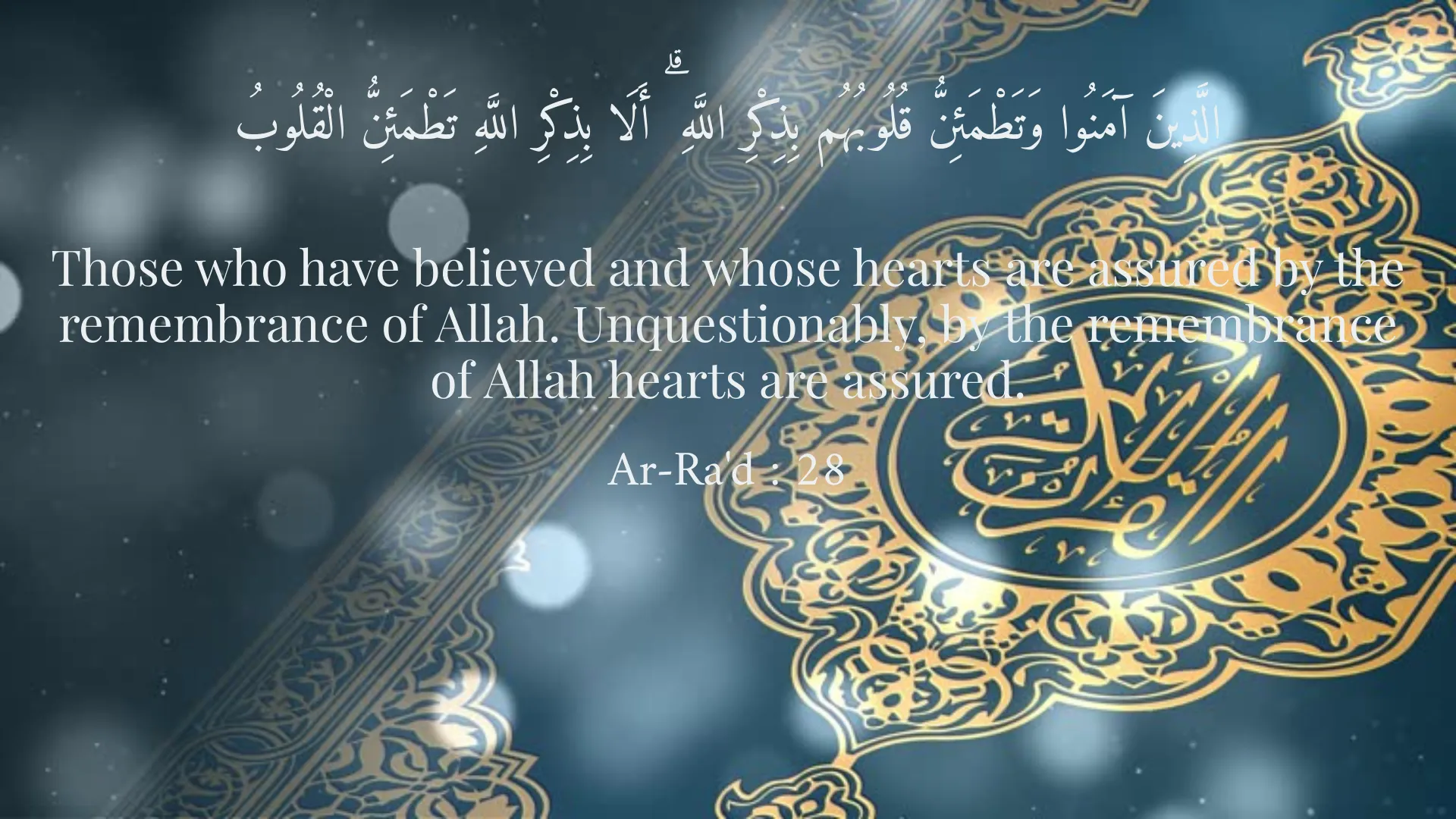
الَّذِينَ آمَنُوا وَتَطْمَئِنُّ قُلُوبُهُم بِذِكْرِ اللَّهِ ۗ أَلَا بِذِكْرِ اللَّهِ تَطْمَئِنُّ الْقُلُوبُ
Those who have believed and whose hearts are assured by the remembrance of Allah. Unquestionably, by the remembrance of Allah hearts are assured.
Ar-Ra'd : 28
وَمَن يَتَوَكَّلْ عَلَى اللَّهِ فَهُوَ حَسْبُهُ ۚ إِنَّ اللَّهَ بَالِغُ أَمْرِهِ ۚ قَدْ جَعَلَ اللَّهُ لِكُلِّ شَيْءٍ قَدْرًا
And whoever relies upon Allah - then He is sufficient for him. Indeed, Allah will accomplish His purpose. Allah has already set for everything a [decreed] extent.
At-Talaq : 3
يَا أَيُّهَا الَّذِينَ آمَنُوا اسْتَعِينُوا بِالصَّبْرِ وَالصَّلَاةِ ۚ إِنَّ اللَّهَ مَعَ الصَّابِرِينَ
O you who have believed, seek help through patience and prayer. Indeed, Allah is with the patient.
Al-Baqarah : 153
وَنُنَزِّلُ مِنَ الْقُرْآنِ مَا هُوَ شِفَاءٌ وَرَحْمَةٌ لِّلْمُؤْمِنِينَ ۙ وَلَا يَزِيدُ الظَّالِمِينَ إِلَّا خَسَارًا
And We send down of the Qur'an that which is healing and mercy for the believers, but it does not increase the wrongdoers except in loss.
Al-Isra : 82
Short Story
They asked a wise man, 'What is peace, and how can one achieve it?' The wise man replied, 'One day, I was ill in Damascus and also poor in worldly possessions. My heart was heavy with sorrow and anxiety about life. Suddenly, I told myself: 'O Saadi, you are deprived of strolling in the markets of Damascus because your feet hurt and you have no shoes.' At that very moment, my eyes fell upon a man who had lost his legs and was crawling on the ground with his hands. Instantly, I offered thanks to God for the blessing of health and the little wealth I possessed, and my heart found ease.' This story reminds us that mental peace often lies in changing our perspective, not in changing external circumstances; through contentment, gratitude, and reliance on the peerless Divine Essence, one can attain inner peace in any condition.