Quranic Answer
The Holy Quran, as a divine guide and a beacon for humanity in all aspects of life, offers profound and comprehensive teachings on how to interact with various types of individuals, including those who might exhibit negative, annoying, or destructive behaviors – what are commonly referred to as "toxic people." While the precise term "toxic person" is not explicitly used in the Quran, its numerous verses provide timeless principles rooted in ethical and spiritual foundations, aiming to preserve the inner peace of the believer, promote goodness, and mitigate harm in society. In essence, the Quran provides holistic and effective strategies for navigating any challenge in human relationships, including those with individuals who are today labeled as "toxic." These guidelines help us navigate a world full of human challenges with wisdom and dignity, protecting ourselves from spiritual and psychological harm, while always keeping the door open for guidance and reform for others. These directives are not only for self-preservation but also for elevating the overall standard of ethics and relationships within the Muslim community. This approach is an active yet peaceful method for managing conflicts and maintaining individual and collective mental well-being. One of the most prominent and central teachings of the Quran in this regard is the emphasis on "patience" (Sabr) and "forbearance" (Mudara). Allah Almighty, in numerous verses, calls upon believers to exercise patience in the face of difficulties, harm, and mistreatment. Patience, in this context, is not merely passive endurance but an active steadfastness on the path of truth, self-restraint against provocations, and refraining from responding to evil with evil. This form of patience is a powerful tool to neutralize negative energies and prevent the escalation of hostilities. In Surah Fussilat (41:34), Allah says: "And not equal are the good deed and the bad. Repel [evil] with that which is better; then verily he, between whom and you there was enmity, will become as though he was a devoted friend." This verse lays down a golden rule for social interactions: responding to toxic behavior with goodness can transform the nature of the relationship and even turn an enemy into a close friend. This approach not only prevents further harm but also opens the door for guidance and reform of the other party, empowering the believer to remain strong and steadfast internally when faced with distress. Patience and endurance do not mean accepting injustice, but rather refraining from emotional and immediate reactions that might worsen the situation, instead providing an opportunity to find the best response in tranquility. In addition to patience and forbearance, the Quran strongly emphasizes "forgiveness" (Afw) and "overlooking" (Safh). Forgiving mistakes and overlooking ignorance are characteristics of true believers. This does not mean condoning injustice but rather demonstrating magnanimity and freeing oneself from the bondage of resentment and malice, which can be the most toxic spiritual states for an individual. The Quran teaches us that the burden of resentment and revenge harms the individual more than anyone else. In Surah Al-A'raf (7:199), Allah instructs the Prophet: "Hold to forgiveness, command what is right, and turn away from the ignorant." This three-part directive is a practical roadmap for dealing with ignorant or ill-mannered people: forgiveness (which is a moral virtue), enjoining good (which can include benevolent advice aimed at reform), and finally, turning away from those whose only intention is dispute and annoyance. Turning away here means distancing oneself from futile quarrels and preserving one's spiritual peace. This self-restraint from useless argument demonstrates wisdom and maturity, allowing a person to dedicate their energy to more beneficial pursuits. Another crucial point is avoiding "vain talk" (laghw) and "idle assemblies." The Quran warns believers against gatherings and conversations where idle talk, mockery, gossip, and slander prevail. These toxic environments not only waste an individual's time and energy but also pollute their soul and mind. In Surah Al-Furqan (25:72), among the qualities of "Ibad-ur-Rahman" (the Servants of the Most Merciful) is that: "And those who do not witness falsehood, and when they pass by idle talk, they pass by with dignity." This means that believers should be vigilant and distance themselves from toxic and destructive environments. This distancing is not out of weakness but out of wisdom and for the preservation of the purity of one's soul and mind. If an individual constantly radiates negativity, gossips, belittles others, or disrupts the peace with their words, the Quran teaches us to gracefully and dignifiedly step away from such environments and not allow their verbal and behavioral toxins to harm us. This "distancing" can include reducing communication or even cutting off ties in very severe cases, always while adhering to ethical principles and without committing injustice. Protecting one's mental and spiritual health is a religious duty, and this distancing is a means to achieve it. The Quran also emphasizes "kind speech" (Qawl Layyin) and "better argumentation" (Jidal Ahsan). Even when encountering opponents, it advises gentleness and the use of sound logic and reasoning, not aggression or insults. This principle is not only applicable to inviting others to the truth but is also recommended in general interactions. The goal is that even if a toxic person cannot be changed, one can at least prevent the situation from worsening through kind speech and keep the door open for positive influence in the future. Gentleness in speech, even with those who mistreat us, closes the door to escalating hostility and can provide an opportunity for reconsideration and reform. This itself is a form of patience and wisdom in action. Finally, reliance on Allah and trust in Him (Tawakkul) is the most fundamental solution when facing any challenge, including difficult human relationships. When one encounters an individual who seems intent only on causing harm and despair, remembering Allah and supplicating to Him can bring immense peace. The Quran assures believers that Allah is the best helper and protector, and whenever a person acts with good intention and trust in Him, Allah's help will encompass them. This reliance gives a person immense strength to be freed from the heavy burden of psychological pressures resulting from interacting with toxic people and to experience true tranquility.
Related Verses
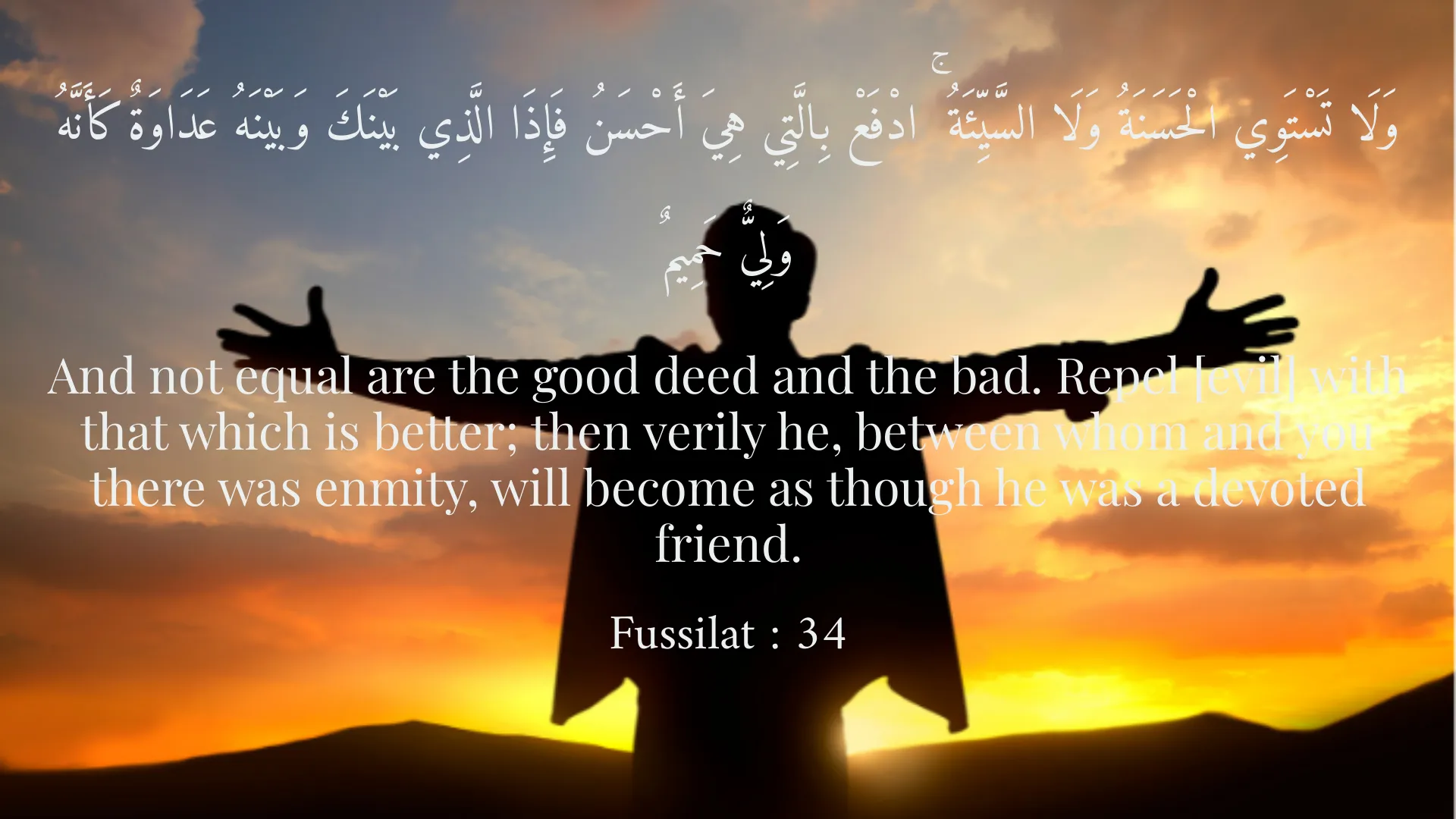
وَلَا تَسْتَوِي الْحَسَنَةُ وَلَا السَّيِّئَةُ ۚ ادْفَعْ بِالَّتِي هِيَ أَحْسَنُ فَإِذَا الَّذِي بَيْنَكَ وَبَيْنَهُ عَدَاوَةٌ كَأَنَّهُ وَلِيٌّ حَمِيمٌ
And not equal are the good deed and the bad. Repel [evil] with that which is better; then verily he, between whom and you there was enmity, will become as though he was a devoted friend.
Fussilat : 34
خُذِ الْعَفْوَ وَأْمُرْ بِالْعُرْفِ وَأَعْرِضْ عَنِ الْجَاهِلِينَ
Hold to forgiveness, command what is right, and turn away from the ignorant.
Al-A'raf : 199
وَالَّذِينَ لَا يَشْهَدُونَ الزُّورَ وَإِذَا مَرُّوا بِاللَّغْوِ مَرُّوا كِرَامًا
And those who do not witness falsehood, and when they pass by idle talk, they pass by with dignity.
Al-Furqan : 72
Short Story
In one of Sa'di's tales from Gulistan, which beautifully illustrates the lesson of interacting with difficult people, there is a story about a man who was verbally abusing a kind-hearted Sufi. The man uttered all sorts of insults, but the Sufi listened with a pleasant demeanor and remained silent. When the man finished his tirade, he asked in astonishment, "Why do you not respond? Do you not hear all these ugly words?" The Sufi calmly replied, "O man, I have a garden of goodness in my heart, and I do not wish to fill it with your thorns and thistles. Everyone gives what they have within them; I only offer you what is in my heart, which is peace and silence." This story teaches us that in the face of venomous words, the best response is sometimes silence and dignity, and we should not allow others' ill-will to disturb our peace and good nature.