Quranic Answer
Heartbreak is an experience that almost everyone encounters at some point in their lives. It can stem from various sources such as the end of a romantic relationship, the loss of a loved one, or even disappointment in one's own aspirations. As tumultuous as it may seem, healing from heartbreak is not only possible but also deeply enriching, especially when guided by spiritual principles. The Holy Quran, as the sacred text of Muslims, offers profound insights into the experience of heartbreak and the pathways to healing. This article will delve into the Quranic perspective on heartbreak, exploring essential strategies outlined within its verses and how they serve as a source of comfort, strength, and solace for believers. At the core of the Quranic discourse on heartbreak is the profound concept of patience, or 'sabr', and reliance upon Allah. These themes are prevalent throughout various chapters and verses of the Quran, where readers can find encouragement to face adversities with a steadfast heart. Surah Al-Imran, verse 139 poignantly captures this sentiment by stating: 'And do not weaken or grieve, for you are the most high if you are indeed believers.' This verse serves as a powerful reminder that believers are called to maintain their faith despite the trials they encounter. In moments of deep sorrow, this passage encourages individuals to draw strength from their beliefs, fostering an attitude of resilience. Furthermore, Surah Al-Baqarah, verse 286 contains another crucial message pertaining to heartbreak: 'Allah does not burden a soul beyond that it can bear.' This verse emphasizes a pivotal truth — that the trials presented to individuals are tailored to their unique capabilities. Consequently, in situations of heartbreak, it is essential to understand that the pain one experiences is not arbitrary but rather a part of divine wisdom and growth. This verse encourages believers to cultivate faith by recognizing that their emotional burdens are designed for their strengths and guided by God's infinite wisdom. Patience and reliance on God do not imply a passive approach to dealing with heartbreak. On the contrary, they furnish believers with active tools to navigate the complexities of their emotions. Prayer, or 'salah', and supplication, or 'du'a', are invaluable practices encouraged within the Quran. Surah Al-Mu'minun, verse 45 states: 'Indeed, in the remembrance of Allah do hearts find peace.' This verse invites believers to engage in regular prayer and remembrance of God, assuring them that these practices grant tranquility in turbulent times. Engaging in prayer during periods of heartbreak allows individuals to communicate their innermost feelings, doubts, and sorrows to God. This connection creates a nurturing dialogue, fostering an environment where healing can commence. Acknowledging one's struggles in prayer provides an essential space for catharsis, permitting the heart to rest and refocus on divine guidance. In this way, prayer becomes a form of therapy, facilitating emotional healing through a reaffirmation of faith and comfort. Additionally, turning to the Quran during moments of heartbreak can provide wisdom and guidance. The Quran is replete with stories of individuals who faced significant hardships, yet emerged renewed in faith and spirit. For instance, the story of Prophet Job (Ayub) exemplifies unwavering patience despite immense suffering. His enduring faith during illness and loss serves as an inspiring testament that healing requires perseverance and trust in God's plan. Even in the depths of despair, the accounts within the Quran remind believers that divine mercy is always accessible. The Quran further underscores that each hardship is accompanied by ease. Surah Al-Inshirah, specifically verses 5 and 6, pronounces: 'For indeed, with hardship [will be] ease. Indeed, with hardship [will be] ease.' These verses serve as powerful harbingers of hope, asserting that no matter how overwhelming the heartbreak may feel, relief is assured. This promise encourages individuals to shift their perspective, inspiring them to look forward to the light that follows darkness. In times of heartbreak, believers also benefit from community support. The Quran emphasizes the importance of companionship and unity among individuals. Sharing one's grief within a supportive community fortifies emotional resilience and provides a network of understanding, compassion, and companionship. Engaging in communal prayers and gatherings fosters a shared sense of healing where an individual can feel a greater connection and solidarity with others facing similar pain. Moreover, one must remember that self-compassion plays a crucial role in healing. Allowing oneself to grieve, process emotions, and seek help are integral parts of recovery. The Quran encourages believers to engage in self-reflection and mercy, both towards oneself and others. By fostering an attitude of love and understanding towards oneself, individuals grant themselves the grace to heal at their own pace. Ultimately, the Quran’s teachings provide a comprehensive and nurturing approach to overcoming heartbreak. Believers are encouraged to cultivate patience and maintain unwavering faith, reminding them of God’s presence in every chapter of their lives. Through prayer, remembrance, reflection, and community engagement, individuals are equipped to navigate the complexities of heartbreak with resilience and grace. In conclusion, the Holy Quran serves as a profound guide for those navigating the tumultuous waters of heartbreak. By embracing the principles of patience, reliance on God, and communal support, believers can find healing and peace even amidst the most challenging trials. The verses of the Quran resonate deeply within the human experience, illuminating pathways towards emotional recovery and spiritual growth. In difficult times, individuals are reminded that they are never alone; they can always reach for the divine connection that promises hope, healing, and ease after hardship.
Related Verses
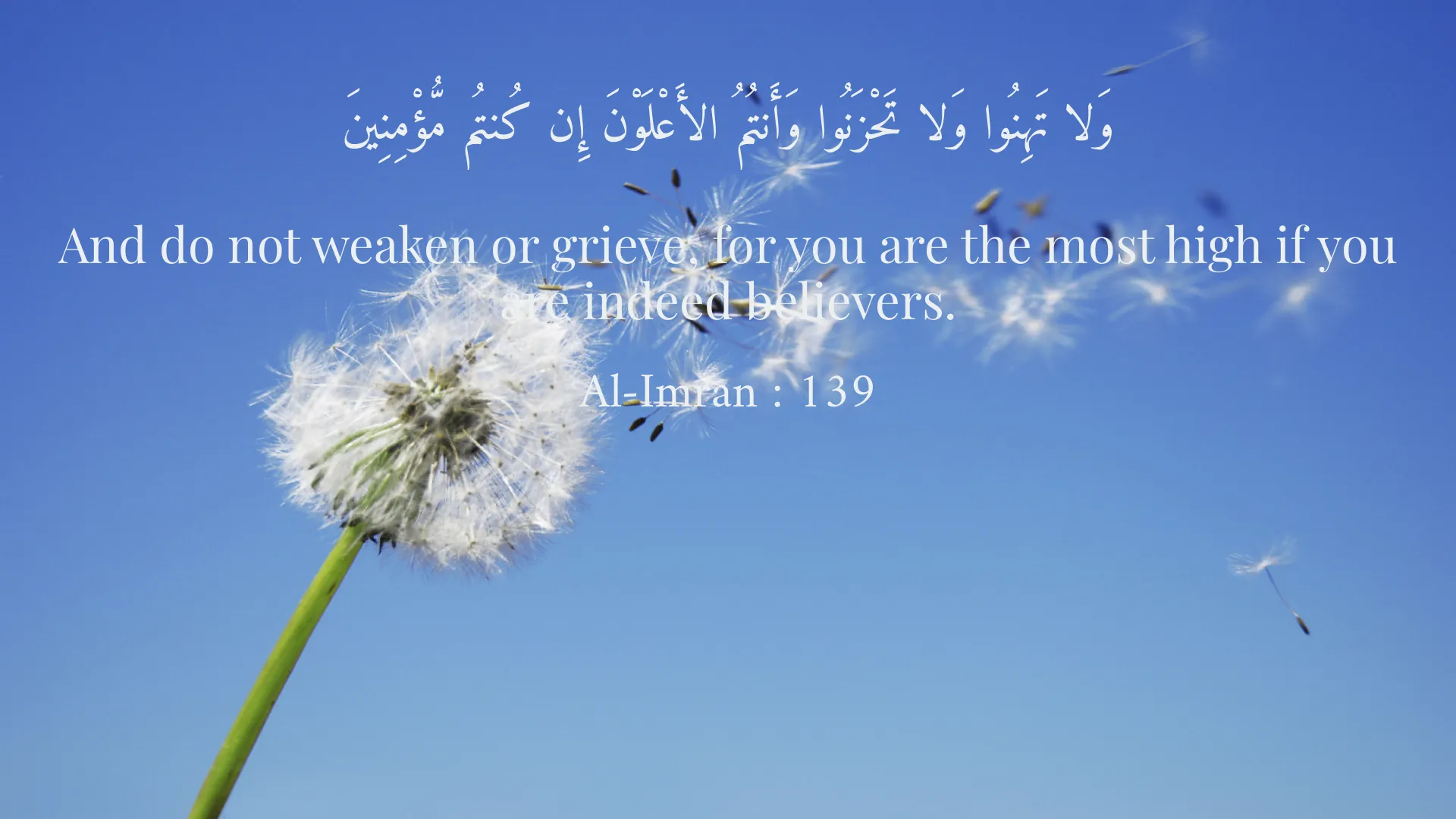
وَلا تَهِنُوا وَلا تَحْزَنُوا وَأَنتُمُ الأَعْلَوْنَ إِن كُنتُم مُّؤْمِنِينَ
And do not weaken or grieve, for you are the most high if you are indeed believers.
Al-Imran : 139
لَا يُكَلِّفُ اللَّهُ نَفْسًا إِلَّا وُسْعَهَا
Allah does not burden a soul beyond that it can bear.
Al-Baqarah : 286
وَاذْكُرُوا إِذَا أَشْعَلَتُمُ النارَ فِي صُلْبِكُمْ
And remember, after invoking God's name, hearts find tranquility.
Al-Mu'minun : 45
Short Story
One day, a man named Hassan experienced deep heartbreak. He turned to the Quran in his solitude. After reading verses about patience and hope, he felt tranquility settle in his heart. Hassan realized that God was always by his side and that this problem was temporary. Thus, he continued with his life and enjoyed the beautiful moments.