Quranic Answer
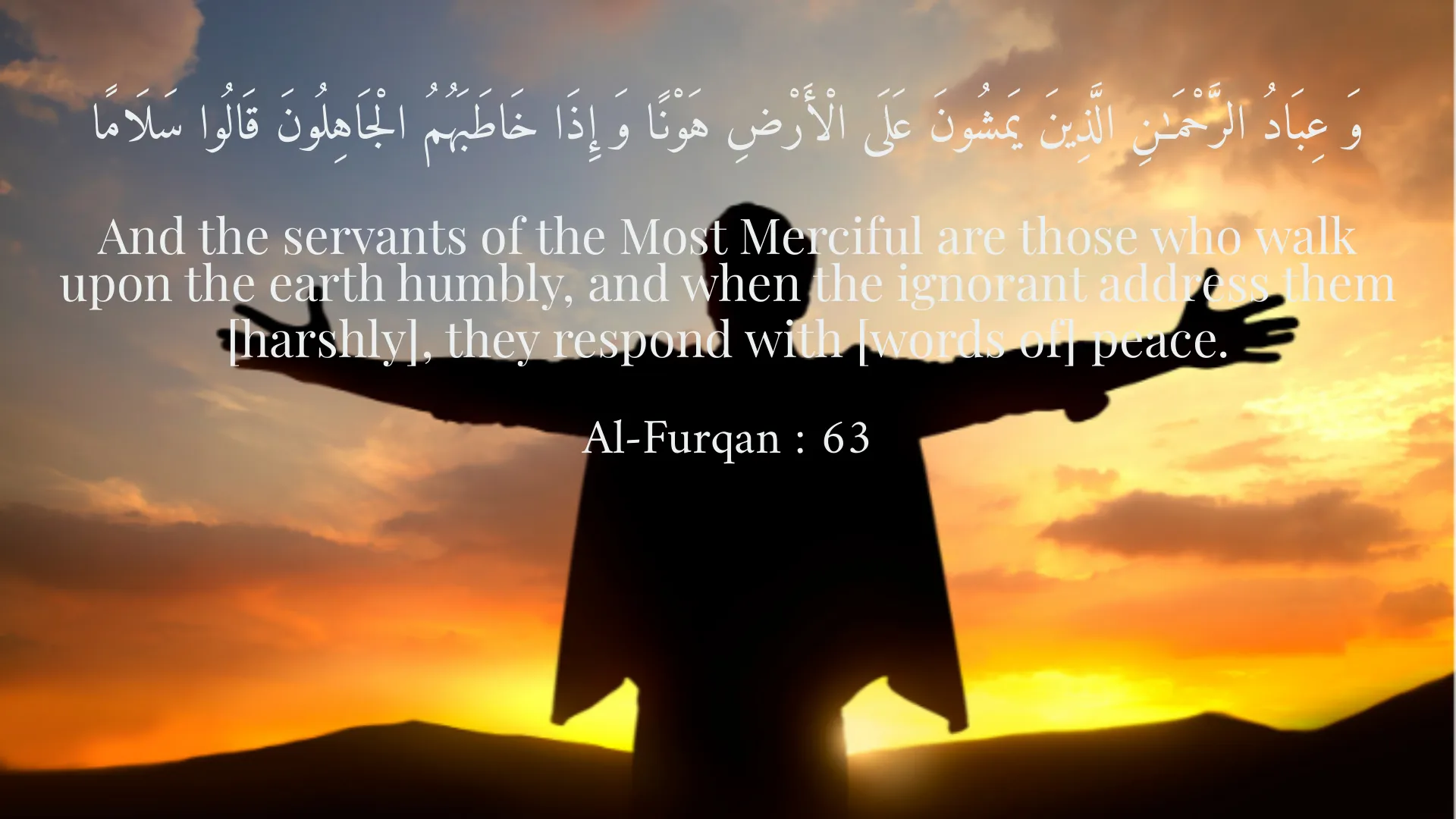
The Holy Quran: A Blueprint for Manners and Respect in Society The Holy Quran, regarded as the sacred book of Islam, serves as a comprehensive and divine guide that outlines the principles and rules of life for humankind. Among these principles, the significance of manners and respect occupies a prominent place. Pivotal verses throughout the Quran stress the importance of treating others with dignity and courtesy, establishing a strong foundation for a harmonious society. One of the key verses illustrating the concept of manners is verse 63 of Surah Al-Furqan, which states: "And the servants of the Most Merciful are those who walk upon the earth humbly, and when the ignorant address them [harshly], they respond with [words of] peace." This verse provides profound insight into the notion of humility and the appropriate response to provocation. In an ever-evolving world, where individuality and pride are often valued above humility, this verse is a reminder of the virtues of modesty and peace. The depiction of the servants of the Most Merciful emphasizes that true believers embody certain characteristics. The Quran guides us to adopt a demeanor of humility, encouraging us to be grounded and approachable despite whatever accolades or achievements we may possess. This ideal presents a stark contrast to ostentation or arrogance, representing behaviors that are increasingly prevalent in the modern world. The verse illustrates that when faced with ignorance or harshness, a wise and conscientious individual chooses a peaceful response over an emotional reaction. This choice fosters an environment that promotes understanding, patience, and kindness. Furthermore, Surah Al-Furqan not only calls believers to practice politeness and humility but also underlines the importance of how to react to hostility. The directive to respond with peace serves as a powerful reminder that control over one’s own reactions is a form of strength. When incited by the provocations of others, many may be tempted to lash out or retaliate. However, the Quran teaches that a calm and dignified response is both a sign of emotional maturity and a way to influence positive change in one’s surroundings. In exploring further the principles of respect and dignity, verse 17 of Surah An-Nur states: "And if you had not spoken, the believers and the believing women would have thought well of themselves." This verse addresses the concept of gossip and disparaging remarks that can lead to misunderstandings or unfounded judgments about others. It affirms that one should maintain a positive perception of others and refrain from jumping to conclusions based solely on hearsay. This principle affirms the value of maintaining respect for others' dignity and honor. In our interactions, especially in an age dominated by social media and instant communication, it is easy to share opinions or judgments without full knowledge of the situation. The Quran reminds believers that such behavior can harm reputations and sow discord among communities. Therefore, it advocates for a mindset that favors charitable assumptions over unfounded criticisms. In doing so, the Quran encourages us to foster a culture built on positivity, respect, and understanding. The relationship between these two verses illustrates an essential aspect of Islamic teachings: the emphasis on moral character. As key components of social etiquette, manners and respect are not mere suggestions but foundational tenets that are necessary for the cohesion and stability of society. By adopting humility, responding with peace, and ensuring our thoughts about others are fair and respectful, we contribute to the establishment of a society that values kindness, compassion, and understanding. Moreover, the teachings of the Quran concerning manners are applicable in numerous facets of daily life, shaping personal conduct, interpersonal relationships, and societal encounters. The principles extend to family dynamics, community interactions, and even interactions in the workplace. By embodying respectful and polite behavior, individuals can build stronger relationships, enhance communication, and foster an inclusive atmosphere. The significance of manners is not limited to mere social interactions; it also extends to how we perceive our responsibilities toward one another. The Quran promotes a communal spirit that fosters a sense of belonging and interconnectedness among believers. When we practice respect and politeness, we build a foundation for mutual support and cooperation, which is integral to achieving our collective goals as a society. In conclusion, the teachings of the Holy Quran regarding manners and respect provide invaluable guidance for cultivating a kind and respectful society. By embracing humility, responding to provocation with peace, and maintaining charitable assumptions about others, individuals can contribute positively to their communities while nurturing their spiritual development. The counsel from these verses encourages all believers to observe manners and respect in their interactions, thereby enhancing social relationships and ultimately laying the groundwork for a prosperous life for everyone. As we reflect on these teachings, let us strive to uphold the principles laid out in the Quran, recognizing that in doing so, we not only fulfill a religious obligation but also enrich our lives and the lives of those around us.
Related Verses
وَ عِبَادُ الرَّحْمَـٰنِ الَّذِينَ يَمشُونَ عَلَى الْأَرْضِ هَوْنًا وَ إِذَا خَاطَبَهُمُ الْجَاهِلُونَ قَالُوا سَلَامًا
And the servants of the Most Merciful are those who walk upon the earth humbly, and when the ignorant address them [harshly], they respond with [words of] peace.
Al-Furqan : 63
وَ لَوْلَا إِذْ سَمِعْتُمُوهُ ظَنَّ الْمُؤْمِنُونَ وَ الْمُؤْمِنَـٰتُ بِأَنفُسِهِمْ خَيْرًا
And if you had not spoken, the believers and the believing women would have thought well of themselves.
An-Nur : 17
Short Story
Once upon a time, an elderly man lived in a village. He always treated others with manners and respect, drawing inspiration from the wisdom of the Quran. One day, a rude young man encountered him and mocked him; however, the old man responded with a smile and kind words. The young man was taken aback by this behavior and fell into deep thought. He decided from that day forward to treat others with politeness and respect, and in this way, his relationships with others improved.