Quranic Answer
The Holy Quran serves as a divine guide, presenting profound insights into moral upbringing and the cultivation of noble qualities that define an individual's character and conduct. From its verses, it is evident that the Quran places great emphasis on the importance of good deeds, honesty, fairness, and love for one another. This article aims to explore the different aspects of moral education as depicted in the Quran, illustrating its vital role in shaping the behavior and ethics of individuals within society. At its essence, the Quran is not just a religious text but a comprehensive manual for life, providing guidance on how to navigate the complexities of human interaction through ethical principles. The emphasis on moral upbringing is apparent from the very beginning of the Quran, suggesting that one's personal growth is deeply intertwined with societal welfare. The Quran encourages individuals to embody lofty moral values, thereby benefiting not just themselves but the community at large. In Surah Al-Baqarah, verse 177, the Quran states, 'Righteousness is not that you turn your faces toward the east or the west, but [true] righteousness is in one who believes in Allah, the Last Day, the Angels, the Book, and the Prophets and gives his wealth, in spite of love for it, to relatives, orphans, the needy, the traveler, those who ask [for help], and for freeing slaves; and establishes prayer and gives zakah; and those who fulfill their promise when they promise; and [those who are] patient in poverty and hardship and during battle. Those are the ones who have been true, and it is those who are the righteous.' This verse encapsulates the essence of true faith, intertwining worship and moral conduct with charitable actions. Giving charity to the needy is portrayed not merely as an act of kindness but as a reflection of one’s faith in God and a critical aspect of righteousness. This notion of charity and helping others extends beyond mere obligation; it calls for a heartfelt commitment to social responsibility. The Quran recognizes that moral upbringing does not occur in isolation but rather in the context of community engagement. By urging believers to assist those in need, the text fosters a sense of empathy and responsibility. This community-oriented approach ensures that the practice of morality transcends personal reflection, resulting in collective betterment. Furthermore, Surah Al-Imran, verse 159, provides further guidance on moral character, instructing the Prophet Muhammad (peace be upon him) to embody kindness and compassion. The verse reads: 'And it is by the mercy of Allah that you were lenient with them. And if you had been rude in speech and harsh in heart, they would have disbanded from about you.' This instruction is profound as it exemplifies the idea that effective leadership and moral authority are deeply rooted in gentle and kind interactions. The emphasis on kindness is not just a personal virtue; it plays a significant role in group cohesion and collective morale. In this way, the Quran calls upon its followers to adopt a nurturing approach to interpersonal relationships, suggesting that good character is fundamental in strengthening community bonds. The Messenger of Allah (peace be upon him) himself further emphasized the importance of moral education and human virtues through his teachings and actions. His life exemplified the harmony between faith and ethical conduct, serving as a model for all Muslims to follow. The Prophet’s interactions with others were marked by integrity, humility, and compassion, reflecting the essence of moral upbringing advocated in the Quran. In Surah Saba, verse 28, believers are reminded to promote virtue through their actions and behavior: 'And We have not sent you, [O Muhammad], except as a bringer of good tidings and a warner to all mankind, but most of the people do not know.' The directive not only acknowledges the role of the Prophet in disseminating divine messages but also emphasizes the responsibility of every believer to actively engage in promoting virtuous behavior. This verse reinforces the notion that individuals are not just passive recipients of moral guidance but also active participants in its dissemination within their communities. The Quran’s teachings extend to essential virtues such as patience and gratitude, fundamental aspects of moral upbringing. In countless verses, Muslims are exhorted to practice patience during times of hardship and to express gratitude in times of ease. These qualities not only enhance personal character but also foster resilience and adaptability in the face of life's challenges. The importance of these virtues cannot be overstated, as they contribute to an individual’s moral fiber and overall well-being. Ultimately, moral education as ordained by the Quran is considered both essential and obligatory for Muslims. It is a comprehensive approach that integrates worship, ethical living, and social responsibility. The Quran serves as a beacon of guidance, illuminating the path toward a virtuous life characterized by integrity, altruism, and compassion. As Muslims strive to embody these qualities, they not only cultivate a strong moral foundation within themselves but also contribute to the betterment of society as a whole. In conclusion, the Quran’s teachings on moral upbringing encapsulate the essence of what it means to lead a righteous life. By intertwining worship with good deeds, encouraging kindness and compassion, and promoting virtues such as patience and gratitude, the Quran serves as an invaluable resource for moral education. Embracing these teachings allows individuals to align their personal conduct with the ideals of justice and compassion, ultimately leading to a more cohesive and thriving community.
Related Verses
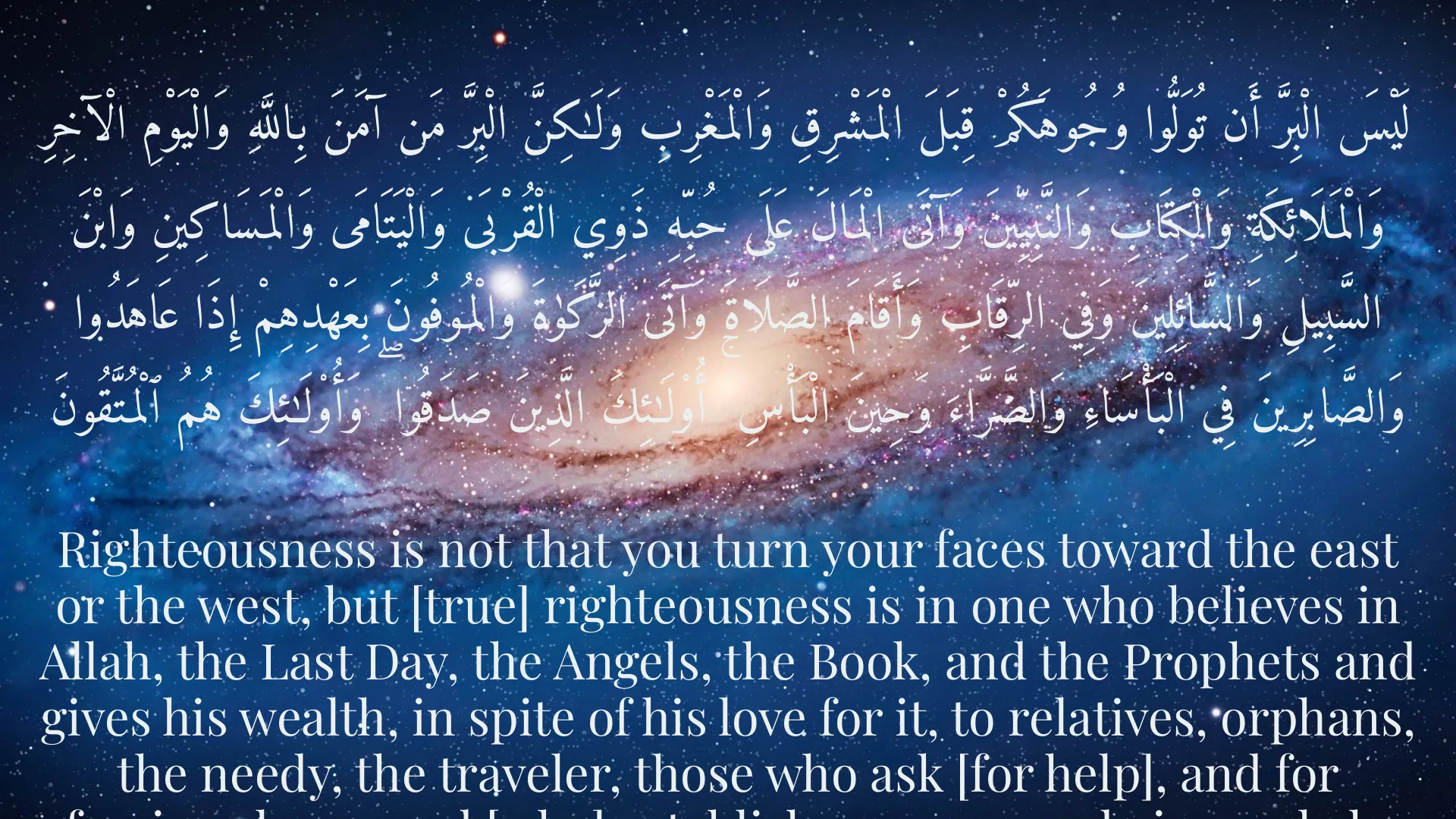
لَيْسَ الْبِرَّ أَن تُوَلُّوا وُجُوهَكُمْ قِبَلَ الْمَشْرِقِ وَالْمَغْرِبِ وَلَـٰكِنَّ الْبِرَّ مَن آمَنَ بِاللَّهِ وَالْيَوْمِ الْآخِرِ وَالْمَلَائِكَةِ وَالْكِتَابِ وَالنَّبِيِّينَ وَآتَى الْمَالَ عَلَى حُبِّهِ ذَوِي الْقُرْبَى وَالْيَتَامَى وَالْمَسَاكِينِ وَابْنَ السَّبِيلِ وَالسَّائِلِينَ وَفِي الرِّقَابِ وَأَقَامَ الصَّلَاةَ وَآتَى الزَّكَوٰةَ وَالْمُوفُونَ بِعَهْدِهِمْ إِذَا عَاهَدُوا وَالصَّابِرِينَ فِي الْبَأْسَاءِ وَالضَّرَّاءَ وَحِينَ الْبَأْسِ ۚ أُو۟لَـٰئِكَ الَّذِينَ صَدَقُوا ۖ وَأُو۟لَـٰئِكَ هُمُ ٱلْمُتَّقُونَ
Righteousness is not that you turn your faces toward the east or the west, but [true] righteousness is in one who believes in Allah, the Last Day, the Angels, the Book, and the Prophets and gives his wealth, in spite of his love for it, to relatives, orphans, the needy, the traveler, those who ask [for help], and for freeing slaves; and [who] establishes prayer and gives zakah; [those who fulfill their promise when they promise] and when they are patient in hardship and during battle. Those are the ones who have been true, and it is those who are the righteous.
Al-Baqarah : 177
فَبِمَا رَحْمَةٍ مِّنَ ٱللَّهِ لِنْتَ لَهُمْ ۖ وَلَو كُنتَ فَظًّا غَلِيظَ ٱلْقَلْبِ لَانفَضُّوا مِن حَوْلِكَ ۖ فَاعْفُ عَنْهُمْ وَٱسْتَغْفِرْ لَهُمْ وَشَاوِرْهُمْ فِي ٱلْأَمْرِ ۚ فَإِذَا عَزَمْتَ فَتَوَكَّلْ عَلَى ٱللَّهِ ۚ إِنَّ ٱللَّهَ يُحِبُّ ٱلْمُتَّكِلِينَ
So by mercy from Allah, [O Muhammad], you were lenient with them. And if you had been rude in speech and harsh in heart, they would have disbanded from about you. So pardon them and ask forgiveness for them and consult them in [certain] matters. And when you have decided, then rely upon Allah. Indeed, Allah loves those who rely [upon Him].
Al-Imran : 159
وَمَا أَرْسَلْنَاكَ إِلَّا كَافَّةً لِّلنَّاسِ بَشِيرًا وَنَذِيرًا وَلَـٰكِنَّ أَكْثَرَ النَّاسِ لَا يَعْلَمُونَ
And We have not sent you, [O Muhammad], except comprehensively to mankind as a bringer of good tidings and a warner, but most of the people do not know.
Saba : 28
Short Story
One day, Ali was sitting in the mosque yard, gazing at the fruit trees. He remembered Quranic verses that encourage honesty and kindness. He decided to be gentler and more sincere in his interactions with others. Just then, a person approached him asking for help. Ali recalled the Prophet's words: 'The best among you are those who are best to their families.' With an open heart, Ali helped the man, realizing that good morals are not just a belief but an action that should be embedded in everyday life.