Quranic Answer
The Holy Quran, which serves as the cornerstone of Islamic faith and guidance, emphasizes self-discipline and the purification of the soul as fundamental aspects of human life. Its verses provide not only spiritual nourishment but also practical instructions on how to cultivate inner strength, self-control, and a closer relationship with Allah. In considering the significance of self-discipline, particular verses of the Quran stand out, shedding light on how believers can attain a higher state of faith and personal integrity. One of the most significant verses in this regard is found in Surah Al-Shura, verse 51, which states: "And it is not [possible] for a human being that Allah should speak to him except by revelation or from behind a partition or that He sends a messenger to reveal by His permission what He wills. Indeed, He is Exalted in Might and Wise." This verse underscores the communicative bond between the Divine and humanity, revealing that Allah's guidance comes through chosen prophets. The significance of this divine relationship lies in its insistence on the importance of faith and reliance on Allah for direction, thus advocating for a disciplined approach toward spiritual communication and understanding. Furthermore, in Surah Al-Anfal, verse 24, the importance of faith is highlighted where it articulates: "Indeed, the believers are those who, when Allah is mentioned, their hearts tremble, and when His verses are recited to them, it increases them in faith, and upon their Lord they rely." This verse articulates the emotional and spiritual responses that genuine belief elicits. When believers remember Allah, their hearts react profoundly, illustrating that true faith instills a sense of responsibility toward the Creator. This cultivates a disciplined mindset, as believers strive to live in accordance with these divine reminders. The trembling of the heart symbolizes an acknowledgment of one's own vulnerabilities and the necessity of seeking purification and discipline through faith. Additionally, the Quran addresses the challenges that are inherent in the human experience. In Surah Al-Baqarah, verse 247, Allah states: "And We will surely test you with something of fear and hunger and a loss of wealth and lives and fruits, but give good tidings to the patient." Here, the Quran openly communicates that trials and tribulations are part of life. However, the verses promise good tidings to those who embody patience—a trait that is deeply linked to self-discipline. This signifies that self-control and the discipline of the soul are vital tools that equip believers to navigate adversities while remaining steadfast in their faith. The Quran doesn't only highlight the importance of self-discipline; it also illustrates the transformative power of patience and perseverance. The term "sabr" (patience) calls not for a passive submission to hardships, but rather an active cultivation of internal strength and resilience. It implies that true believers will not succumb to despair, but will find in their trials an opportunity for growth. This element of disciplined perseverance can lead to a purer soul, one that aligns itself more closely with the purpose and guidance set forth by Allah. In examining the exemplary model of self-discipline illustrated by the life of Prophet Muhammad (peace be upon him), we find a leader who embodied these principles in every aspect of his life. The Prophet consistently encouraged self-discipline, moderation, and the avoidance of sinful behaviors. He demonstrated how spiritual and moral development require persistent effort and a focus on Allah’s commands. This model serves as a guide for believers intent on following the path of self-improvement and character development. Moreover, the Quran presents practical solutions for those seeking to train themselves and develop better character traits. The emphasis on self-training is rooted in the understanding that character is not a static attribute; rather, it is a dynamic quality that one must actively cultivate and refine. This signifies that believers must engage in ongoing self-reflection, repentance, and conscientious obedience to Allah’s teachings. This process empowers individuals to move away from sin and towards righteousness, fostering a virtuous cycle of self-improvement. The significance of self-discipline extends beyond the individual, impacting communities and societies as a whole. As individuals purify their souls and adhere to ethical conduct, they contribute positively to their environment. The collective effort of disciplined believers fosters a community grounded in justice, compassion, and mutual support. The Quran’s teachings encourage believers to uphold moral standards, to care for one another, and to contribute to the betterment of society—hallmarks of a community embodying spiritual discipline. Consequently, the message of self-discipline and purification of the soul is central to the Quran. It teaches that true success lies not merely in worldly accomplishments but in the deepening of one’s relationship with Allah and the cultivation of ethical character. The Quran offers timeless lessons that allow individuals to reflect on their actions, seek self-improvement, and navigate the complexities of life with grace and faith. The Holy Quran serves as a comprehensive guide, imbued with wisdom that transcends time and culture. It emphasizes the dual importance of self-discipline and the purification of the soul as essential elements in the path towards enlightenment and fulfillment. Through the verses of the Quran, believers are called to embark on a transformative journey, one that nurtures their spiritual essence and fortifies their character. As they practice self-discipline, turning to faith in moments of weakness and resolving to uphold moral values, they step closer to not only personal enlightenment but also the collective upliftment of humanity. The teachings of the Quran provide an enduring framework for individuals to pursue a life of purpose, integrity, and devotion to Allah.
Related Verses
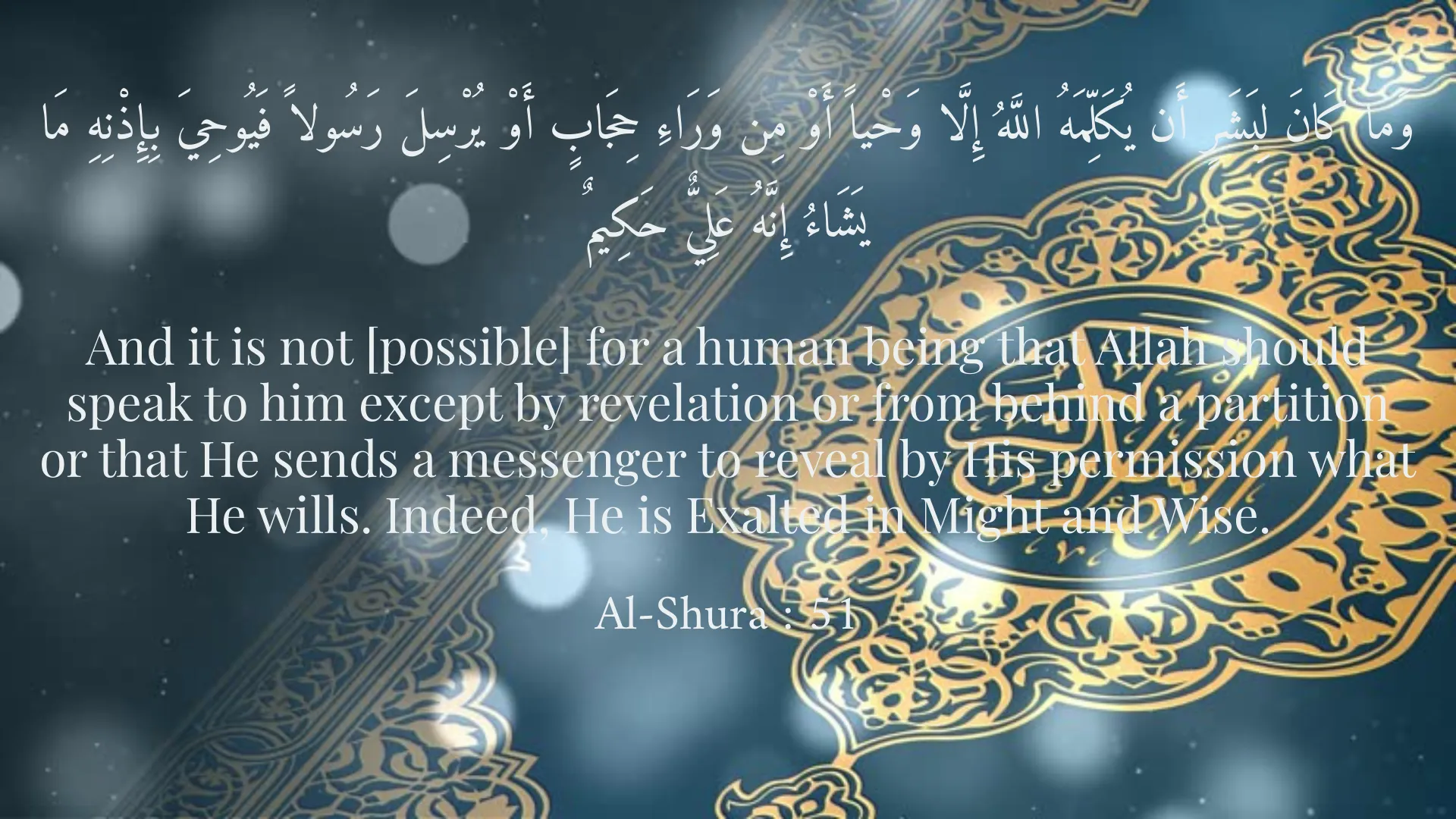
وَما كَانَ لِبَشَرٍ أَن يُكَلِّمَهُ اللَّهُ إِلَّا وَحْياً أَوْ مِن وَرَاءِ حِجَابٍ أَوْ يُرْسِلَ رَسُولاً فَيُوحِيَ بِإِذْنِهِ مَا يَشَاءُ إِنَّهُ عَلِيٌّ حَكِيمٌ
And it is not [possible] for a human being that Allah should speak to him except by revelation or from behind a partition or that He sends a messenger to reveal by His permission what He wills. Indeed, He is Exalted in Might and Wise.
Al-Shura : 51
إنَّمَا الْمُؤْمِنُونَ الَّذِينَ إِذَا ذُكِرَ اللَّهُ وَجِلَتْ قُلُوبُهُمْ وَإِذَا سُمِعَتْهُ آيَاتُهُ زَادَتْهُمْ إِيمانًا وَعَلَى رَبِّهِمْ يَتَوَكَّلُونَ
Indeed, the believers are those who, when Allah is mentioned, their hearts tremble, and when His verses are recited to them, it increases them in faith, and upon their Lord they rely.
Al-Anfal : 24
وَلَنَبْلُوَنَّكُمْ بِشَيءٍ مِّنَ الْخَوْفِ وَالْجُوعِ وَنَقْصٍ مِّنَ الْأَمْوَالِ وَالْأَنفُسِ وَالثَّمَرَاتِ ۗ وَبَشِّرِ الصَّابِرِينَ
And We will surely test you with something of fear and hunger and a loss of wealth and lives and fruits, but give good tidings to the patient.
Al-Baqarah : 247
Short Story
One day, Adel was sitting on the subway, pondering his life. He had always been in search of success and happiness and remembered that the Quran indicated that self-discipline is the key to success and tranquility. He decided to fill his days with prayer and worship, and as soon as he began, he felt a greater sense of peace and joy. Adel realized that by establishing a connection with Allah and focusing on strengthening his spirit, his life would change in miraculous ways.