Quranic Answer
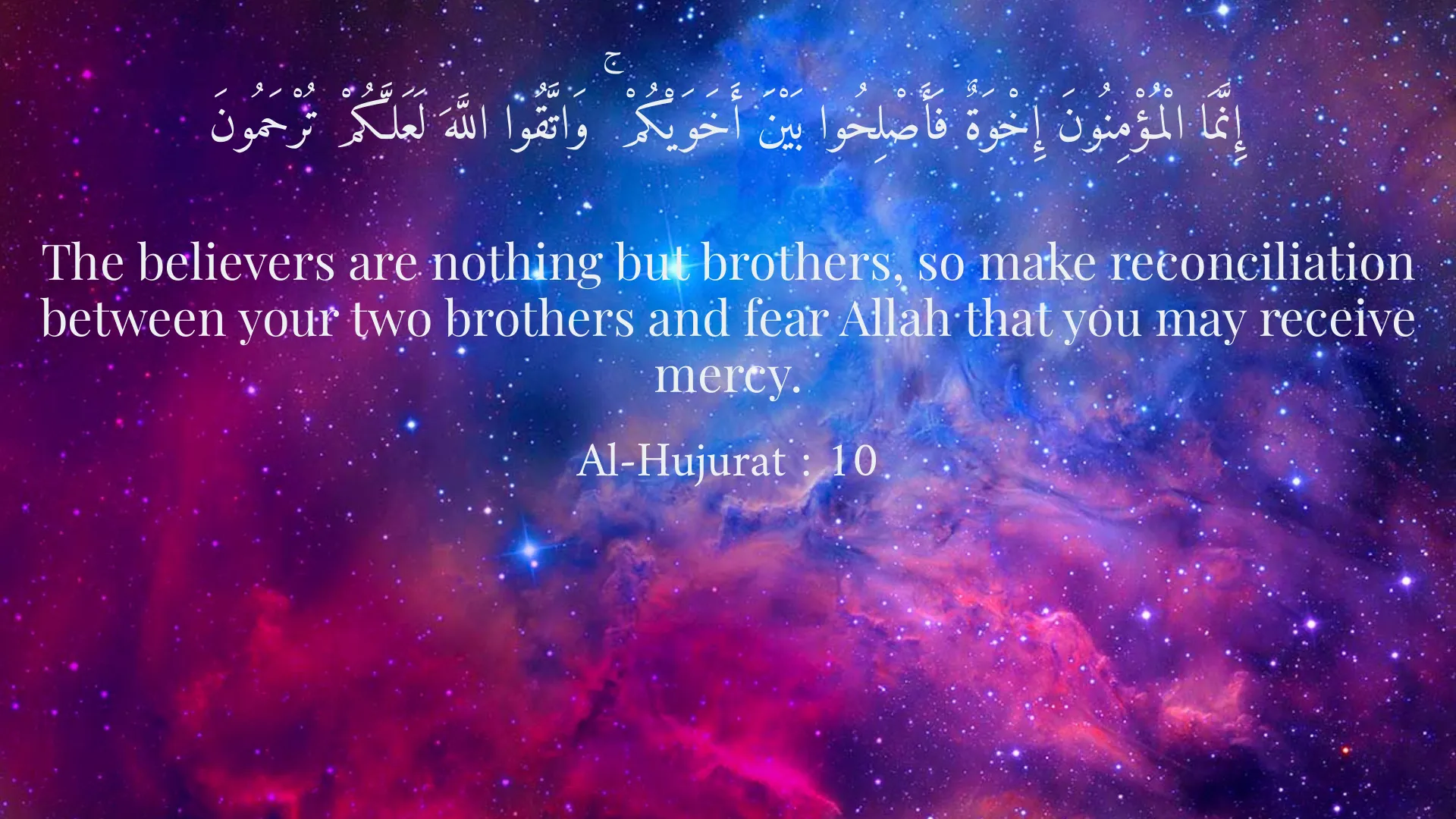
The Holy Quran, as the divine and comprehensive guide for humanity, indeed provides extensive and profound instructions regarding social relations. Islam is not merely a collection of rituals and worship acts; it is a complete way of life (deen) that meticulously addresses every facet of human existence, including the intricate web of interactions that bind individuals into societies. From the smallest family unit to the broader global community, the Quran lays down fundamental principles that foster harmony, justice, compassion, and mutual respect. At its core, the Quran emphasizes the concept of universal human brotherhood and sisterhood, asserting that all humanity originates from a single soul, thus promoting unity and discouraging division. Surah Al-Hujurat (49:10) states, 'The believers are nothing but brothers, so make reconciliation between your two brothers and fear Allah that you may receive mercy.' This verse is a powerful call for solidarity, urging believers to resolve disputes peacefully and maintain strong communal bonds. It highlights that differences should not lead to fragmentation but rather serve as an opportunity for understanding and cooperation. The emphasis on fearing Allah (taqwa) in this context implies that maintaining good social relations is an act of worship and a path to divine mercy. A cornerstone of social ethics in the Quran is the commandment for justice and fairness. This principle extends to all interactions, whether with friends, family, or even adversaries. Surah An-Nisa (4:135) unequivocally states, 'O you who have believed, be persistently firm in justice, witnesses for Allah, even if it be against yourselves or parents and relatives. Whether one is rich or poor, Allah is more worthy of both. So follow not [personal] inclination, lest you deviate. And if you distort [your testimony] or refuse [to give it], then indeed Allah is ever, with what you do, Acquainted.' This verse underscores that justice is an absolute moral imperative, transcending personal biases, familial ties, or socio-economic status. It demands impartiality and truthfulness, ensuring that rights are upheld for all. Furthermore, Surah Al-Ma'idah (5:8) advises, 'O you who have believed, be persistently firm for Allah, witnesses in justice, and let not hatred of a people prevent you from being just. Be just; that is nearer to righteousness. And fear Allah. Indeed, Allah is Acquainted with what you do.' This instruction is particularly profound, commanding believers to treat even those they dislike with fairness, demonstrating the high standard of ethical conduct expected in Islam. The Quran also places immense importance on familial ties, especially the relationship with parents. Surah Al-Isra (17:23-24) declares, 'And your Lord has decreed that you not worship except Him, and to parents, good treatment. Whether one or both of them reach old age [while] with you, say not to them [so much as], 'uff,' and do not repel them but speak to them a noble word. And lower to them the wing of humility out of mercy and say, 'My Lord, have mercy upon them as they nurtured me when I was small.'' This command elevates kindness to parents to a status immediately following the worship of God, indicating its paramount importance in Islamic social structure. It covers respect, gentle speech, and care, especially in their old age. Extending beyond parents, the Quran also enjoins kindness to relatives, orphans, the needy, neighbors (both close and distant), companions, travelers, and those under one's care (Surah An-Nisa 4:36). This comprehensive list illustrates the broad scope of social responsibility in Islam, emphasizing a supportive and compassionate community. Another vital aspect of Quranic social etiquette is the prohibition of negative behaviors that undermine communal trust and harmony. These include backbiting (gheebah), slandering, suspicion, mockery, and spying. Surah Al-Hujurat (49:12) warns, 'O you who have believed, avoid much [negative] assumption. Indeed, some assumption is sin. And do not spy or backbite each other. Would one of you like to eat the flesh of his brother when dead? You would abhor it. And fear Allah; indeed, Allah is Accepting of repentance and Merciful.' This vivid analogy underscores the abhorrence of backbiting, likening it to cannibalism, thus highlighting its destructive nature on social bonds. The Quran encourages open communication, forgiveness, and reconciliation rather than fostering grudges or spreading rumors. Furthermore, the Quran promotes virtues like humility, modesty, truthfulness, trustworthiness, and generosity in social interactions. It encourages visiting the sick, feeding the hungry, helping those in distress, and being charitable. The concept of 'Amr bil Ma'ruf wa Nahy anil Munkar' (enjoining what is right and forbidding what is wrong) is also a collective social responsibility, urging believers to actively promote good and prevent evil within their communities, but always with wisdom and gentleness. In essence, the Quran provides a detailed blueprint for building a virtuous and harmonious society. It teaches that true faith (iman) is not isolated from good deeds (amal salih) and ethical conduct (akhlaq). Social relations are viewed as an integral part of one's worship and a means of attaining Allah's pleasure. By adhering to these divine instructions, individuals contribute to a collective environment of peace, justice, and compassion, reflecting the sublime values of Islam in their daily lives. The overarching message is to treat others as one would wish to be treated, fostering a society where mutual respect, empathy, and solidarity prevail, leading to both worldly prosperity and spiritual success. The divine guidance extends to every nuanced aspect of human interaction, ensuring that society functions on principles of fairness, love, and righteousness. This comprehensive approach ensures that every individual understands their role and responsibility in contributing to a thriving and just community, making the Quran an unparalleled guide for social living.
Related Verses
إِنَّمَا الْمُؤْمِنُونَ إِخْوَةٌ فَأَصْلِحُوا بَيْنَ أَخَوَيْكُمْ ۚ وَاتَّقُوا اللَّهَ لَعَلَّكُمْ تُرْحَمُونَ
The believers are nothing but brothers, so make reconciliation between your two brothers and fear Allah that you may receive mercy.
Al-Hujurat : 10
يَا أَيُّهَا الَّذِينَ آمَنُوا كُونُوا قَوَّامِينَ لِلَّهِ شُهَدَاءَ بِالْقِسْطِ ۖ وَلَا يَجْرِمَنَّكُمْ شَنَآنُ قَوْمٍ عَلَىٰ أَلَّا تَعْدِلُوا ۚ اعْدِلُوا هُوَ أَقْرَبُ لِلتَّقْوَىٰ ۖ وَاتَّقُوا اللَّهَ ۚ إِنَّ اللَّهَ خَبِيرٌ بِمَا تَعْمَلُونَ
O you who have believed, be persistently firm for Allah, witnesses in justice, and let not hatred of a people prevent you from being just. Be just; that is nearer to righteousness. And fear Allah. Indeed, Allah is Acquainted with what you do.
Al-Ma'idah : 8
وَاعْبُدُوا اللَّهَ وَلَا تُشْرِكُوا بِهِ شَيْئًا ۖ وَبِالْوَالِدَيْنِ إِحْسَانًا وَبِذِي الْقُرْبَىٰ وَالْيَتَامَىٰ وَالْمَسَاكِينِ وَالْجَارِ ذِي الْقُرْبَىٰ وَالْجَارِ الْجُنُبِ وَالصَّاحِبِ بِالْجَنبِ وَابْنِ السَّبِيلِ وَمَا مَلَكَتْ أَيْمَانُكُمْ ۗ إِنَّ اللَّهَ لَا يُحِبُّ مَن كَانَ مُخْتَالًا فَخُورًا
And worship Allah and do not associate anything with Him, and to parents do good, and to relatives, orphans, the needy, the near neighbor, the distant neighbor, the companion by your side, the traveler, and those whom your right hands possess. Indeed, Allah does not like those who are conceited and boastful.
An-Nisa : 36
Short Story
They say that King Anushirvan the Just, a monarch renowned for his fairness, once went hunting. A deer was injured and fled into a village. The king followed it. Upon arriving, he found a villager trying to help the deer. The king asked for some salt to season the deer's meat. The villager quickly went to fetch some. Anushirvan remarked, 'Do you have salt in your house?' The villager replied, 'Yes, Sire, I have a small amount. But if I ask my neighbors for it, it will be faster.' The king said, 'Do not take from your neighbor without permission, for even a small injustice from the king's men can lead to great ruin for the people.' The villager understood the king's deep wisdom and said, 'May your justice endure, for it is the foundation of our prosperity.' This story by Sa'di beautifully illustrates the profound importance of even the smallest acts of justice and consideration for others' rights in social relations, and how they contribute to the well-being and peace of a community.