Quranic Answer
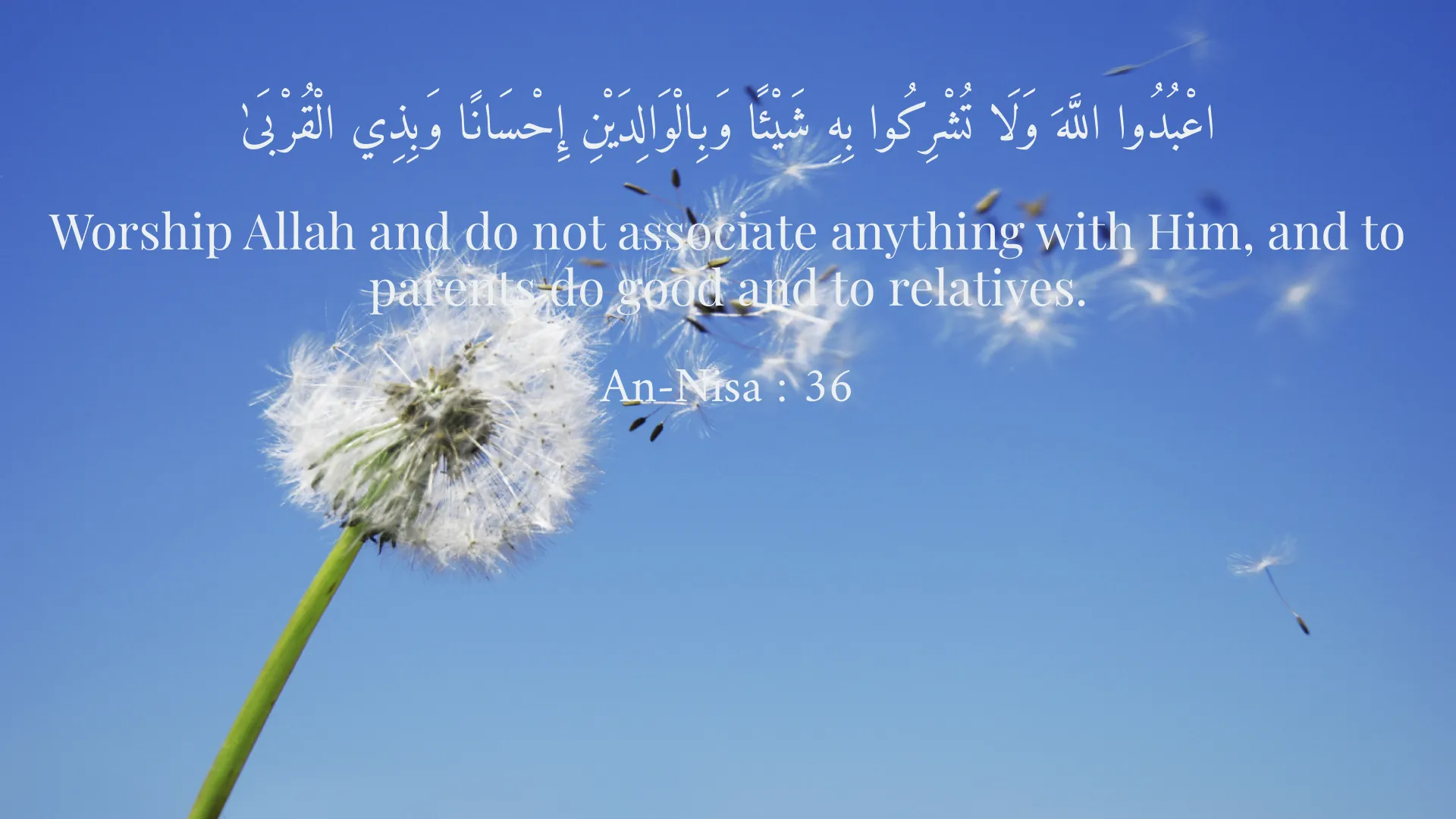
The Holy Quran is often regarded as the ultimate guide for Muslims, outlining various aspects of life, spirituality, morality, and social conduct. Among the multitude of themes woven throughout its verses, the emphasis on kindness, specifically towards relatives, stands out as a significant moral obligation. This commitment to familial kindness is rooted deeply in Islamic teachings and is reiterated in various contexts within the Quran. The importance of this concept not only lies in its spiritual significance but also in the social and cultural fabric of Muslim communities. ### Kindness to Relatives in the Quran In Surah An-Nisa, verse 36, Allah commands His followers with a clear directive that encompasses worship and ethical treatment of others. The verse reads: "Worship Allah and do not associate anything with Him, and to parents, do good, and to relatives, orphans, the needy, and the neighbor who is near, and the neighbor who is distant, and the companion at your side, and the companion along the way, and those whom your right hands possess. Indeed, Allah does not like those who are self-deluding and boastful." This verse offers a comprehensive framework for Muslim social responsibility, highlighting that acts of worship are intrinsically linked with ethical behavior towards others. Here, the Quran establishes an unambiguous notion: being good to one's relatives is not merely a recommendation but a divine command that signifies the beauty and importance of kinship ties. It showcases that treating relatives well is fundamentally integrative with the worship of Allah, indicating that one’s relationship with God is reflected in how one treats others, particularly family members. Additionally, in another profound verse found in Surah Al-An'am, verse 151, Allah reiterates this notion where He states: "Say, 'Come, I will recite what your Lord has forbidden to you: that you not associate anything with Him and to parents, good treatment, and do not kill your children out of fear of poverty.'" This verse places kindness to parents and relatives on par with some of the most foundational tenets of Islamic belief, such as monotheism, thereby underlining its critical importance in a believer's life. ### The Prophetic Teachings on Kinship Beyond the verses of the Quran, the teachings of the Prophet Muhammad (PBUH) further emphasize the importance of maintaining kinship ties. He is reported to have said: "The one who severs ties of kinship will not enter Paradise." This poignant statement can be seen as a dire warning for those who neglect or damage their family relationships. It illustrates the deep-seated values in Islam that view familial bonds as sacred and worthy of nurturing and respect. The Prophet (PBUH) lived and preached kindness to family members, and his own life serves as a model for believers. His actions and words reflect a gentle but firm commitment to ensuring that ties of kinship were valued and preserved. The Prophet’s relationship with his own relatives, including his treatment of his uncle Abu Talib and his family, serves as an example for Muslims to follow. His approach encourages a sense of community that extends beyond mere biological ties to encompass broader social responsibilities that include empathy and generosity. ### The Social and Cultural Impact of Kindness to Relatives The emphasis on kindness to relatives has profound implications for the social fabric of Muslim communities. In many cultures within the Islamic world, familial bonds are the cornerstone of social life. This commitment to kindness fosters a sense of responsibility and care among family members, which acts as a protective factor against social dysfunction. Such values not only contribute to personal relationships but also have wider implications for societal harmony. Acts of kindness towards relatives can manifest in various forms such as supporting family members during times of hardship, providing emotional and spiritual support, and ensuring that family members remain connected to one another. The cultural practices that arise from this commitment can include regular family gatherings, celebrations of important life events together, and a general atmosphere of shared support that is passed on from generation to generation. Moreover, by instilling values of kindness and compassion within the family unit, individuals are likely to extend these values to the broader community. This creates a ripple effect that can lead to societal change, promoting initiatives like charitable giving, community service, and broader acts of benevolence that support the less fortunate. ### The Moral Imperative of Kindness The moral dimension of kindness to relatives resonates deeply within the Islamic tradition. It functions not only as a social mechanism but also as a spiritual one. The Quranic injunctions and prophetic teachings create a framework through which believers can understand the intentionality behind their actions. The essence of such kindness is deeply embedded in the concept of mercy, which is a recurring theme in the Quran and is synonymous with the characteristics of Allah. By engaging in acts of kindness towards relatives, individuals embody the qualities of mercy and compassion that are encouraged in Islam, thus drawing closer to God. This spiritual connection reinforces the belief that kindness is an act of worship in itself, whereby believers manifest their faith through tangible actions towards those they are closest to. ### Conclusion In conclusion, the importance of kindness to relatives occupies a pivotal place in Islamic teachings, underscored by explicit Quranic directives and the behavior of the Prophet Muhammad (PBUH). The repeated emphasis on this principle serves not only to promote moral values within the context of familial relationships but also establishes a template for broader social interaction. By fostering kindness and empathy towards family members, Muslims can create a nurturing environment that contributes to personal satisfaction, community welfare, and spiritual fulfillment. As such, the commitment to kindness is not simply about familial obligation but rather a pathway to fulfilling one’s religious duties and realizing the broader aim of achieving a moral and just society.
Related Verses
اعْبُدُوا اللَّهَ وَلَا تُشْرِكُوا بِهِ شَيْئًا وَبِالْوَالِدَيْنِ إِحْسَانًا وَبِذِي الْقُرْبَىٰ
Worship Allah and do not associate anything with Him, and to parents do good and to relatives.
An-Nisa : 36
قُلْ تَعَالَوْا أَتْلُ مَا حَرَّمَ رَبُّكُمْ عَلَيْكُمْ
Say, 'Come, I will recite what your Lord has forbidden to you.'
Al-An'am : 151
Short Story
One day, a man named Hassan was praying for success in his life. He remembered the verses of the Quran and decided to show more kindness to his relatives. By implementing this decision, Hassan realized that his life improved and he found greater peace.