Quranic Answer
In today's noisy world, where information bombards us from all directions and the din of modern life grates on our ears, many individuals seek ways to find inner peace and mental focus. The question of whether the Quran offers recommendations on silence and concentration is profound and timely. While the Holy Quran does not directly employ the term 'physical silence' in response to 'noise,' it profoundly introduces concepts that clearly guide towards cultivating inner tranquility, mental focus, and avoiding heedlessness and distraction. These teachings provide practical pathways to achieve internal concentration in any circumstance, even amidst a loud and bustling world. One of the most central Quranic concepts closely related to this topic is 'Dhikrullah' or the remembrance of God. The Quran explicitly states: 'Unquestionably, by the remembrance of Allah hearts are assured' (Surah Ar-Ra’d, 13:28). This verse articulates a fundamental principle: the true source of peace and assurance for the heart lies in the remembrance of the Lord. Dhikr is not merely the verbal repetition of words; rather, it is a state of presence of heart and continuous attention to God. This presence of heart automatically diminishes the negative impacts of external noise and mental distractions. When the mind and heart are focused on the remembrance of God, an individual distances themselves from mental storms and worldly temptations, achieving a central and comforting point of tranquility. This continuous remembrance helps a person, even in the busiest environments, not to lose their connection with the source of peace and to maintain their focus on what truly matters. Prayer (Salat), as a pillar of Islam, is another fundamental tenet strongly emphasized in the Quran, serving as an unparalleled means of concentration and solitude with the Lord. Allah says in the Quran: 'Recite, [O Muhammad], what has been revealed to you of the Book and establish prayer. Indeed, prayer prohibits immorality and wrongdoing, and the remembrance of Allah is greater. And Allah knows what you do' (Surah Al-Ankabut, 29:45). Prayer is a time when the believer disconnects from all worldly concerns and turns wholeheartedly towards God. The prescribed movements, recitation of Quranic verses, and supplication to the Lord during prayer are all designed to compel the mind to focus. In prayer, the ultimate goal is the presence of heart; meaning not only the body is performing prayer, but the heart and mind are also entirely attentive to God. This daily practice of concentration enables an individual to maintain their peace and focus even outside of prayer, when faced with the noise and distractions of life. The Quran specifically, in Surah Al-Muzzammil (verses 1-8), advises the Prophet Muhammad (PBUH) to rise for night prayer and recite the Quran. These verses underscore the importance of seclusion and detachment from the environment for deepening one's connection with God and receiving the 'heavy word' (the weighty message of revelation), which itself necessitates deep concentration and attention. In addition to Dhikr and Salat, the Quran extensively recommends 'Tafakkur' (contemplation) and 'Tadabbur' (pondering over verses). Numerous verses invite humanity to reflect on the creation of the heavens and the earth, the signs of God in the universe, and the meanings of the Quranic verses. This contemplation and pondering require mental tranquility and an avoidance of superficiality. 'Indeed, in the creation of the heavens and the earth and the alternation of the night and the day are signs for those of understanding' (Surah Ali 'Imran, 3:190). Those of understanding are individuals who contemplate these signs, and this contemplation itself is an act of deep mental concentration that occurs away from worldly noise and clamor. The Quran also strongly cautions against 'Ghaflah' (heedlessness). Ghaflah means unawareness and inattentiveness, often resulting from preoccupation with trivial matters and worldly distractions. A noisy environment and overwhelming information can easily lead a person towards heedlessness. Quranic teachings, by encouraging Dhikr, prayer, contemplation, and attention to the purpose of creation, liberate individuals from the trap of heedlessness and guide them towards wakefulness and awareness. This wakefulness and awareness are the essence of true concentration. In summary, it can be said that the Holy Quran provides practical solutions for achieving inner silence and deep concentration amidst a noisy world. These solutions include: 1. Seeking refuge in the remembrance of God to find true peace of heart. 2. Establishing prayer with complete presence of heart as a daily exercise for concentration. 3. Inviting contemplation and pondering on the cosmic and internal signs to deepen insight and avoid superficiality. 4. Avoiding heedlessness and triviality, and embracing constant wakefulness and awareness. These recommendations are not merely religious directives but comprehensive solutions for mental well-being and achieving sustainable peace and concentration under any circumstances, enabling individuals to hear the voice of their heart amidst the clamor of the world and connect with their Creator. Ultimately, these Quranic teachings instruct humanity that true peace and concentration are not a product of the external environment, but rather the fruit of a deep connection with the Lord and the cultivation of a spiritual life in which the heart and mind are constantly directed towards the truth. This approach empowers the believer to create a sanctuary of silence and concentration within their heart, even in the noisiest societies, and to utilize it for spiritual growth and connection with Allah. Therefore, the answer is affirmative; the Quran, by emphasizing the aforementioned concepts, implicitly but profoundly recommends inner silence and concentration in the face of worldly noise.
Related Verses
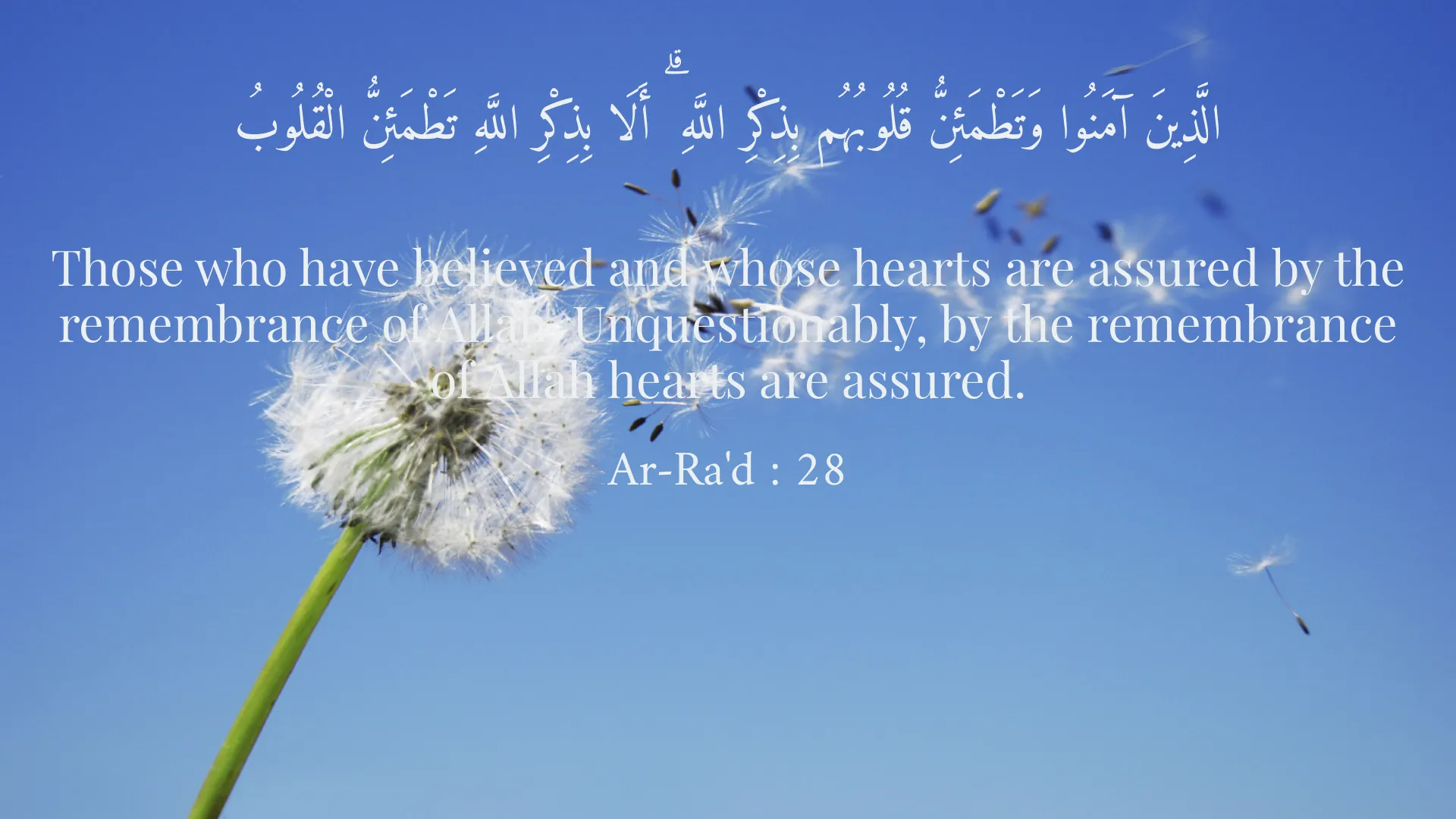
الَّذِينَ آمَنُوا وَتَطْمَئِنُّ قُلُوبُهُم بِذِكْرِ اللَّهِ ۗ أَلَا بِذِكْرِ اللَّهِ تَطْمَئِنُّ الْقُلُوبُ
Those who have believed and whose hearts are assured by the remembrance of Allah. Unquestionably, by the remembrance of Allah hearts are assured.
Ar-Ra'd : 28
اتْلُ مَا أُوحِيَ إِلَيْكَ مِنَ الْكِتَابِ وَأَقِمِ الصَّلَاةَ ۖ إِنَّ الصَّلَاةَ تَنْهَىٰ عَنِ الْفَحْشَاءِ وَالْمُنكَرِ ۗ وَلَذِكْرُ اللَّهِ أَكْبَرُ ۗ وَاللَّهُ يَعْلَمُ مَا تَصْنَعُونَ
Recite, [O Muhammad], what has been revealed to you of the Book and establish prayer. Indeed, prayer prohibits immorality and wrongdoing, and the remembrance of Allah is greater. And Allah knows what you do.
Al-Ankabut : 45
إِنَّ لَكَ فِي النَّهَارِ سَبْحًا طَوِيلًا
Indeed, for you by day is prolonged occupation.
Al-Muzzammil : 7
وَاذْكُرِ اسْمَ رَبِّكَ وَتَبَتَّلْ إِلَيْهِ تَبْتِيلًا
And remember the name of your Lord and devote yourself to Him with [complete] devotion.
Al-Muzzammil : 8
Short Story
In Sa'di's Gulistan, it is narrated that a king, weary from the multitude of his duties and the clamor of his court, lost his peace of mind. He sought refuge with a wise sage, asking for a way to find tranquility and ease. The sage said: 'O King, tranquility comes from within, not from without. Though the world is full of noise and busyness, one can make one's heart like a secluded corner.' The king asked: 'How so?' The sage replied: 'When you do not fill your ears with vain talk, and do not blind your eyes to the glitter of the world, and occupy your heart with the remembrance of Truth, then you will find peace even amidst the crowded marketplace, a peace you could not find even in the solitude of your royal chambers.' The king acted upon the sage's words, and instead of fleeing from the clamor, he began to practice remembrance and ponder on truth. Before long, even in his noisy court, he tasted the sweet flavor of peace and concentration.