Quranic Answer
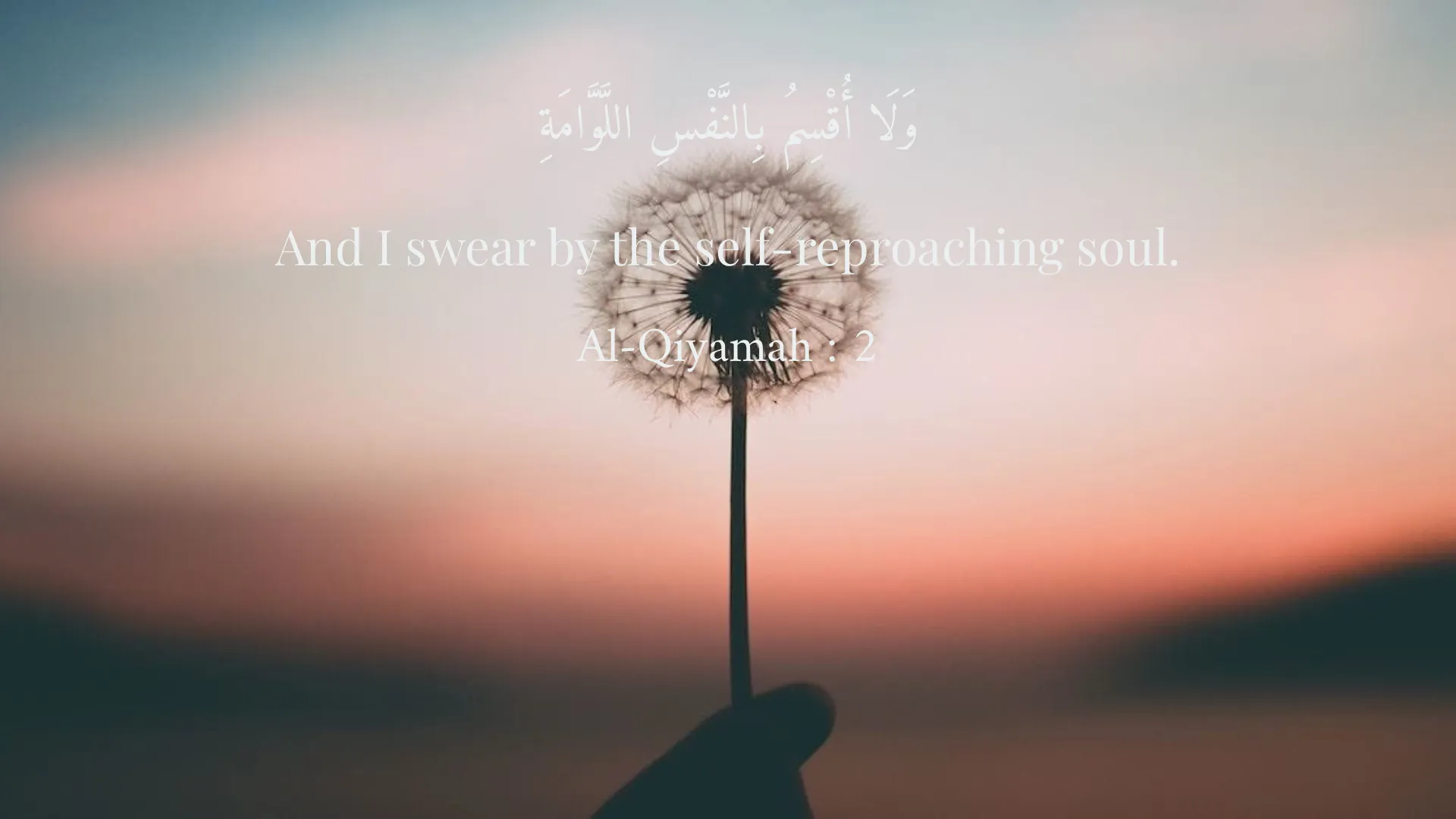
In the Holy Quran, the specific word 'conscience' (وجدان) in its modern psychological sense is not explicitly mentioned. However, the Quran profoundly emphasizes concepts and teachings that intricately describe the function and significance of an 'inner moral guide' or what we understand today as conscience. Rather than a single term, the Quran introduces a combination of inner human capacities and dimensions that collectively fulfill the role of conscience. These include 'An-Nafs al-Lawwamah' (the self-reproaching soul), 'Al-Fitrah' (the innate disposition), and the pivotal role of the 'Qalb' (heart) as the center of understanding and moral insight, all of which underscore the importance of listening to one's inner voice and holding oneself accountable. One of the most explicit and closest Quranic concepts to conscience is 'An-Nafs al-Lawwamah,' to which Allah swears in Surah Al-Qiyamah, verse 2: "Wala Uqsimu bin-Nafs al-Lawwamah" (And I swear by the self-reproaching soul). This 'Nafs al-Lawwamah' is indeed the awakened conscience that censures and blames a person after they commit a wrongdoing, prompting them towards remorse and repentance. This inner reproach is a sign of spiritual health and an awakened conscience, which Allah has honored by swearing upon it. The presence of this force within human beings is a decisive proof of human accountability and their capacity to distinguish between good and evil, right and wrong. This 'Nafs al-Lawwamah' is, in fact, the first stage of inner deterrence against sin and the initiator of the path of repentance and correction; a force that enables humans to critically evaluate their actions and learn from their mistakes. Another concept pertinent to conscience is 'Al-Fitrah' (the innate disposition). In Surah Ar-Rum, verse 30, it states: "Faaqim wajhaka lid-Deeni Haneefa; Fitrat Allahi allati fatara an-nasa alaiha; la tabdeela li-khalqillahi; thalika ad-Deenul Qayyim walakinna akthara an-nasi la ya'lamoon" (So direct your face toward the religion, inclining to truth. [Adhere to] the fitrah of Allah upon which He has created [all] mankind. No change should there be in the creation of Allah. That is the correct religion, but most of the people do not know). Fitrah refers to the pure, primordial nature of humanity, upon which Allah created them with an inherent inclination towards monotheism (Tawhid), truth, and righteousness. This innate disposition naturally perceives goodness and dislikes evil. Trusting one's conscience, in this context, means listening to this inherent, divine call that constantly invites humanity towards God, justice, and good ethics. Deviating from the right path is, in essence, ignoring this فطری (fitree) call, which prophets were sent to awaken and remind. This fitrah acts as an internal moral guide that, if not distorted by external factors and improper upbringing, will always lean towards what is right and true. Furthermore, the 'Qalb' (heart) in the Quranic perspective is not merely a physical organ but the center of perception, faith, intellect, and moral insight. Numerous verses emphasize the importance of a sound heart and its clear vision. For instance, in Surah Al-Hajj, verse 46, it says: "Afalam yaseeru fil-ardi fatakuna lahum quloobun ya'qiloona biha aw aathaanun yasma'oona biha; fainnaha la ta'mal absaru walakin ta'mal quloobullati fis-sudoor" (Have they not traveled through the earth and have hearts by which to reason and ears by which to hear? For indeed, it is not eyes that are blinded, but blinded are the hearts which are within the breasts). A pure and awakened heart functions like a clear conscience, comprehending truths and guiding humanity toward correct decisions. A diseased heart, akin to spiritual blindness and heedlessness, prevents one from hearing the voice of their conscience, leading them astray. The Quran emphasizes the purification of the soul (Tazkiyah an-Nafs) and the heart so that this center of perception can function properly and keep the conscience alert. In summary, the Quran profoundly emphasizes the importance of an internal moral guide, even if it does not use the specific term 'conscience.' This guide operates through 'An-Nafs al-Lawwamah,' which reproaches humans for their misdeeds; 'Al-Fitrah,' which is the innate inclination towards good and truth; and 'Al-Qalb,' which is the center of moral perception and understanding. Trusting this inner force, alongside the divine guidance of the Quran and Sunnah, directs humanity towards the straight path and a meaningful, responsible life. These concepts demonstrate that Allah has placed the necessary tools for discerning good from evil within human beings themselves and expects them to heed these inner calls. By nurturing these internal capacities with the help of revelation, humans can achieve worldly and spiritual success. Therefore, trusting one's conscience, within the framework of Quranic teachings, means listening to and following these divinely-endowed internal tools, which ultimately lead to piety and a life filled with goodness and justice. This inner guide is a firm pillar in the human spiritual journey, leading to growth and perfection, and its voice should never be ignored, for it is a sign of the divine presence deep within our being.
Related Verses
وَلَا أُقْسِمُ بِالنَّفْسِ اللَّوَّامَةِ
And I swear by the self-reproaching soul.
Al-Qiyamah : 2
فَأَقِمْ وَجْهَكَ لِلدِّينِ حَنِيفًا ۚ فِطْرَتَ اللَّهِ الَّتِي فَطَرَ النَّاسَ عَلَيْهَا ۚ لَا تَبْدِيلَ لِخَلْقِ اللَّهِ ۚ ذَٰلِكَ الدِّينُ الْقَيِّمُ وَلَٰكِنَّ أَكْثَرَ النَّاسَ لَا يَعْلَمُونَ
So direct your face toward the religion, inclining to truth. [Adhere to] the fitrah of Allah upon which He has created [all] mankind. No change should there be in the creation of Allah. That is the correct religion, but most of the people do not know.
Ar-Rum : 30
أَفَلَمْ يَسِيرُوا فِي الْأَرْضِ فَتَكُونَ لَهُمْ قُلُوبٌ يَعْقِلُونَ بِهَا أَوْ آذَانٌ يَسْمَعُونَ بِهَا ۖ فَإِنَّهَا لَا تَعْمَى الْأَبْصَارُ وَلَٰكِن تَعْمَى الْقُلُوبُ الَّتِي فِي الصُّدُورِ
Have they not traveled through the earth and have hearts by which to reason and ears by which to hear? For indeed, it is not eyes that are blinded, but blinded are the hearts which are within the breasts.
Al-Hajj : 46
Short Story
It is narrated that during the reign of a just king, a man came before the city's judge and said, "O Judge, I have been accused of a mistake I did not commit. My conscience is clear, and I know I am innocent." The judge, a wise man who believed in inner light and divine nature, paused for a moment. He said, "O man, sometimes a person's inner intuition and conscience are the most truthful witnesses. Tell me, what within you has brought you peace and made you certain?" The man sincerely explained how, in a moment of hesitation, an inner voice had prevented him from committing a great sin, even though no one was watching him. Upon hearing this, the judge, not based on outward appearances but on the man's inner purity and the certainty of his conscience, issued a verdict of acquittal. He said, "Whoever listens to the voice of their self-reproaching soul and trusts their pure nature will never go astray. A clear conscience is a treasure more precious than all testimonies." This story reminds us how God has placed a lamp of insight and guidance within human beings, which, if we listen to it, will show us the right path and protect us from errors.