Quranic Answer
The Holy Quran, regarded as the ultimate source of guidance for Muslims, addresses various aspects of social injustice and calls for fairness and equity in multiple verses. This sacred text provides a comprehensive framework for principles of justice, compassion, and righteousness. Through its teachings, the Quran not only delineates actions that are pleasing to Allah but also situates social justice as a cornerstone of ethical conduct among individuals and communities. The significance of social justice in the Quran is often underscored by a profound call for its adherents to act with kindness and equity. One of the paramount verses highlighting this call for justice can be found in Surah An-Nisa, verse 135, which articulates: 'O you who have believed, be persistently standing firm in justice, witnesses in justice...' This verse acts as a compelling reminder of the individual and collective responsibilities that Muslims have towards establishing a just society. The phrase 'be persistently standing firm in justice' reinforces the notion that justice is not merely a transient act but a continuous obligation that must be upheld at all times. The Quran emphasizes bearing witness to the truth, an act that may sometimes challenge personal interests or familial ties. For instance, the verse suggests that individuals must place justice above personal relationships and societal pressures. Upholding justice becomes an act of faith; it transcends personal bias and compels individuals to face uncomfortable truths and advocate for what is right, regardless of the circumstances. This intrinsic idea that justice must be upheld, even when it contradicts personal interests, is critically important in combating social injustice, making it a prevalent theme throughout the Quran. In Surah Al-Ma'idah, verse 8, a similar message is echoed: 'O you who have believed, be persistently standing firm in justice, witnesses for Allah...' This directive highlights the necessity of maintaining equity and justice within society, serving as a moral compass for believers. The recurring motifs of justice within these verses signify that acting justly is not only an expectation of individual behavior but a divine commandment that shapes the very fabric of Muslim identity. Social injustice has been a persistent issue throughout history, one that many prophets have addressed fervently in their missions. The Quran critiques societal structures that perpetuate oppression and inequality, reiterating the need for collective action against such injustice. For instance, many narratives in Islamic history showcase prophets who stood against tyrants and fought for the rights of the marginalized—illustrating the Quran's consistent stance against all forms of oppression. Allah's message encourages Muslims to embody these principles of compassion and justice actively. The upkeep of social justice within a community fosters an environment of mutual respect and dignity. The Quranic injunctions facilitate values of charity, moral accountability, and compassion, ultimately enhancing the interconnectedness of community members. This robust framework of justice acts against apathy towards societal wrongs and highlights the encouragement for believers to contribute positively to their communities. Furthermore, the Quran's teachings extend their influence beyond individual actions. They encourage believers to engage proactively with their communities, becoming advocates for justice and change. The profound teachings of the Quran urge Muslims not to be mere observers of societal injustices but active participants in alleviating them. The idea of social responsibility is essential to these teachings, with a particular focus on the obligation of the wealthy and privileged to assist the less fortunate. Charitable giving, termed 'Zakat' in the Quran, plays a critical role in addressing social inequality. The practice encourages wealth redistribution within society, thereby diminishing the gap between the affluent and impoverished classes. This radical and transformative approach signifies that every individual carries the responsibility to ensure fairness and justice in the societal framework, effectively working against the cycle of poverty and oppression. In essence, the Quran stands firmly against any form of oppression and social disparity, and its teachings continue to provide guidance to Muslims in navigating moral and ethical dilemmas in contemporary society. The application of these principles is essential not merely for individual piety but for cultivating a just and equitable society as a whole. The impact of such teachings can be seen in both the local and global contexts, encouraging believers to strive for justice in their communities and cultivate broader societal changes. Ultimately, the call for justice in the Quran is unwavering, urging adherents to reflect on their actions and strive for fairness in all aspects of life. It serves as a reminder that social justice is not just a concept but a divine command that is integral to faith. By embodying these principles in daily life, Muslims are encouraged to transform their surroundings, combating social injustice with unwavering resolve. The Quran thus serves as an eternal source of guidance, encouraging its followers to become champions of justice and harbingers of change in an oft-disparate world.
Related Verses
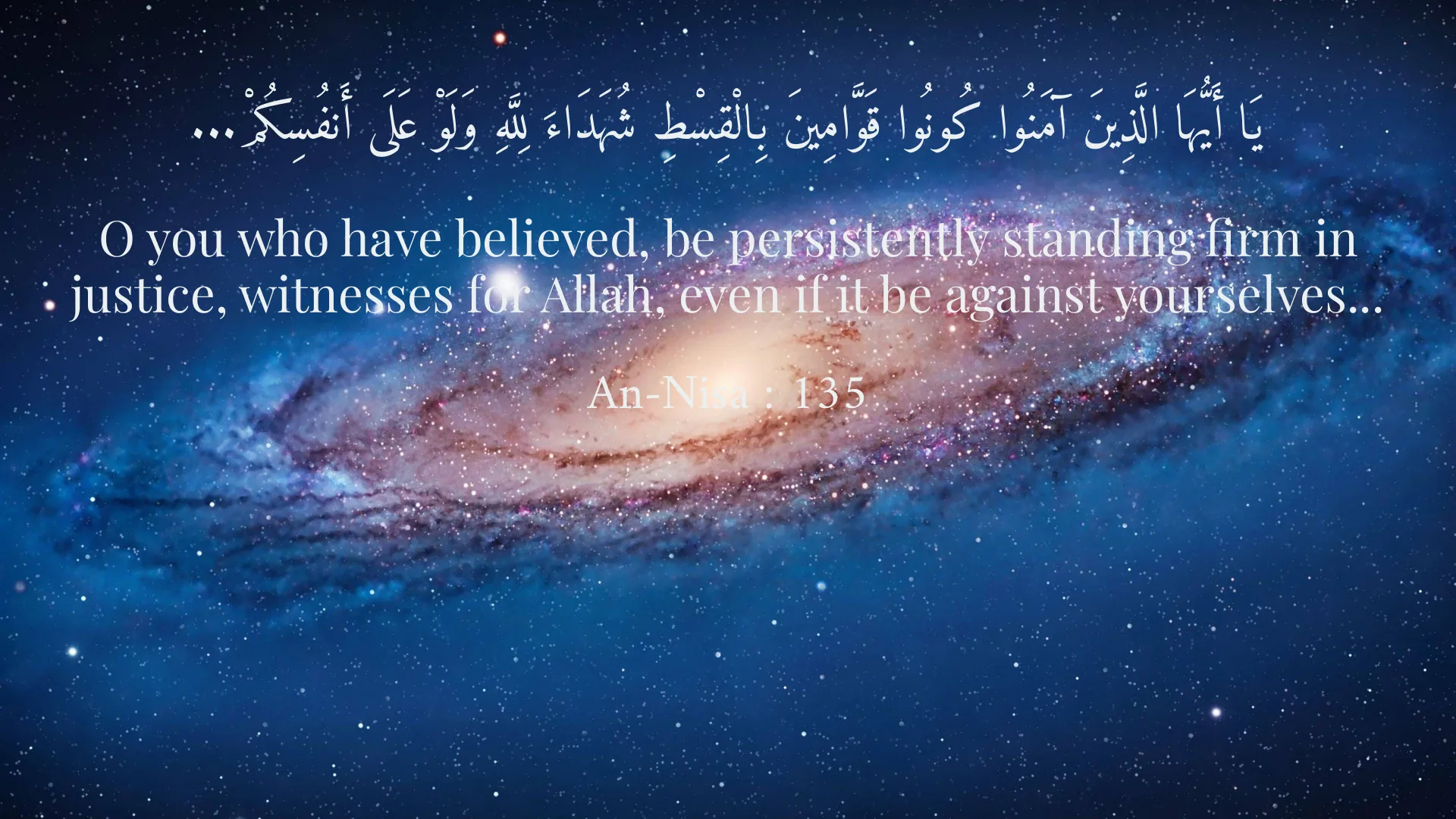
يَا أَيُّهَا الَّذِينَ آمَنُوا كُونُوا قَوَّامِينَ بِالْقِسْطِ شُهَدَاءَ لِلَّهِ وَلَوْ عَلَى أَنفُسِكُمْ...
O you who have believed, be persistently standing firm in justice, witnesses for Allah, even if it be against yourselves...
An-Nisa : 135
يَا أَيُّهَا الَّذِينَ آمَنُوا كُونُوا قَوَّامِينَ لِلَّهِ شُهَدَاءَ بِالْقِسْطِ...
O you who have believed, be persistently standing firm in justice, witnesses for Allah...
Al-Ma'idah : 8
Short Story
One day, a man named Reza met a homeless individual in an alley. He recalled the Quranic verses that speak of justice and divine mercy. Reza decided to help this person and offered him food. This act not only assisted the individual, but it also brought Reza a sense of satisfaction and peace. He realized that through his actions, he could play a role in preventing social injustice.