Quranic Answer
The Holy Quran, a profound and revered text in Islamic teachings, serves as a guide for moral conduct and the enhancement of human well-being. Within its verses, the Quran delves into various topics, one of which includes the critical issue of self-harm and the detrimental effects it can have on individuals. In general, the Quran firmly emphasizes that self-harm is not only an unacceptable practice but also an action that contradicts the divine will established by Allah. This article explores the various Quranic verses that address self-harm, the underlying reasons why such actions are discouraged, and the paths the Quran offers toward a healthier and more fulfilling existence. The first reference that draws attention to the concept of self-harm appears in Surah Al-Baqarah (Chapter 2), verse 195: 'And spend in the way of Allah, and do not throw yourselves into destruction.' This verse serves as a strong directive that clearly indicates that self-harm and inflicting damage upon oneself is neither condoned nor acceptable from a divine perspective. The Quran promotes a sense of responsibility toward oneself, urging believers to invest in righteous actions rather than destructive behaviors. By framing self-harm as a form of self-destruction, this verse reinforces the idea that every individual has the responsibility to safeguard their well-being. Furthermore, we find another poignant reference in Surah An-Nisa (Chapter 4), verse 29, which states: 'O you who have believed, do not consume one another's wealth unjustly.' While this verse primarily addresses the ethical treatment of others with respect to financial transactions, it can also be interpreted metaphorically in the context of self-treatment. The essence behind the verse implores individuals to avoid behaviors that cause harm not only to others but also to themselves. Engaging in negative actions, such as self-harm, disrupts the delicate balance of well-being and spirituality that the Quran advocates. The implications of self-harm extend beyond an individual's mental and physical health; they affect one’s spiritual essence and connection with Allah. Inflicting harm upon oneself creates a barrier that distances individuals from divine love and mercy. The self-destructive tendencies can lead to a gradual erosion of one’s spirit, ultimately hindering the development of a positive mindset. The Quran recognizes this dysfunction; hence it guides the believer toward preserving their self-worth and embracing a life filled with positivity and fulfillment. Moreover, the Quran portrays the concept of life as sacred, a trust from Allah entrusted to human beings. With this perspective, believers are encouraged to view life through a lens of gratitude and care. Surah Al-Isra (Chapter 17), verse 31 states: 'And do not kill your children for fear of poverty; We provide for them and for you.' This verse not only emphasizes the sanctity of life but further indicates that the rigors of existence should not lead to despair and harmful actions. By recognizing that all provisions and life are governed by Allah's wisdom, believers can nurture hope rather than succumb to self-destructive thoughts. Self-harm may arise from a multitude of factors, including mental health challenges, external pressures, or feelings of inadequacy. The modern world bombards individuals with unrealistic expectations, leading many to internalize feelings of worthlessness. The Quran acknowledges such struggles and offers avenues for seeking comfort and refuge in faith. Surah Al-Baqarah, verse 286 states: 'Allah does not burden a soul beyond that it can bear.' This verse is a reminder that each individual's challenges are tailored to their capabilities, and the struggle does not define one’s value. In contrast to self-harm, the Quran offers pathways toward healing and self-preservation. The importance of community is prevalent in Islamic teachings, and believers are encouraged to lean on one another during trying times. The practice of forming a supportive community can be instrumental in aiding individuals struggling with negative thoughts. The Prophet Muhammad (peace be upon him) emphasized the value of brotherhood and collective support, wherein members of society uplift one another in pursuit of righteousness. Moreover, self-care is woven into Islamic practice through acts of worship and devotion. Regular prayers, remembrance of Allah (dhikr), and engaging in acts of charity are highlighted as powerful tools to foster mental resilience. The Quran encourages Muslims to engage in spiritual practices as a way to foster inner peace and reconnection with the divine. In essence, the Quran decidedly champions the idea that individuals should nurture themselves both physically and spiritually. The guidance offered within its verses offers profound insight into the prevention of self-harm and its negative consequences. The teachings encourage believers to view their lives as sacred, to nourish their souls, and to seek out connections—both divine and communal. When individuals indulge in self-care, foster healthy relationships, and engage in meaningful actions, they cultivate a life that honors their existence and aligns with the divine will. This journey towards self-preservation is not merely an act of individual will but is considered a spiritual act of obedience to Allah. By adhering to the moral and ethical imperatives outlined in the Quran, believers can foster conditions that radically transform their experiences, steering them away from self-destructive thoughts and toward a life filled with purpose and divine connection. In conclusion, the Quran's unequivocal stance against self-harm reflects its broader message of promoting mental, spiritual, and communal health. It calls on individuals to honor their existence through positive action and responsibility, ultimately guiding them to live fulfilling lives in accordance with divine wisdom.
Related Verses
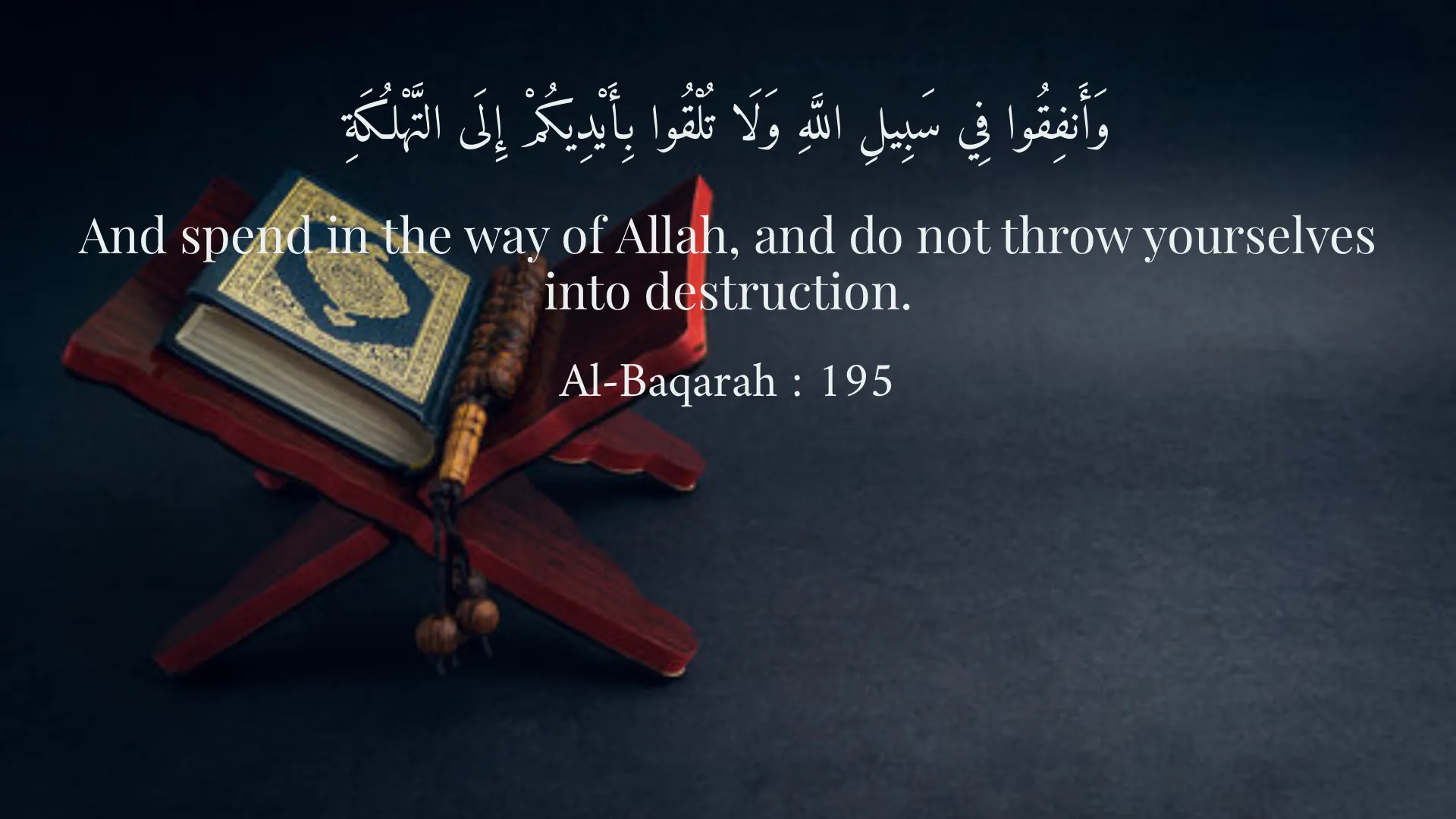
وَأَنفِقُوا فِي سَبِيلِ اللَّهِ وَلَا تُلْقُوا بِأَيْدِيكُمْ إِلَى التَّهْلُكَةِ
And spend in the way of Allah, and do not throw yourselves into destruction.
Al-Baqarah : 195
يَا أَيُّهَا الَّذِينَ آمَنُوا لَا تَأْكُلُوا أَمْوَالَكُمْ بَيْنَكُمْ بِالْبَاطِلِ
O you who have believed, do not consume one another's wealth unjustly.
An-Nisa : 29
Short Story
One day, a young man named Ali faced challenges in life and felt overwhelmed. He recalled the verses of the Quran and decided not to harm himself. Gradually, he tried to seek assistance from God and chose friendship and kindness towards others instead of self-harm. After a while, he felt good and his life transitioned towards positivity.