Quranic Answer
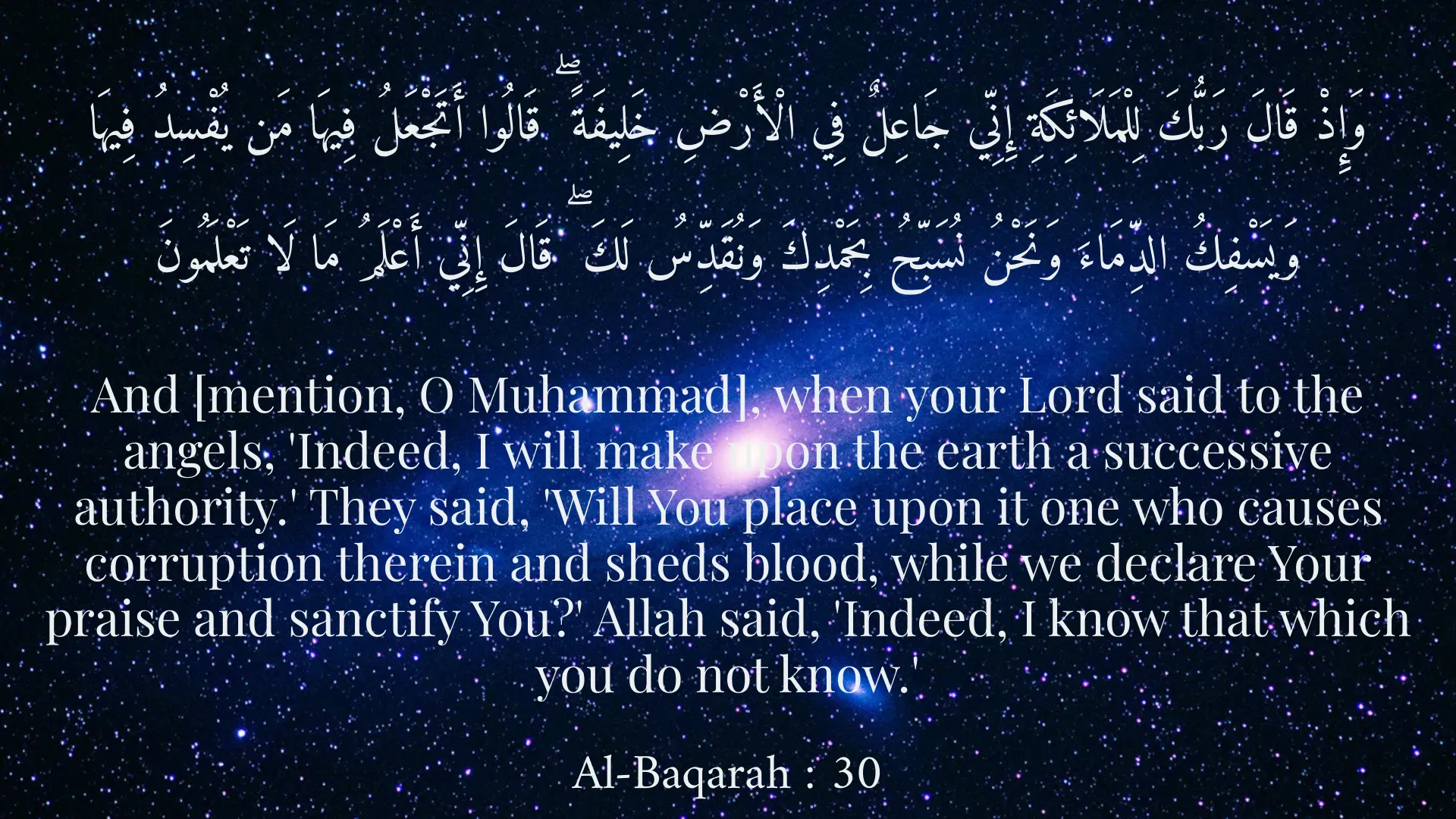
Yes, the Holy Quran addresses the topic of environmental awareness and the preservation of nature in various profound and comprehensive ways. While modern terms like 'environment' or 'ecology' are not explicitly mentioned in the Quran, the fundamental concepts underpinning a responsible and sustainable approach to nature are clearly articulated within its divine verses. The Quran, with its holistic perspective, portrays humanity not only as the pinnacle of creation but also as the trustee and vicegerent of God on Earth. This role of 'Khalifatullah' (divine vicegerency and stewardship) places a weighty responsibility upon humanity, encompassing the preservation and cultivation of the Earth and the prevention of any corruption or destruction therein. This concept is clearly stated in Surah Al-Baqarah, verse 30: "And [mention, O Muhammad], when your Lord said to the angels, 'Indeed, I will make upon the earth a successive authority (khalifa)." This verse signifies that humans were created to cultivate and justly manage the Earth. Humanity's responsibility towards the Earth extends to all its elements, from water and soil to plants and animals. One of the most crucial Quranic principles in this regard is the principle of 'Mizan' or balance. Allah created the universe based on order and equilibrium, and any disturbance of this balance constitutes 'fasad fil-ard' (corruption on Earth). In Surah Ar-Rahman, verses 7-9, it states: "And the heaven He raised and set the balance that you may not transgress [due to] the balance And establish weight in justice and do not make deficient the balance." These verses emphasize that one should not transgress the natural order of creation and disturb its equilibrium. This concept directly points to environmental sustainability, as any overuse or destruction of nature disrupts the natural balance and leads to detrimental consequences. The Quran warns humanity that corruption on land and sea is a result of their own actions: "Corruption has appeared on land and sea by [reason of] what the hands of people have earned so He may let them taste part of [the consequence of] what they have done that perhaps they will return [to righteousness]" (Surah Ar-Rum, verse 41). This verse clearly indicates that environmental destruction stems from human misconduct and wrong actions, and Allah does not allow corruption and destruction to spread on Earth. The Quran also places significant emphasis on the concept of 'Ayat' (signs of God) found in nature. Many verses refer to natural phenomena such as rainfall, the growth of plants, the movement of clouds, the alternation of night and day, and the creation of animals and humans, presenting them as signs of Allah's power, wisdom, and mercy (for instance, Surah An-Nahl, verses 10-14). This perspective fosters a profound sense of respect for nature, as nature is not merely a source of sustenance and life but also an open book for contemplation and recognition of God. When one views nature as a divine 'sign,' they realize that any harm inflicted upon it is, in essence, disrespect towards its Creator. This viewpoint encourages humanity to protect and care for nature, transcending a purely materialistic outlook. Furthermore, the Quran explicitly prohibits 'Israf' (extravagance and wastefulness). This prohibition also includes the excessive consumption of natural resources. In Surah Al-A'raf, verse 31, it is stated: "O children of Adam, take your adornment at every masjid, and eat and drink, but be not excessive. Indeed, He likes not those who commit excess." Although this verse seemingly refers to the consumption of food and drink, its underlying meaning encompasses refraining from any form of excess or waste in the utilization of divine blessings, including natural resources. This teaching forms the basis of a sustainable and non-consumerist lifestyle, one that meets present needs without compromising the ability of future generations to meet their own. Adhering to this principle is essential in all aspects of life, including agriculture, industry, and the management of water and energy resources. Moreover, the Quran highlights the value of water and its crucial role in life, considering it the source of all life: "And We made from water every living thing" (Surah Al-Anbiya, verse 30). This verse underscores the importance of preserving and properly utilizing this vital resource. Respect for animals is also addressed in the Quran; it states that animals are communities like humans and glorify Allah (Surah Al-An'am, verse 38, and Surah An-Nur, verse 41). This perspective reminds humanity of its ethical responsibility towards animals and the prevention of their harm or abuse. Ultimately, Quranic teachings provide a strong ethical and spiritual framework for environmental awareness. These teachings call upon humanity to be responsible, moderate, grateful, and to maintain balance in relation to the environment, emphasizing that caring for the Earth is an inseparable part of faith and devotion to God. This comprehensive and balanced perspective guides humanity towards a sustainable and harmonious life with nature, meeting human needs while preserving the dignity and balance of creation. Therefore, it can be concluded that the Quran not only addresses environmental awareness but also provides profound foundations for a comprehensive and sustainable environmental ethic that originates from a monotheistic worldview and considers the well-being of all creation.
Related Verses
وَإِذْ قَالَ رَبُّكَ لِلْمَلَائِكَةِ إِنِّي جَاعِلٌ فِي الْأَرْضِ خَلِيفَةً ۖ قَالُوا أَتَجْعَلُ فِيهَا مَن يُفْسِدُ فِيهَا وَيَسْفِكُ الدِّمَاءَ وَنَحْنُ نُسَبِّحُ بِحَمْدِكَ وَنُقَدِّسُ لَكَ ۖ قَالَ إِنِّي أَعْلَمُ مَا لَا تَعْلَمُونَ
And [mention, O Muhammad], when your Lord said to the angels, 'Indeed, I will make upon the earth a successive authority.' They said, 'Will You place upon it one who causes corruption therein and sheds blood, while we declare Your praise and sanctify You?' Allah said, 'Indeed, I know that which you do not know.'
Al-Baqarah : 30
وَلَا تُفْسِدُوا فِي الْأَرْضِ بَعْدَ إِصْلَاحِهَا وَادْعُوهُ خَوْفًا وَطَمَعًا ۚ إِنَّ رَحْمَتَ اللَّهِ قَرِيبٌ مِّنَ الْمُحْسِنِينَ
And cause not corruption upon the earth after its reformation. And invoke Him in fear and aspiration. Indeed, the mercy of Allah is near to the doers of good.
Al-A'raf : 56
وَالسَّمَاءَ رَفَعَهَا وَوَضَعَ الْمِيزَانَ
And the heaven He raised and set the balance.
Ar-Rahman : 7
أَلَّا تَطْغَوْا فِي الْمِيزَانِ
That you may not transgress [due to] the balance.
Ar-Rahman : 8
وَأَقِيمُوا الْوَزْنَ بِالْقِسْطِ وَلَا تُخْسِرُوا الْمِيزَانَ
And establish weight in justice and do not make deficient the balance.
Ar-Rahman : 9
Short Story
Once upon a time, a king intended to clear a lush forest near his city entirely to expand his palace and erect new buildings. Among the people lived a wise and kind old man, who had learned lessons from Saadi's Bustan of wisdom. He approached the king and said: "O virtuous King! These trees are not merely shade for travelers and shelter for birds; they are the very breath of the earth and the life of the people. They retain water in the soil, purify the air, and their beauty illuminates the soul's eye. If you cut down this forest, you will lose a precious treasure that cannot be restored with gold or silver." The king, moved by the wise old man's sagacious words, recanted his decision. He not only commanded the forest to be preserved but also emphasized its expansion and maintenance. The people rejoiced at this decision, benefiting from the blessings of that forest for years to come, and remembered the king kindly for respecting nature.