Quranic Answer
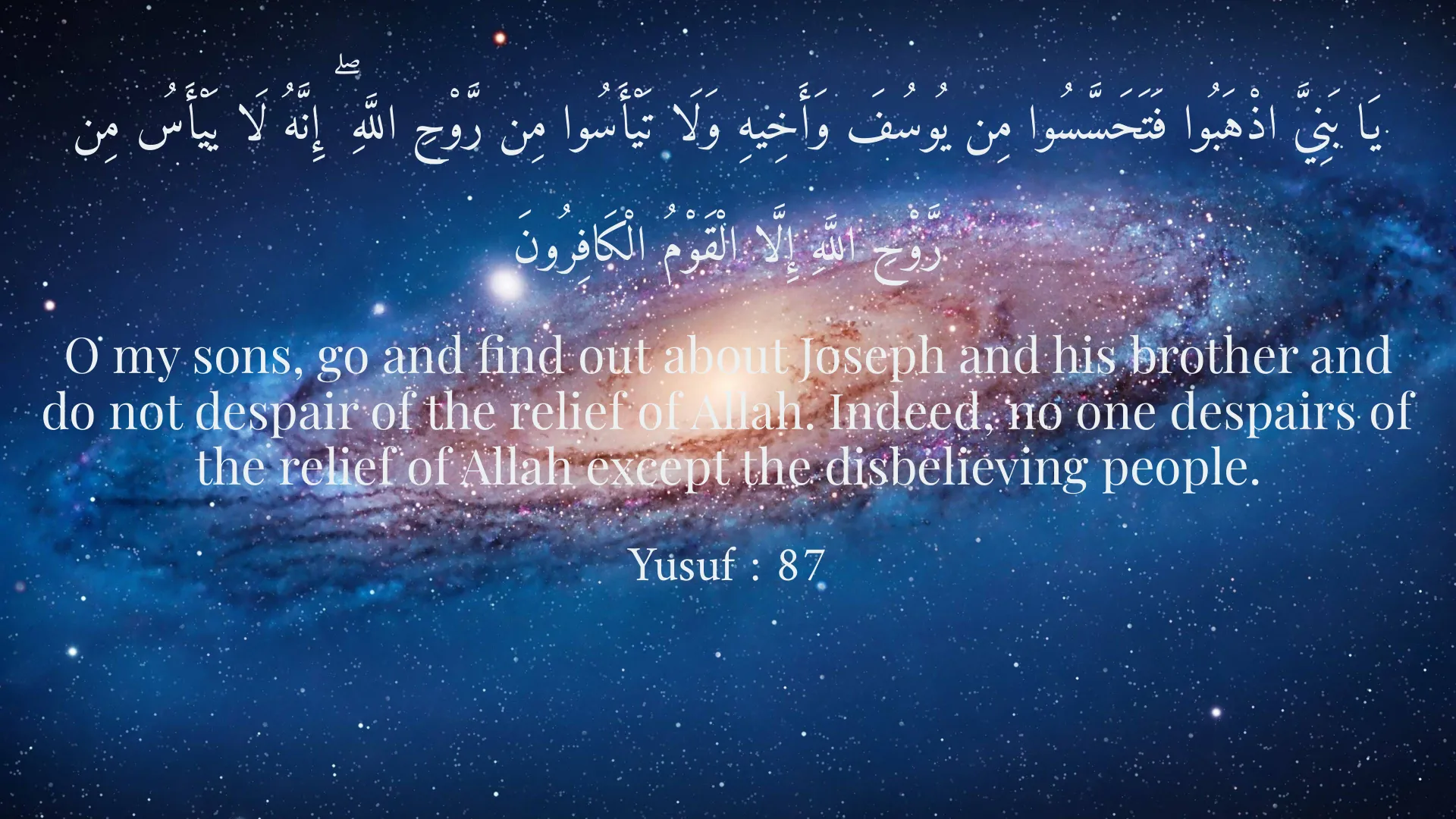
Yes, the Holy Quran extensively and emphatically addresses the paramount importance of hope and the prohibition of despair and hopelessness, especially when facing the most critical and challenging situations. These teachings are not merely ethical recommendations but fundamental tenets of faith and divine commands for the perseverance and resilience of believers. The Quran firmly establishes that whenever a person places their trust in God and does not despair of His mercy, Allah will provide a way out and relief for them. This message is reiterated in various forms across numerous verses to comfort the hearts of believers amidst adversity and to empower them with strength to endure. One of the most central concepts in this regard is 'Tawakkul' (trust in God) and 'Sabr' (patience). The Quran commands believers to rely on God in difficulties and to seek His help through patience and prayer. This implies that hope is not just an internal feeling but an active practice accompanied by complete reliance on God's infinite power and the fulfillment of one's religious duties. In Surah Al-Baqarah, verse 153, Allah says: "O you who have believed, seek help through patience and prayer. Indeed, Allah is with the patient." This verse illustrates that even in the direst circumstances, patience and prayer are the keys to relief and hope, because Allah is with those who are patient and will never abandon them. Furthermore, the Quran explicitly forbids despairing of Allah's mercy, associating it with the disbelievers. In Surah Yusuf, verse 87, Prophet Yaqub (Jacob) (peace be upon him) tells his sons: "O my sons, go and find out about Joseph and his brother and do not despair of the relief of Allah. Indeed, no one despairs of the relief of Allah except the disbelieving people." This verse clearly articulates that hope in divine relief and God's mercy is a characteristic of believers, even when all paths seem closed and there is no sign of relief. This is a story where, years after Joseph's separation, at the peak of human despair, the elderly father still appeals to divine hope, and this hope indeed materializes. Another emphasis in the Quran is the divine principle of 'ease after hardship.' This principle is beautifully articulated in Surah Al-Inshirah, verses 5 and 6: "For indeed, with hardship [will be] ease. Indeed, with hardship [will be] ease." The repetition of this verse twice consecutively provides a definitive affirmation of the certainty of ease following every difficulty. These verses reassure believers that no hardship or crisis is permanent and that within every problem lies the seed of ease and relief. This is a divine promise that gives humanity hope, encouraging them not to give up striving even in the most challenging moments, and to have faith in Allah's deliverance. Additionally, the Quran narrates many stories of prophets and righteous individuals who, in extremely critical and difficult situations, emerged triumphant from divine tests by relying on God and maintaining hope. The story of Prophet Musa (Moses) and his people facing Pharaoh and crossing the sea, the story of Prophet Yunus (Jonah) in the belly of the fish, and the story of Prophet Ayyub (Job) enduring illness and loss of wealth and children – all are examples of the pinnacle of hardship and the depths of apparent despair that, through hope in divine grace and reliance on Him, led to relief and victory. These stories are presented as paradigms for humanity, teaching lessons of hope, patience, and steadfastness in the face of adversity. Finally, the Quran teaches believers to always remember Allah and to find solace in His remembrance. In Surah Ar-Ra'd, verse 28, it states: "Those who have believed and whose hearts are assured by the remembrance of Allah. Unquestionably, by the remembrance of Allah hearts are assured." This tranquility of heart derived from the remembrance of Allah is itself the primary source of hope in critical situations, because when a person knows that they are under the protection of an infinite power, they will never feel alone or despair. Therefore, the Quran considers having hope in critical situations not only possible but an obligatory aspect of faith and a path to success and salvation.
Related Verses
يَا بَنِيَّ اذْهَبُوا فَتَحَسَّسُوا مِن يُوسُفَ وَأَخِيهِ وَلَا تَيْأَسُوا مِن رَّوْحِ اللَّهِ ۖ إِنَّهُ لَا يَيْأَسُ مِن رَّوْحِ اللَّهِ إِلَّا الْقَوْمُ الْكَافِرُونَ
O my sons, go and find out about Joseph and his brother and do not despair of the relief of Allah. Indeed, no one despairs of the relief of Allah except the disbelieving people.
Yusuf : 87
فَإِنَّ مَعَ الْعُسْرِ يُسْرًا
For indeed, with hardship [will be] ease.
Al-Inshirah : 5
إِنَّ مَعَ الْعُسْرِ يُسْرًا
Indeed, with hardship [will be] ease.
Al-Inshirah : 6
الَّذِینَ آمَنُوا وَتَطْمَئِنُّ قُلُوبُهُم بِذِکْرِ اللَّهِ ۗ أَلَا بِذِکْرِ اللَّهِ تَطْمَئِنُّ الْقُلُوبُ
Those who have believed and whose hearts are assured by the remembrance of Allah. Unquestionably, by the remembrance of Allah hearts are assured.
Ar-Ra'd : 28
Short Story
Once upon a time, a dervish lost his way in a desolate, waterless desert. The scorching sun beat down on him, and thirst had drained his strength. No matter how far he walked, he found no water and saw no shade. Despair crept into his heart like a serpent. But suddenly, he remembered Sa'di's words: "Do not imagine that God forgets you. Have patience, for after every hardship comes ease." Remembering this, a spark of hope ignited within him. Despite his parched lips and heavy steps, he continued his journey, remembering God with every step and trusting in Him. It wasn't long before a lush palm grove appeared in the distance; a clear spring flowed beneath the palm trees. The dervish revived himself with the spring's water and understood that even at the peak of despair, if there is hope in God, relief is near. Thus, he not only survived the desert but also learned a great lesson about the power of hope and reliance.