Quranic Answer
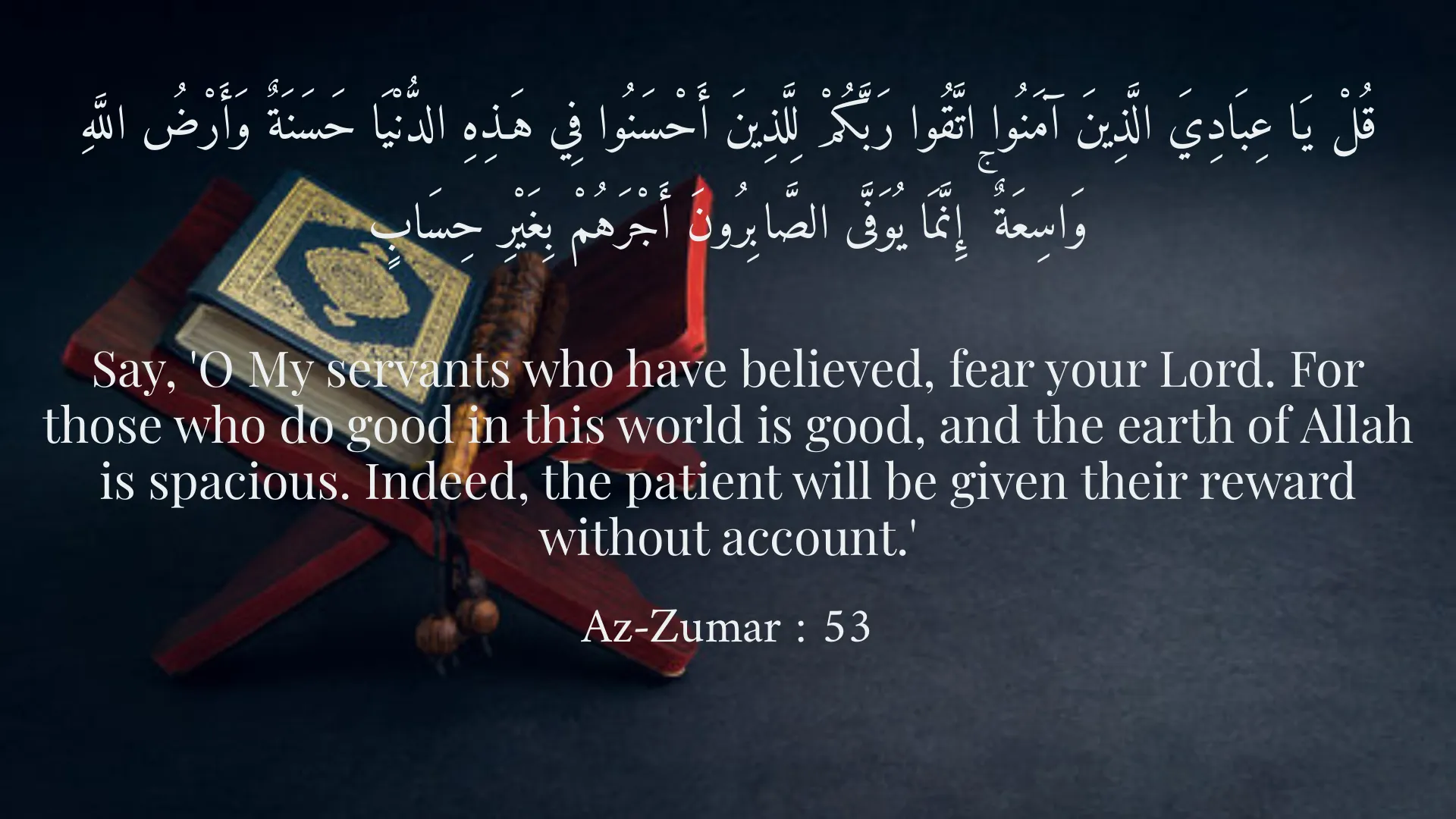
The Holy Quran, revered as the divine scripture of Islam, repeatedly addresses the theme of hope and emphasizes its significance in human life. In a world often marked by trials and tribulations, the Quran serves as a guiding light, providing comfort through the understanding of hope as a fundamental pillar of faith that bolsters the spirit of believers. The essence of hope in the Quran transcends mere optimism; it is a profound trust in Allah's mercy, a belief in the possibility of positive change, and an unwavering commitment to follow the path of righteousness. One of the most poignant manifestations of hope is found in Surah Az-Zumar, verse 53, where Allah communicates a powerful message to His followers: 'Say, O My servants who have believed, fear your Lord. For those who do good in this world is good, and the earth of Allah is spacious. Indeed, the patient will be given their reward without account.' This verse encapsulates key elements of hope: the importance of good deeds, the immense mercy of Allah, and the promise of reward for those who endure hardships. It reassures believers that no matter how dire their circumstances, there is always a silver lining through faith and action. Hope in the Quran is intricately linked to mercy and forgiveness. It serves as a driving force that encourages individuals to cultivate patience and resilience. In today's world, where challenges are manifold—from personal struggles to broader societal issues—this message rings especially true. It inspires individuals to remain steadfast in the face of adversity and never to cease their efforts to improve their circumstances. By nurturing hope within ourselves and our communities, we can foster a spirit of perseverance that empowers us to overcome obstacles. Moreover, Allah's instruction to Prophet Musa (Moses) in Surah Al-Shu'ara, verse 68 serves as a profound example of hope against adversity. Here, Allah instructs Musa to confront Pharaoh, an embodiment of tyranny and oppression. This narrative illustrates that hope is not passive; it necessitates action and courage. Musa's confrontation with Pharaoh, despite the overwhelming odds against him, symbolizes the importance of hope in challenging unjust systems. His faith and resilience serve as a beacon for believers, reinforcing the idea that hope can lead to monumental change, even in the face of seemingly insurmountable challenges. Hope in the Quran is not limited to individual meanings; it also emphasizes hope as a social and systematic value. The Quran advocates for a collective experience of hope—encouraging believers to uplift one another, foster unity, and work towards the common good. This communal perspective on hope is vital, as it reinforces the principle that collective perseverance can lead to significant societal progress. When individuals come together, energized by hope, they can effect change in their communities and beyond. The notion of hope as a catalyst for progress is underscored throughout the Quran. Believers are called to live with hope as a proactive stance towards life, which brings individuals closer to success. This belief in progress, fueled by hope, is seen as a fundamental condition for success in any field—be it personal development, social justice, or economic advancement. In various instances, the Quran encourages believers to work diligently while trusting in Allah's plan, illustrating that hope is intertwined with action. Furthermore, the concept of divine mercy permeates the entire Quran, depicting Allah as Al-Rahman (The Most Merciful) and Al-Rahim (The Most Compassionate). This recurring theme reiterates the notion that no one is beyond the reach of Allah’s mercy, and thus, everyone is worthy of hope. This inclusive message of hope ensures that people from all walks of life can find solace and comfort in their faith, regardless of their past actions. The Quran repeatedly underscores the need for repentance and seeking forgiveness, further embedding the understanding that no matter how far one has strayed, the door to return is always open. Additionally, the Quran articulates the importance of hope in fostering a positive outlook during difficult times. Believers are often reminded that trials serve a purpose, and through them, they can emerge stronger and more resilient. In Surah Al-Baqarah, verse 286, Allah assures believers that He does not burden a soul beyond its capacity. This acknowledgment not only instills hope but also equips individuals with a sense of responsibility and agency in coping with life’s hurdles. The understanding that hardships are accompanied by lessons and potential growth allows believers to maintain hope even in dire situations. In conclusion, hope is intricately woven into the fabric of the Quran, serving as a source of strength and motivation for believers. Through its numerous verses, the Quran portrays hope not only as a personal sentiment but as a collective value that fosters communal resilience. It teaches that hope, grounded in faith and action, can transform challenges into opportunities for growth and advancement. In an age characterized by uncertainty, the timeless message of hope offered in the Quran remains a vital source of comfort and inspiration, encouraging individuals to remain steadfast and hopeful in their journey of faith. Living with hope indeed brings one closer to achieving success and improving circumstances, ultimately participating in the greater tapestry of human existence woven by divine will. As believers navigate the complexities of life, the Quran reminds them that with patience, good deeds, and unwavering trust in Allah's mercy, they can not only survive but thrive.
Related Verses
قُلْ يَا عِبَادِيَ الَّذِينَ آمَنُوا اتَّقُوا رَبَّكُمْ لِلَّذِينَ أَحْسَنُوا فِي هَـذِهِ الدُّنْيَا حَسَنَةٌ وَأَرْضُ اللَّهِ وَاسِعَةٌ ۚ إِنَّمَا يُوَفَّى الصَّابِرُونَ أَجْرَهُمْ بِغَيْرِ حِسَابٍ
Say, 'O My servants who have believed, fear your Lord. For those who do good in this world is good, and the earth of Allah is spacious. Indeed, the patient will be given their reward without account.'
Az-Zumar : 53
وَإِذْ قَالَ رَبُّكَ لِلْمَلَائِكَةِ إِنِّي خَالِقٌ بَشَرًا مِّن طِينٍ
And [mention] when your Lord said to the angels, 'Indeed, I will create a human being from clay.'
Ash-Shu'ara : 68
Short Story
One day, a man was feeling worried and hopeless in his heart. He decided to listen to the words of Allah and read the verses of the Quran. When he reached the verse 'Have hope in Allah’s mercy,' he felt a strange peace in his heart and said to himself, 'No problem is without a solution.' From that day on, he tried to remain hopeful and positive, encouraging others to trust in divine hope.