Quranic Answer
The Holy Quran is a profound spiritual and philosophical text that addresses various aspects of human existence, morality, and ethics. One of the significant concepts implicit within its verses is that of conscience, which can be understood as an individual's inner sense of right and wrong. Although the Quran does not explicitly use the term 'conscience,' it undoubtedly conveys the idea through numerous references and teachings that highlight the importance of self-awareness, moral responsibility, and accountability. This article explores the concept of conscience as indicated in the Holy Quran, discussing its implications for believers in their spiritual journey and moral conduct. Conscience is often characterized as an internal force that guides a person’s decisions, influences their feelings of guilt or remorse, and shapes their ethical values. The Quran emphasizes the necessity of being mindful of oneself and one's actions. In Surah Al-Imran (3:135), Allah states, "And those who, when they are reminded of the verses of their Lord, do not fall upon them deaf and blind." This directive encourages believers to remain vigilant of their inner compass, echoing the notion that self-awareness is pivotal to spiritual growth and moral conduct. The encouragement to reflect upon one's actions and decisions is not merely advice, but a fundamental principle for safeguarding oneself from moral pitfalls. The subsequent warning against the 'Fire of Hell' serves as a reminder that every action has consequences, reinforcing the notion that a well-tuned conscience is essential for avoiding a detrimental path. Thus, this self-awareness and consideration of one’s deeds directly link to the function and importance of conscience, as believers are urged to constantly evaluate their choices and motivations. In addition to self-reflection, the Quran firmly posits that guidance toward truth inherently resides within humans. In Surah Al-Baqarah (2:142), Allah asserts, "Indeed, Allah guides whom He wills to the straight path." This verse implies that discernment between right and wrong is not entirely external but is rooted in the human soul. The presence of an inner sense of moral clarity suggests that every individual possesses a form of conscience that, when acknowledged and nurtured, can lead them towards ethical and righteous living. The Quran also delineates the interconnection between human conscience and divine guidance. In Surah Al-Anfal (8:24), Allah admonishes humanity to respond to His call: "O you who have believed, respond to Allah and the Messenger when he calls you to that which gives you life.” This call to life can be interpreted not only as physical existence but also as a spiritual awakening that prompts believers to tune into their conscience. By yielding to this inner voice, individuals can navigate through life's challenges with a moral grounding aligned with divine principles. Furthermore, the Quran underscores the significance of accountability on the Day of Judgment, reinforcing the idea that one’s conscience plays a crucial role in this ultimate evaluation. In Surah Al-Qiyamah (75:14-15), it says, "And man will be informed that Day of what he brought [of good or evil]." This acknowledgment suggests that self-awareness, developed through an attuned conscience, will enable individuals to reflect on their life choices when they stand before Allah. The reminders of judgment day serve to reassure believers that their inner moral compass, influenced by their conscience, will either attest to their righteousness or bring forth the weight of their misdeeds. As we delve deeper into the notion of conscience, we find that the Quran articulates the necessity for believers to cultivate a keen awareness of their inner self. This cultivation involves a continuous effort to align one’s actions with ethical behaviors derived from a conscientious understanding of good and evil. In Surah Al-Baqarah (2:177), Allah states that righteousness is not merely in facing east or west but involves belief in Allah, the Day of Judgment, the Angels, the Book, and the Prophets. This comprehensive definition portrays that being morally upright is interconnected with spiritual beliefs and adherence to divine guidelines, which are all significantly mediated by one’s conscience. Moreover, the teachings of the Quran encourage believers to seek knowledge and wisdom, which further enriches their moral conscience. In Surah Al-Mujadila (58:11), it is stated, "Allah will raise those who have believed among you and those who were given knowledge, by degrees." This verse highlights that the pursuit of knowledge serves as a pathway to strengthening one’s conscience, as a well-informed individual can better discern the complexities of morality and ethics in a world fraught with challenges. In essence, the Quran promotes a holistic approach to conscience as a cooperative interaction between divine guidance and human introspection. The interplay of external teachings and internal reflections fosters a robust framework for understanding morality that is deeply embedded within the human psyche. Understanding one's conscience is, therefore, not simply an isolated endeavor but a shared journey of growth towards becoming a morally responsible being. In conclusion, the Quran indeed addresses the concept of conscience through various teachings and reminders emphasizing morality, self-awareness, and divine accountability. Although the term 'conscience' may not be directly mentioned, its essence is palpable throughout the text. The guidance provided in the Quran highlights the importance of cultivating a conscientious spirit that is attentive to one's inner voice and aligned with ethical principles. As believers navigate their spiritual and moral journeys, they are encouraged to embrace and refine their conscience as an instrument that not only aids in their personal conduct but also enriches their connection with their Creator and fellow beings.
Related Verses
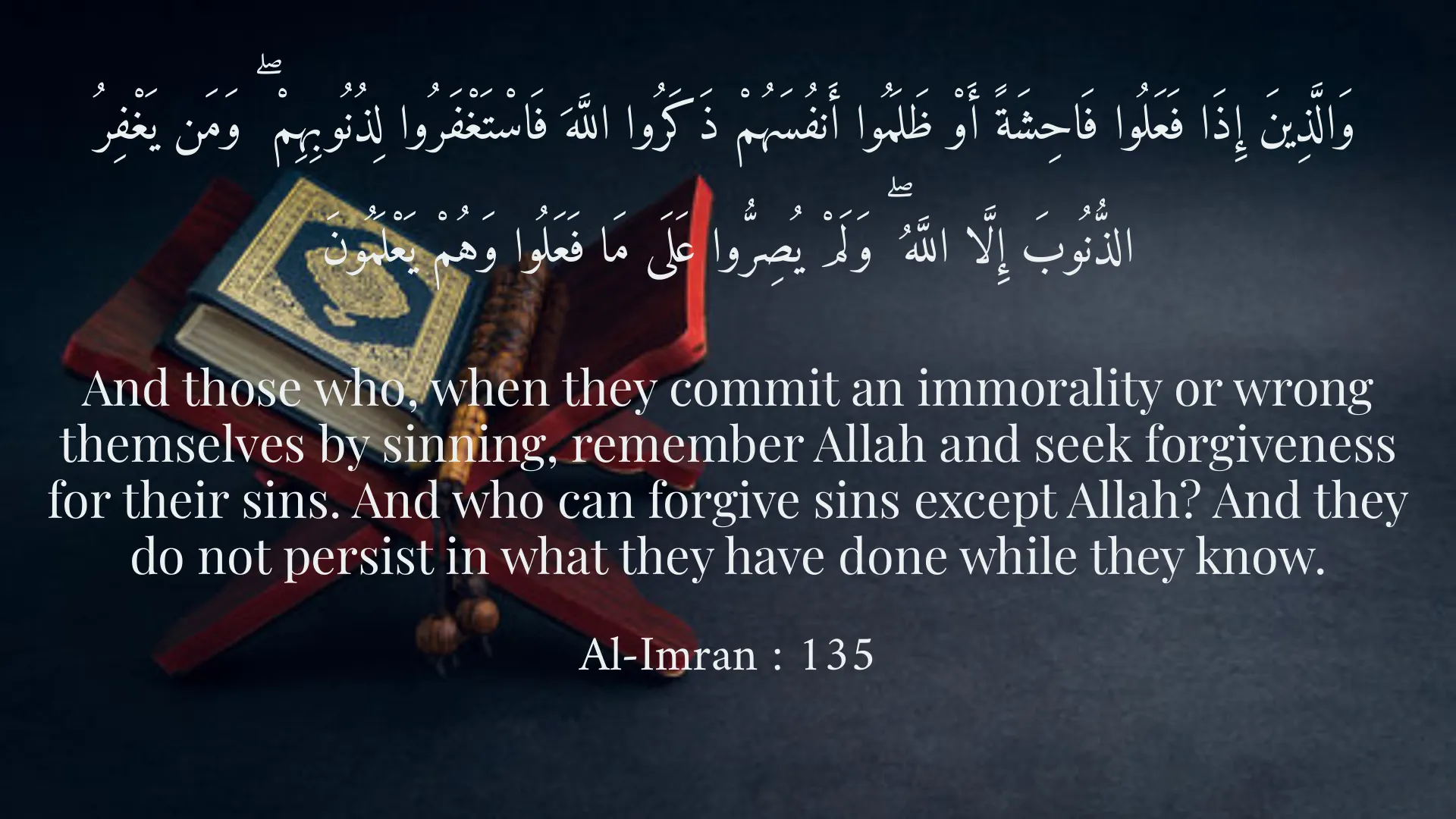
وَالَّذِينَ إِذَا فَعَلُوا فَاحِشَةً أَوْ ظَلَمُوا أَنفُسَهُمْ ذَكَرُوا اللَّهَ فَاسْتَغْفَرُوا لِذُنُوبِهِمْ ۖ وَمَن يَغْفِرُ الذُّنُوبَ إِلَّا اللَّهُ ۖ وَلَمْ يُصِرُّوا عَلَى مَا فَعَلُوا وَهُمْ يَعْلَمُونَ
And those who, when they commit an immorality or wrong themselves by sinning, remember Allah and seek forgiveness for their sins. And who can forgive sins except Allah? And they do not persist in what they have done while they know.
Al-Imran : 135
كَذَلِكَ جَعَلْنَاكُمْ أُمَّةً وَسَطًا لِّتَكُونُوا شُهَدَاءَ عَلَى النَّاسِ وَيَكُونَ الرَّسُولُ عَلَيْكُمْ شَهِيدًا ۚ وَمَا جَعَلْنَا الْقِبْلَةَ الَّتِي كُنتَ عَلَيْهَا إِلَّا لِنَعْلَمَ مَن يَتَّبِعُ الرَّسُولَ مِمَّن يَنقَلِبُ عَلَى عَقِبَيْهِ ۚ وَإِن كَانَتْ لَكَبِيرَةً إِلَّا عَلَى الَّذِينَ هَدَى اللَّهُ ۗ وَمَا كَانَ اللَّهُ لِيُضِيعَ إيمانَكُمْ ۚ إنَّ اللَّهَ بِالنَّاسِ لَرَؤُوفٌ رَّحِيمٌ
And thus We have made you a justly balanced nation that you will be witnesses over the people and the Messenger will be a witness over you. And We did not make the direction of your prayer which you used to pray except to make evident who would follow the Messenger and who would turn back on his heels. And indeed, it was great except for those whom Allah guided. And Allah would not cause your faith to be lost. Indeed Allah is to the people Kind and Merciful.
Al-Baqarah : 142
بَلْ يُكَذِّبُونَ بِالْحَقِّ لَمَّا جَاءَهُمْ فَهُمْ فِي أَمْرٍ مَّرِيجٍ
But they deny the truth when it has come to them, and they are in a state of confusion.
Al-Qiyamah : 14
Short Story
One day, a young man named Amir faced a dilemma about his future. He was unsure which path to choose. After some time, he turned to the verses of the Quran and realized that God had placed within humanity an inner sense for distinguishing right from wrong. Amir decided to listen to his conscience and act accordingly. Soon, he found himself making better choices, and his life began to improve.