Quranic Answer
The Concept of Kindness and Respect for Parents in the Holy Quran The relationship between parents and their children is a cornerstone of human life and culture, and it carries significant weight in many religious traditions. In Islam, the Holy Quran emphasizes the importance of kindness and respect towards parents distinctly and with clarity. This article delves into the fundamental principles regarding parental respect found within the Quran, showcasing how these teachings resonate through both individual conduct and societal values. ### The Divine Commandment One of the most prominent references to kindness towards parents is located in Surah Al-Isra, verse 23, which states: "And your Lord has decreed that you not worship except Him, and to parents, good treatment..." This verse serves as a powerful reminder that the respect and reverence we owe our parents stands alongside the worship of God as a primary tenet of faith. The explicit mention of the relationship between the act of worshiping Allah and the treatment of parents indicates a divine hierarchy of duties, suggesting that reverence for one’s progenitors is intertwined with the very concept of faith itself. This connection asserts that individual piety cannot be fully realized without fulfilling responsibilities towards parents, thus ensuring the acknowledgment of their sacrifices and their vital roles in nurturing their children. ### Age and Attitude Furthermore, the Quran instructs believers to maintain their kindness towards parents, particularly as they age. This notion is reinforced in the same verse where it implies that, as parents grow older, they often require greater support, love, and patience from their children. Speaking kindly and acting with respect are not merely suggestions but religious obligations that reflect a person’s moral and spiritual standing. Maintaining a gentle demeanor and positive attitude towards elderly parents is a clear portrayal of one’s gratitude and respect for the sacrifices they made during their youth—sacrifices often overlooked by the younger generations. ### Gratefulness and Repayment In Surah Luqman, verse 14 reinforces this theme: "And We have enjoined upon man [care] for his parents. But if they endeavor to make you associate with Me that of which you have no knowledge, do not obey them. To Me is your return, and I will inform you about what you used to do." This verse acknowledges the struggles and challenges faced by parents, thus emphasizing the significance of being grateful towards them. It underscores the notion that children owe a debt of gratitude, not only for the physical care provided during their upbringing but also for the emotional and moral guidance parents impart throughout their lives. Yet, the verse also carefully delineates the boundaries of obedience. While respect and kindness are paramount, the Quran cautions against compromising one’s faith in the pursuit of pleasing parents, particularly if they demand actions that conflict with the core tenets of Islam. Herein lies an essential balance: we are called to love our parents dearly but not at the expense of our spiritual health or ethical convictions. ### Societal Implications The Quranic edicts on how to treat parents have deep social implications, encouraging cultural values that uphold the family structure. A society built on respect for parents inevitably fosters an environment where younger generations understand the importance of family integrity, cooperation, and mutual support. This, in turn, nurtures respect for elders throughout the community. Additionally, the stress on parental care promotes ethical behavior and accountability—a pathway to instill fundamental values within children, ensuring they learn the significance of compassion, responsibility, and charity. When children witness their parents being treated with kindness, they are more likely to emulate these values in their future interactions, perpetuating a cycle of respect and kindness. ### Psychological and Emotional Benefits The religious guidance on honoring parents extends beyond spiritual obligations; it also has psychological and emotional benefits. Fostering a positive relationship with parents can lead to healthier emotional well-being for both parties. Parents who feel respected and loved may experience reduced stress and increased happiness, which can have a positive effect on their overall health and their relationships with others. Conversely, children raised in environments that emphasize kindness and respect towards parents are likely to develop emotional intelligence, empathy, and better communication skills. They learn the importance of human connections and become more adept at nurturing relationships of their own, both within and beyond their familial structures. ### Conclusion In summary, the teachings of the Holy Quran regarding the treatment of parents form a fundamental aspect of Islamic doctrine. By urging believers to show kindness and respect towards their parents, not only when they are young but also as they age, the Quran establishes a framework for fostering love within families and society at large. This framework emphasizes the duality of obligation: the divine connection between God and parental respect becomes a pillar for building moral character and a compassionate community. It is crucial, however, that this respect does not come at the expense of one’s faith—therein lies the essence of balance that Islam advocates. Through adhering to these guidelines, Muslims can contribute to a world enriched by respect, compassion, and mutual responsibility, fulfilling both their spiritual and familial obligations in a harmonious manner. The imperative remains clear: being kind to parents is not just a recommendation found in the Quran; it is an essential reflection of one’s commitment to both faith and family.
Related Verses
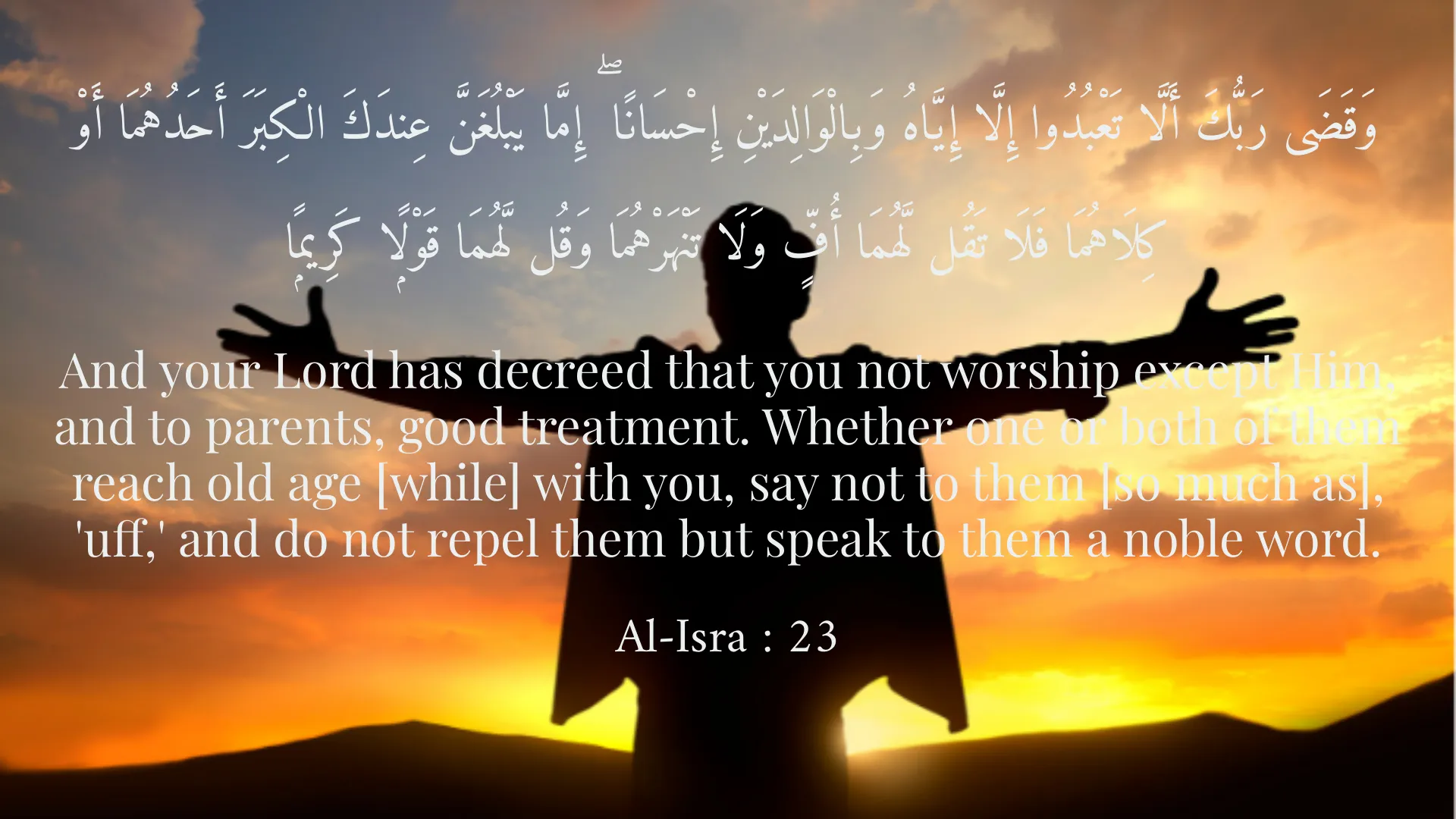
وَقَضَى رَبُّكَ أَلَّا تَعْبُدُوا إِلَّا إِيَّاهُ وَبِالْوَالِدَيْنِ إِحْسَانًا ۖ إِمَّا يَبْلُغَنَّ عِندَكَ الْكِبَرَ أَحَدُهُمَا أَوْ كِلَاهُمَا فَلَا تَقُل لَّهُمَا أُفٍّ وَلَا تَنْهَرْهُمَا وَقُل لَّهُمَا قَوْلًۭا كَرِيمًۭا
And your Lord has decreed that you not worship except Him, and to parents, good treatment. Whether one or both of them reach old age [while] with you, say not to them [so much as], 'uff,' and do not repel them but speak to them a noble word.
Al-Isra : 23
وَوَصَّيْنَا الْإِنْسَانَ بِوَالِدَيْهِ ۖ أَنِ اشْكُرْ لِي وَلِوَالِدَيْكَ ۚ إِلَيَّ الْمَصِيرُ
And We have enjoined upon man [care] for his parents. But if they endeavor to make you associate with Me that of which you have no knowledge, do not obey them. To Me is your return, and I will inform you about what you used to do.
Luqman : 14
Short Story
One day, an elderly woman was shopping at the market, and her daughter was helping her. Suddenly, the woman fell to the ground due to a chronic illness. Everyone rushed to help her, and the daughter exclaimed loudly: 'I am so grateful to God that this is my mother, and I have the duty to help her!' This incident shows that love and kindness towards parents should be manifested not only in the Quran but also in our daily behaviors.