Quranic Answer
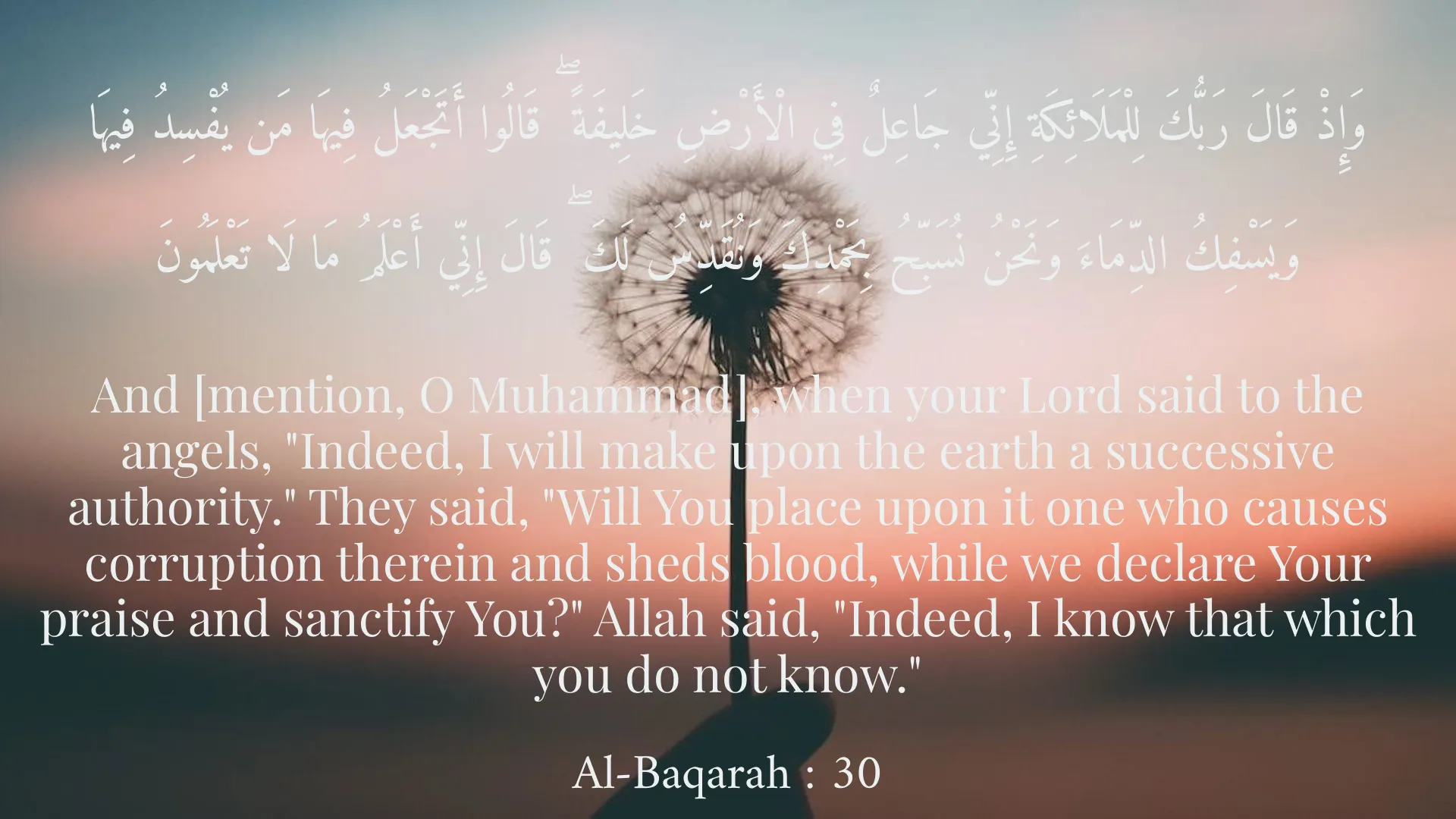
The Holy Quran, far from being silent on the crucial issue of human social responsibility towards the Earth, comprehensively lays down the foundational principles for this responsibility. Quranic teachings portray humanity not as absolute owners but as "Khalifa" (vicegerents or stewards) appointed by God on Earth. This status comes with profound obligations and responsibilities. This perspective transcends a mere environmental viewpoint, integrating it as an inseparable component of faith and worship. One of the most central concepts in this regard is "Khalifa" or stewardship. In Surah Al-Baqarah, verse 30, Allah states: "And [mention, O Muhammad], when your Lord said to the angels, 'Indeed, I will make upon the earth a successive authority (khalifa)." This "successive authority" is humanity, and stewardship does not imply arbitrary rule; rather, it signifies just management, protection, and cultivation of the Earth according to divine will and laws. This vicegerency includes the responsibility to safeguard natural resources, preserve biodiversity, and ensure sustainability for future generations. The Earth and all within it are a divine trust (Amanah) placed in human hands. Therefore, humans are responsible for preserving and managing this trust in the best possible way, as they will be held accountable before their Creator and future generations. This perspective does not view the Earth merely as a place for exploitation but as a living, valuable entity deserving of care and respect. The Quran explicitly prohibits "Fasad fi al-Ard" (corruption on Earth). Fasad refers to any form of decay, destruction, or disorder, which unequivocally includes environmental degradation. In Surah Al-A'raf, verse 56, Allah declares: "And do not cause corruption on the earth after its reformation." This verse clearly indicates that Allah created the Earth in a state of order and balance, and any human action that disrupts this balance and leads to corruption is strongly condemned by divine decree. Deforestation, pollution of water and air, extinction of species, and any other action that harms the health of the ecosystem are clear manifestations of corruption on Earth. Surah Ar-Rum, verse 41, further emphasizes this: "Corruption has appeared on land and sea by [reason of] what the hands of people have earned, so that He may let them taste part of [the consequence of] what they have done, that perhaps they will return [to righteousness]." This verse explicitly links human actions to environmental corruption and warns of its devastating consequences. This corruption not only encompasses injustice towards people and disrupting social order but also includes harming nature. Our social responsibility dictates that we refrain from any activity that harms the environment and strive to improve and restore it. This includes not only major destructive actions but also small, daily behaviors that can gradually cause environmental damage. The concept of "Mizan" or balance is another pivotal Quranic teaching. Allah created the universe with precise balance and order. In Surah Ar-Rahman, verses 7-9, we read: "And the heaven He raised and set the balance (Mizan). That you may not transgress [due measure] in the balance. And establish weight in justice and do not make deficient the balance." While these verses initially refer to social and economic justice, they encompass a broader concept of cosmic balance and the necessity of preserving it. Disturbing the natural balance, overexploiting resources, and neglecting the rights of nature all fall under transgressing the divine Mizan. Humanity is responsible for maintaining this balance and avoiding any excess or deficiency in resource utilization. This principle teaches us that every action in nature has an impact on the entire system, and we must act with these effects in mind. Our lives should be in harmony with nature, not in conflict and competition. The Quran also forbids "Israf" (excess and extravagance) in the consumption of resources. In Surah Al-An'am, verse 141, it states: "And eat of its fruit when it yields and give its due on the day of its harvest. And do not be extravagant; indeed, He does not like those who are extravagant." This principle applies not only to food and drink but generally to the use of all resources. Excessive use and waste of natural resources, water, energy, and everything Allah has created for human benefit are considered forms of extravagance, which are reprehensible in the sight of the Quran. Social responsibility towards the Earth demands that humans utilize resources with wisdom, moderation, and foresight to ensure their availability for future generations. This principle reminds us that resources are finite and must be used with care and gratitude, not with recklessness and greed. Educating a generation committed to these values is part of our social responsibility. Furthermore, the Holy Quran regards nature as replete with "Ayat" (signs) of Allah, inviting reflection, contemplation, and recognition of God. Observing mountains, rivers, seas, rain, plants, and animals all invites contemplation of the Creator's power and wisdom (e.g., Surah Al-Jathiyah, verses 3-6 or Surah An-Nahl, verses 10-13). Destroying these signs is akin to ignoring and being ungrateful for divine blessings. This perspective teaches humanity that the relationship with nature is not merely material but also spiritual and cognitive, doubling the responsibility to protect it. Every time we look at the beauties of nature, we should reflect on its Creator and be grateful for these blessings. Social responsibility towards the Earth, from the Quranic perspective, has both individual and collective dimensions. Every individual is responsible for practicing sustainable consumption in daily life and refraining from polluting the environment. At the societal level, governments and institutions also bear the responsibility to enact and enforce laws for environmental protection, promote sustainable development, and provide necessary education in this field. This responsibility extends beyond geographical boundaries and generations. We are not only responsible for the environment of our own country but also for the global environment, as the Earth is the common home for all humanity. Ultimately, the Quranic teachings regarding human responsibility towards the Earth provide a comprehensive ethical and legal framework that, if properly understood and implemented, can guide humanity in addressing current environmental challenges. This framework is built upon respect for creation, maintaining balance, avoiding corruption, and sustainable resource management. As God's vicegerents on Earth, humans are obliged to preserve and manage this divine trust with the utmost care and responsibility to gain the Lord's pleasure and secure a sustainable and healthy future for themselves and successive generations. This responsibility is a sign of perfected faith and a deep understanding of humanity's place in existence. By adhering to these teachings, we can move towards a greener and more sustainable world where both humans and nature live in peace and prosperity.
Related Verses
وَإِذْ قَالَ رَبُّكَ لِلْمَلَائِكَةِ إِنِّي جَاعِلٌ فِي الْأَرْضِ خَلِيفَةً ۖ قَالُوا أَتَجْعَلُ فِيهَا مَن يُفْسِدُ فِيهَا وَيَسْفِكُ الدِّمَاءَ وَنَحْنُ نُسَبِّحُ بِحَمْدِكَ وَنُقَدِّسُ لَكَ ۖ قَالَ إِنِّي أَعْلَمُ مَا لَا تَعْلَمُونَ
And [mention, O Muhammad], when your Lord said to the angels, "Indeed, I will make upon the earth a successive authority." They said, "Will You place upon it one who causes corruption therein and sheds blood, while we declare Your praise and sanctify You?" Allah said, "Indeed, I know that which you do not know."
Al-Baqarah : 30
وَلَا تُفْسِدُوا فِي الْأَرْضِ بَعْدَ إِصْلَاحِهَا وَادْعُوهُ خَوْفًا وَطَمَعًا ۚ إِنَّ رَحْمَتَ اللَّهِ قَرِيبٌ مِّنَ الْمُحْسِنِينَ
And cause not corruption upon the earth after its reformation. And invoke Him in fear and aspiration. Indeed, the mercy of Allah is near to the doers of good.
Al-A'raf : 56
ظَهَرَ الْفَسَادُ فِي الْبَرِّ وَالْبَحْرِ بِمَا كَسَبَتْ أَيْدِي النَّاسِ لِيُذِيقَهُم بَعْضَ الَّذِي عَمِلُوا لَعَلَّهُمْ يَرْجِعُونَ
Corruption has appeared on land and sea by [reason of] what the hands of people have earned so that He may let them taste part of [the consequence of] what they have done that perhaps they will return [to righteousness].
Ar-Rum : 41
Short Story
It is narrated that in ancient times, a king owned a vast garden. He had two gardeners: an old and wise one named Hakim, and a young and impulsive one named Nadan (meaning ignorant). The king entrusted each with a portion of the garden to cultivate. Hakim, with patience and foresight, prepared the soil, carefully planted saplings, and watered them precisely, as if each drop of water were a precious jewel. He would say, "This Earth is a trust from God in our hands, and every speck of it will be accounted for one day." But Nadan, with carelessness and extravagance, wasted water needlessly and planted trees hastily without proper care. He believed that the Earth was infinitely generous and that whatever he took from it, there would always be more. One day, the king came to inspect the garden. Hakim's plot was lush and fruitful, with strong trees bearing abundant fruits. But Nadan's plot was barren and dry, with withered trees that bore no fruit. The king turned to Hakim and asked, "How did you cultivate this land so well?" Hakim replied, "O King, I treated the Earth as my own child and showed kindness to it. Whatever I took from it, I returned to it, and I avoided extravagance." The king then turned to Nadan and said, "Why did you ruin the land?" Nadan hung his head and said, "I thought my power over the land was infinite, and there was no need for care." The king said, "O Nadan, every blessing has a limit and measure, and so does the Earth. Our responsibility is not to plunder it, but to cultivate and preserve it. Whoever neglects God's trust will be a loser, and whoever looks after it well will benefit." And so, the king rewarded Hakim and dismissed Nadan, so that everyone might know that the Earth is a trust, and the responsibility to preserve it rests on every human being, and its destruction is the destruction of one's own life.