Quranic Answer
The Holy Quran, as the ultimate source of guidance and wisdom for humanity, while not explicitly using the modern term 'creativity,' profoundly addresses concepts that foster and encourage the spirit of innovation and ingenuity in humans. Indeed, one can deduce the importance of creativity from the very essence of its divine verses, through its emphasis on God's attributes, its encouragement of reflection and contemplation, its call to develop the Earth, and by recounting the stories of the prophets. The primary and most significant axis in understanding the Quran's stance on creativity is recognizing Allah Almighty as 'Al-Khaliq' (The Creator), 'Al-Badi'' (The Originator of the heavens and the earth, the Unique Inventor), and 'Al-Musawwir' (The Fashioner). By creating the universe in an orderly, beautiful, diverse, and flawless manner, Allah introduces Himself as the ultimate and boundless source of creativity. Everything in the heavens and on Earth, from the smallest particle to the largest galaxies, is a sign of His unparalleled creativity. This divine creation not only prompts humanity to praise and wonder but also conveys the message that the potential for creation and innovation has been entrusted within them. Humanity, created in 'the best of molds' and 'in the finest stature,' possesses intellect that can observe, analyze, and create. Therefore, any human creativity is, in essence, a reflection of the divine attribute of creativity, and an opportunity to approach absolute perfection and beauty. The Quran repeatedly invites humanity to 'Tafakkur' (deep thinking), 'Tadabbur' (contemplation and deliberation), and 'Ta'aqqul' (exercising intellect) regarding creation and divine signs. These concepts form the backbone of creative thought. Tafakkur means deep and organized thinking about phenomena; Tadabbur means examining the consequences of matters and looking beyond the surface; and Ta'aqqul means employing intellect and reason to understand truths. When humans reflect on Quranic verses concerning the sky, the earth, rain, plants, animals, and even their own creation (for example, in Surah Ar-Rum, verse 22, which cites the diversity of languages and colors as signs for those who possess knowledge), their minds become prepared to discover hidden relationships, gain deeper understanding, and find novel solutions. This kind of thinking is the main driver of innovation and the creation of new ways. Allah does not want humans to merely imitate; rather, He invites them to explore, understand, and create, leading to development and progress. The responsibility of 'developing the Earth' (I'mar al-ard), entrusted to humanity in the Quran, is also directly linked to creativity. In Surah Hud, verse 61, Allah says: 'He it is Who produced you from the earth and settled you in it; so ask forgiveness of Him, then turn to Him.' Developing the Earth is not merely about physical construction but encompasses all forms of development, improvement, and enhancement of human life quality using available resources. This necessitates creative thinking to solve problems, design efficient systems, create new tools, and optimize processes. From modern agriculture to sustainable architecture, from resource management to technology development, all require a creative and innovative spirit for humans to fulfill their divine duty towards the Earth in the best possible way. The stories of the prophets in the Quran also present brilliant examples of the application of creativity and practical intelligence. Prophet Noah (peace be upon him), by building the ark under circumstances where people saw no need for it and had no prior experience of such a structure, stands as a prime example of creative engineering. Prophet David (peace be upon him), with his invention of chainmail armor (Surah Al-Anbiya, verse 80), not only utilized his abilities but also brought about an innovation in the defense industry of his time. Prophet Joseph (peace be upon him), through his interpretation of the king's dream and his ingenious management plan for storing grains during seven years of abundance to be used during seven years of famine (Surah Yusuf), demonstrated unparalleled creativity in crisis management and economic planning. These stories teach us that the divine prophets, in addition to their spiritual and moral aspects, also utilized intelligence, wisdom, and creative abilities in practical life to solve problems and advance divine goals. In conclusion, the Holy Quran, indirectly yet powerfully, points to the importance of creativity. This divine book guides the mind toward discovery, invention, and innovation, provided that these activities are in line with goodness, justice, and divine pleasure. Creativity in Islam is not merely an individual skill but a collective responsibility that leads to the development of the Earth, the progress of society, and closeness to Allah. A creative human is one who not only utilizes what exists but, with insight and foresight, imagines and brings into existence what does not yet exist, and this in itself is a manifestation of their worthiness for the status of Allah's vicegerent.
Related Verses
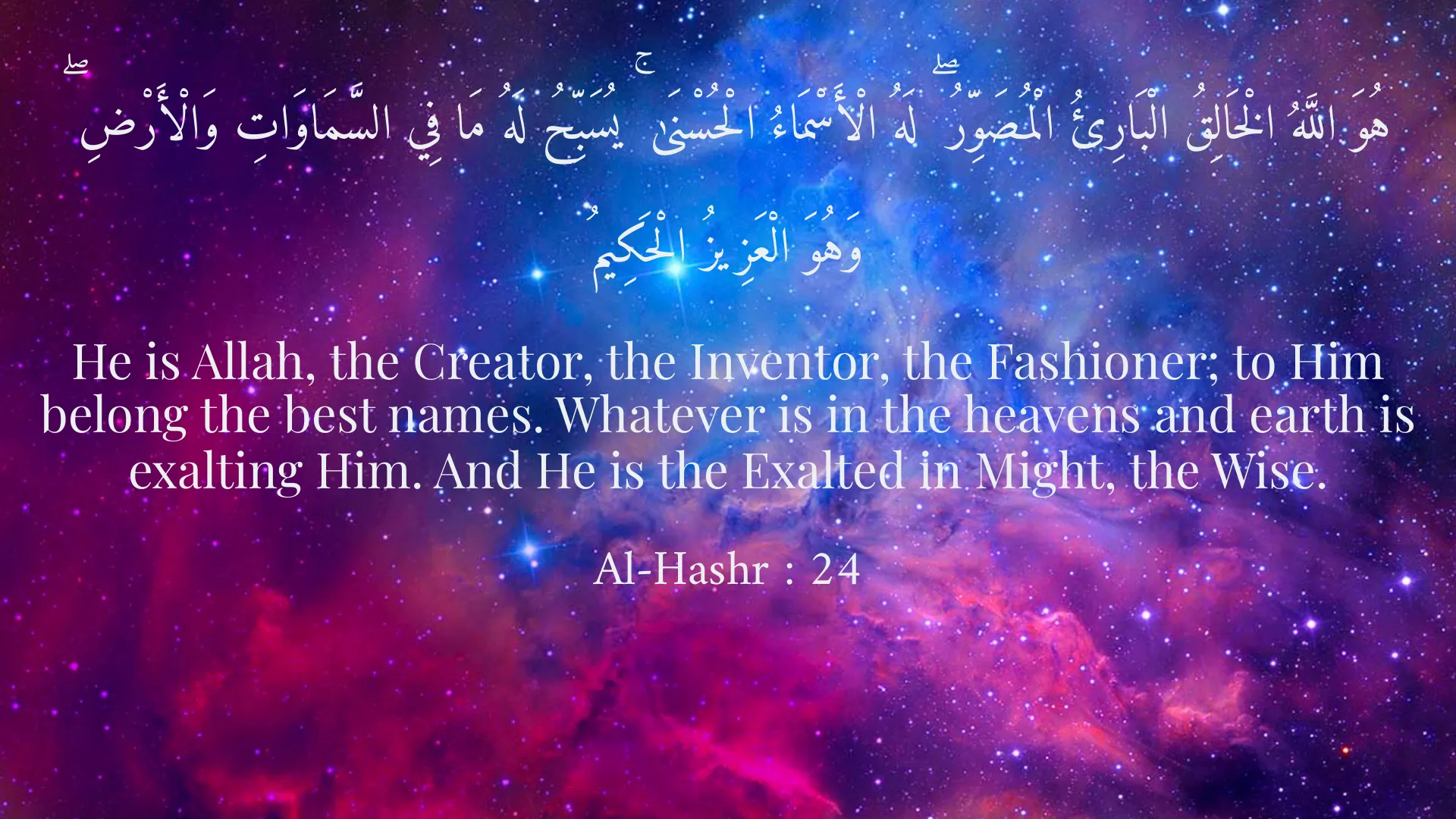
هُوَ اللَّهُ الْخَالِقُ الْبَارِئُ الْمُصَوِّرُ ۖ لَهُ الْأَسْمَاءُ الْحُسْنَىٰ ۚ يُسَبِّحُ لَهُ مَا فِي السَّمَاوَاتِ وَالْأَرْضِ ۖ وَهُوَ الْعَزِيزُ الْحَكِيمُ
He is Allah, the Creator, the Inventor, the Fashioner; to Him belong the best names. Whatever is in the heavens and earth is exalting Him. And He is the Exalted in Might, the Wise.
Al-Hashr : 24
الَّذِي خَلَقَ سَبْعَ سَمَاوَاتٍ طِبَاقًا ۖ مَّا تَرَىٰ فِي خَلْقِ الرَّحْمَٰنِ مِن تَفَاوُتٍ ۖ فَارْجِعِ الْبَصَرَ هَلْ تَرَىٰ مِن فُطُورٍ
He who created seven heavens in layers. You do not see in the creation of the Most Merciful any inconsistency. So return [your] vision [to the sky]; do you see any breaks?
Al-Mulk : 3
وَإِلَىٰ ثَمُودَ أَخَاهُمْ صَالِحًا ۚ قَالَ يَا قَوْمِ اعْبُدُوا اللَّهَ مَا لَكُم مِّنْ إِلَٰهٍ غَيْرُهُ ۖ هُوَ أَنشَأَكُم مِّنَ الْأَرْضِ وَاسْتَعْمَرَكُمْ فِيهَا فَاسْتَغْفِرُوهُ ثُمَّ تُوبُوا إِلَيْهِ ۚ إِنَّ رَبِّي قَرِيبٌ مُّجِيبٌ
And to Thamud [We sent] their brother Salih. He said, 'O my people, worship Allah; you have no deity other than Him. He has produced you from the earth and settled you in it, so ask forgiveness of Him and then repent to Him. Indeed, my Lord is near and responsive.'
Hud : 61
Short Story
It is narrated that in a land, a lock was crafted so intricate that no artisan could open it. Many people tried to force it open and failed. Amidst the despair, a wise old man with years of experience in craftsmanship stepped forward. He possessed neither brute strength nor strange tools. With a deep gaze and a calm mind, he took the lock. He gently touched it, and by listening to its inner whispers, he discerned its secret. Then, with a simple key and mere finesse, he opened the lock. Everyone exclaimed in wonder: "How did you solve this difficult puzzle?" The old man smiled and said: "Every creation has a secret. This lock could not be opened by force, but by understanding and insight. The secret of every creation lies in comprehending its structure." This story reminds us that the value of creativity lies in deep understanding and a different approach, and with insight, we can find novel solutions to problems, just as contemplating divine creation opens a door to innovation.