Quranic Answer
The question of how the Quran describes true repentance is one of the most profound and vital topics that every Muslim should understand. The Quran not only highlights the importance of repentance but also graciously and clearly teaches us its path and principles. The word "Tawbah" (توبة) in Arabic literally means "to return" or "to turn back." In the Quranic context, repentance signifies a servant's return from disobedience and sin to obedience and submission to Allah. This return is not merely a verbal declaration; rather, it is a comprehensive spiritual, practical, and intellectual process with various dimensions. The Holy Quran introduces Allah (SWT) with the attributes of "At-Tawwab" (The Oft-Returning, The Acceptor of Repentance) and "Ar-Rahim" (The Most Merciful). These Divine attributes assure us that the door of Allah’s mercy is always open to His servants, and He welcomes those who repent. This hope in Allah's mercy is itself the first step on the path of repentance, as despairing of Allah's mercy is a great sin in itself. As stated in numerous verses of the Quran, Allah invites His servants to repentance and return to Him. This invitation is a sign of Divine love and compassion, as Allah does not wish His servants to drown in the mire of sin. The first and most crucial pillar of true repentance is "sincere remorse" (nadama) for the sin committed. This remorse must arise from the depths of the heart, not merely from fear of punishment or public disgrace. A person who genuinely regrets their sin acknowledges their error and confesses that they have deviated from the right path. This remorse paves the way for return and reform. Without heartfelt remorse, repentance would be a mere utterance and ineffective. The Quran teaches us that this regret must lead to an internal change, not just a superficial expression of sorrow. The second step in repentance is the "immediate cessation of the sin." The repenter must immediately abandon the sinful act they have committed. One cannot be considered a true repenter if they continue to engage in the sin. This abandonment of sin requires strong willpower and a struggle against the ego (nafs al-ammara). In Surah An-Nisa (4:17), the Quran states: "إِنَّمَا التَّوْبَةُ عَلَى اللَّهِ لِلَّذِينَ يَعْمَلُونَ السُّوءَ بِجَهَالَةٍ ثُمَّ يَتُوبُونَ مِن قَرِيبٍ فَأُولَٰئِكَ يَتُوبُ اللَّهُ عَلَيْهِمْ ۗ وَكَانَ اللَّهُ عَلِيمًا حَكِيمًا" (Indeed, the repentance accepted by Allah is only for those who do wrong in ignorance [or carelessness] and then repent soon after. It is those to whom Allah will turn in forgiveness, and Allah is ever Knowing and Wise.) This verse highlights the importance of abandoning sin "soon after" (i.e., immediately upon realizing the mistake). The third component of Tawbah Nasuh (sincere and true repentance) is a "firm resolve not to return to the sin." The repenter must make a solemn vow to themselves not to repeat that sin. This resolve signifies seriousness in repentance and sincerity in their return. Of course, a person might stumble and fall into sin again after repenting. In such a case, the door of repentance remains open, but the point is that at the time of repentance, the individual's intention and resolve must be not to return to the sin, not to repent with the thought that "I might do it again later." Allah accepts heartfelt repentance, even if human weaknesses lead to repeated sins and the person returns to Him multiple times. The fourth important aspect of repentance, especially for sins that infringe upon the rights of others, is "making amends and restoring rights." If the sin committed relates to Huquq al-Nas (the rights of people), such as theft, backbiting, slander, or harming someone, mere regret and cessation of the sin are insufficient. The Holy Quran teaches us that to complete repentance in such cases, one must return the violated rights to their owners or seek their forgiveness. In Surah Al-Baqarah (2:160), we read: "إِلَّا الَّذِينَ تَابُوا وَأَصْلَحُوا وَبَيَّنُوا فَأُولَٰئِكَ أَتُوبُ عَلَيْهِمْ ۚ وَأَنَا التَّوَّابُ الرَّحِيمُ" (Except for those who repent and correct themselves and make evident [the truth] - those, I will accept their repentance. And I am the Acceptor of repentance, the Merciful.) The phrase "أَصْلَحُوا" (they corrected themselves) refers to the practical aspect of making amends for the sin. This indicates that repentance is not solely an individual act; it may also have social and compensatory dimensions. The fifth condition or complementary stage of repentance is "seeking forgiveness" (Istighfar) from Allah. Istighfar means asking Allah to cover or forgive one's sins. After going through the aforementioned stages, a person must verbally and wholeheartedly ask Allah to forgive their sins and conceal them. This seeking of forgiveness is accompanied by an acknowledgment of one's powerlessness before Divine majesty and a confession of one's wrongdoing. The Holy Quran reminds us that Allah forgives sins and encourages His servants to return to Him. The sixth and one of the most beautiful aspects of repentance is the "transformation of evil deeds into good ones." In Surah Al-Furqan (25:70-71), it is stated: "إِلَّا مَن تَابَ وَآمَنَ وَعَمِلَ عَمَلًا صَالِحًا فَأُولَٰئِكَ يُبَدِّلُ اللَّهُ سَيِّئَاتِهِمْ حَسَنَاتٍ ۗ وَكَانَ اللَّهُ غَفُورًا رَّحِيمًا وَمَن تَابَ وَعَمِلَ صَالِحًا فَإِنَّهُ يَتُوبُ إِلَى اللَّهِ مَتَابًا" (Except for those who repent, believe and do righteous work. For them Allah will change their evil deeds into good ones. And ever is Allah Forgiving and Merciful. And he who repents and does righteousness – then indeed, he has turned to Allah with [acceptable] repentance.) This verse not only promises the forgiveness of sins but, even more profoundly, promises that with sincere repentance and subsequent righteous deeds, Allah will transform past evil deeds into good ones. This demonstrates Allah's boundless mercy, granting the repenting servant a reward beyond expectation. This transformation serves as a powerful incentive for return and reform, giving hope to individuals that even if their past was dark, it can be transformed into shining light through repentance and good deeds. The Quran places great emphasis on Tawbah Nasuh (sincere repentance). Tawbah Nasuh, mentioned in Surah At-Tahrim (66:8): "يَا أَيُّهَا الَّذِينَ آمَنُوا تُوبُوا إِلَى اللَّهِ تَوْبَةً نَّصُوحًا..." (O you who have believed, repent to Allah with sincere repentance...), means a repentance that purifies a person from the roots of sin and leads them to salvation. This repentance must be so pure and firm that the individual does not return to that sin. The word "Nasuh" derives from the root "nasaha," meaning sincere and well-wishing. It implies a repentance that is truly for one's own good and performed with pure intention. Ultimately, true repentance in the Quran is an ongoing act and a process of spiritual growth. Humans make mistakes and err throughout their lives, but the door of repentance is always open. Allah not only accepts the repentance of His servants but "loves those who repent" (Surah Al-Baqarah, 2:222). This Divine love for repenters is the greatest motivator for returning and moving towards perfection. Repentance not only lifts the burden of sin from a person's shoulders but also brings spiritual peace, purity of heart, and closeness to Allah, opening a gateway to a better and more fruitful life.
Related Verses
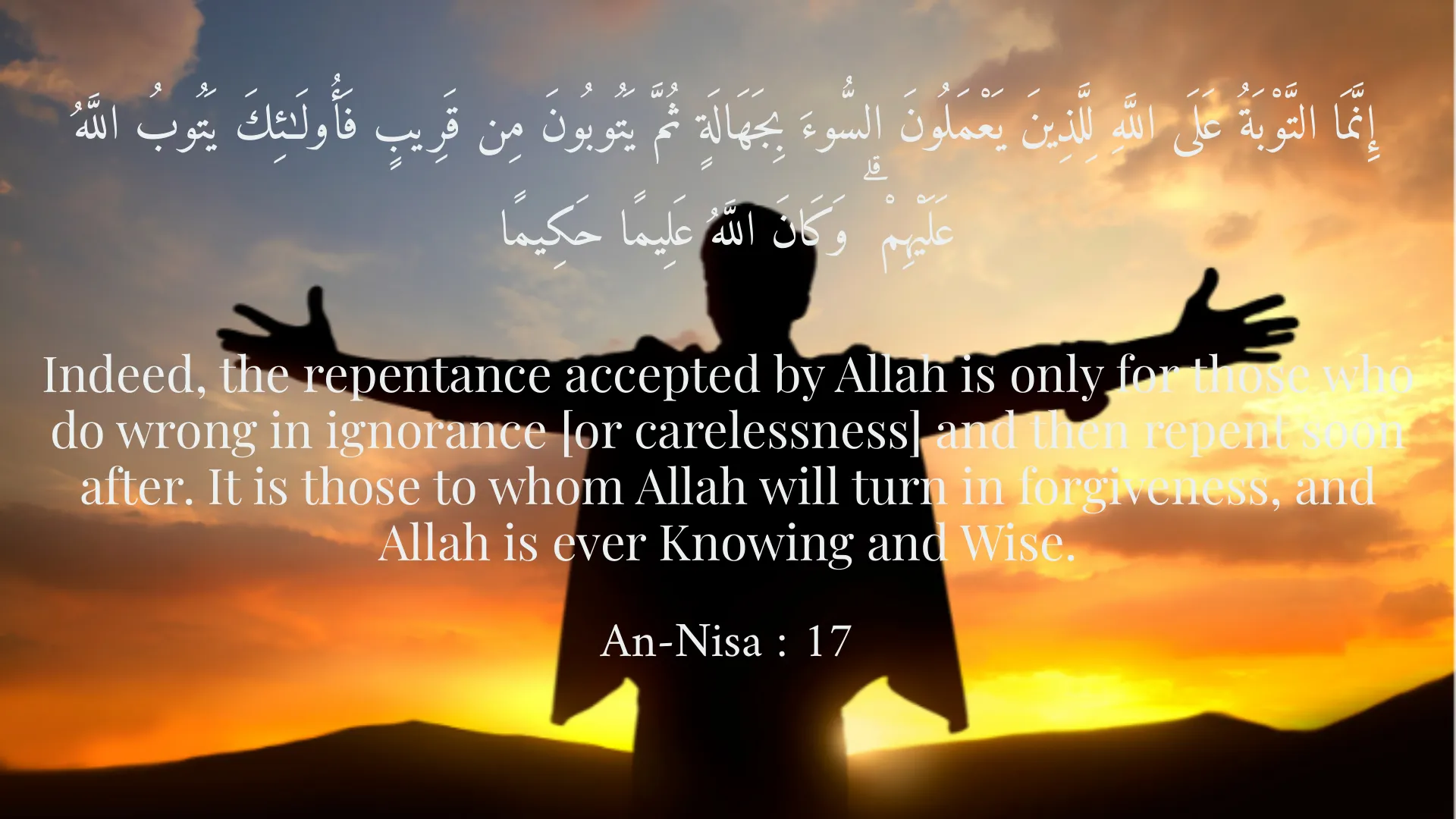
إِنَّمَا التَّوْبَةُ عَلَى اللَّهِ لِلَّذِينَ يَعْمَلُونَ السُّوءَ بِجَهَالَةٍ ثُمَّ يَتُوبُونَ مِن قَرِيبٍ فَأُولَٰئِكَ يَتُوبُ اللَّهُ عَلَيْهِمْ ۗ وَكَانَ اللَّهُ عَلِيمًا حَكِيمًا
Indeed, the repentance accepted by Allah is only for those who do wrong in ignorance [or carelessness] and then repent soon after. It is those to whom Allah will turn in forgiveness, and Allah is ever Knowing and Wise.
An-Nisa : 17
يَا أَيُّهَا الَّذِينَ آمَنُوا تُوبُوا إِلَى اللَّهِ تَوْبَةً نَّصُوحًا عَسَىٰ رَبُّكُمْ أَن يُكَفِّرَ عَنكُمْ سَيِّئَاتِكُمْ وَيُدْخِلَكُمْ جَنَّاتٍ تَجْرِي مِن تَحْتِهَا الْأَنْهَارُ يَوْمَ لَا يُخْزِي اللَّهُ النَّبِيَّ وَالَّذِينَ آمَنُوا مَعَهُ ۖ نُورُهُمْ يَسْعَىٰ بَيْنَ أَيْدِيهِمْ وَبِأَيْمَانِهِمْ يَقُولُونَ رَبَّنَا أَتْمِمْ لَنَا نُورَنَا وَاغْفِرْ لَنَا ۖ إِنَّكَ عَلَىٰ كُلِّ شَيْءٍ قَدِيرٌ
O you who have believed, repent to Allah with sincere repentance. Perhaps your Lord will remove from you your misdeeds and admit you into Gardens beneath which rivers flow [on] the Day when Allah will not disgrace the Prophet and those who believed with him. Their light will proceed before them and on their right; they will say, 'Our Lord, perfect for us our light and forgive us. Indeed, You are over all things competent.'
At-Tahrim : 8
إِلَّا مَن تَابَ وَآمَنَ وَعَمِلَ عَمَلًا صَالِحًا فَأُولَٰئِكَ يُبَدِّلُ اللَّهُ سَيِّئَاتِهِمْ حَسَنَاتٍ ۗ وَكَانَ اللَّهُ غَفُورًا رَّحِيمًا
Except for those who repent, believe and do righteous work. For them Allah will change their evil deeds into good ones. And ever is Allah Forgiving and Merciful.
Al-Furqan : 70
Short Story
It is related in Saadi's Golestan that a tyrannical king oppressed his subjects to such an extent that people fled his lands, and his realm became desolate. When the population dwindled and the treasury ran low, the king asked a wise old man, 'The people of the world have decreased, and the kingdom's income has fallen.' The wise old man replied, 'O King, the people of the world have not decreased; rather, your justice has diminished. If justice and fairness prevail, people will return from the farthest places.' The king was moved by these words and repented deeply. He immediately ceased his oppression and opened the doors of justice and equity to his people, striving to restore violated rights and heal wounded hearts with kindness. When the people witnessed his sincerity, they returned, and the country prospered. This king not only regretted his past sins but, through righteous actions, transformed his injustices into justice, demonstrating that true repentance is a return that brings change and even heals old wounds.