Quranic Answer
Title: The Value of Silence in the Light of the Holy Quran Introduction The Holy Quran, revered as the ultimate guide in the lives of millions of Muslims, delves deep into moral and social issues that pertain to human conduct and relationships. Among the essential themes explored in its verses, the concept of silence, though not explicitly framed as a virtue, emerges as an implicit value that invites contemplation, discretion, and wisdom in speech. The Quran underscores the importance of employing speech judiciously, providing numerous reflections on the ramifications of discussion, assertion, and argumentation. This article explores how various verses tackle the themes related to silence, restraint, and the careful use of language, and emphasizes the need for introspection in communication. Silence as a Tool of Wisdom While silence itself is not labeled as a virtue within the Quranic text, its subtleties play a crucial role in the overarching message of choosing words wisely. The significance of silence can often be observed in how Allah advises believers in their interactions with others. For instance, in Surah Al-Hujurat, verse 12, Allah counsels, "O you who have believed, avoid much [negative] assumption. Indeed, some assumption is sin. And do not spy or backbite each other. Would one of you like to eat the flesh of his brother while he is dead?" This verse serves as a powerful metaphor that illustrates the severity of gossip and slander. Here, silence can be viewed as a sanctuary from negative speech that can cause harm to others. By choosing silence when tempted to engage in gossip or negative conversation, one exercises wisdom and discretion, reflecting an understanding of the weighty consequences associated with careless words. Promoting Positive Interaction Furthermore, the Holy Quran presents a call for positivity and encouragement in interpersonal relationships. Surah Luqman, verse 19 states, "And do not turn your cheek [in contempt] toward people and do not walk through the earth exultantly. Indeed, Allah does not like everyone self-deluded and boastful." This verse encourages moderation and humility, highlighting the importance of maintaining a calm demeanor during conversations. In a world filled with hostility and competition, the wisdom of silence becomes increasingly relevant. Instead of engaging in boastful or self-important dialogue, embracing moments of silence can serve as a reminder of humility. By prioritizing thoughtful communication over unnecessary noise, one fosters a more supportive environment, allowing individuals to connect on deeper levels. The Power of Thoughtful Dialogue Moreover, the concept of silence ultimately goes beyond mere verbal communication; it also involves inner dialogue and self-reflection. Engaging in self-examination and resistance against reactionary speech can be a profound practice encouraged within Quranic teachings. The Quran suggests a pathway to self-awareness, where silence allows for careful thought and observation before making statements. The practice of pause—whether to collect one’s thoughts or to measure the impact of words—positions individuals to engage in a style of communication that elevates their character and minimizes potential harm. The nuances of speech often lie in the intent from which the words emanate, and thus, by asserting silence at critical junctures, individuals can cultivate a space of integrity and thoughtfulness, leading to more meaningful discourse. Avoiding Harm in Expression Another paramount dimension of the Quranic discussion on speech and silence is adherence to the ethical responsibilities towards others. The ethical mandate against backbiting and gossiping is an invitation to cultivate silence. In the same verse from Surah Al-Hujurat mentioned above, engaging in harmful discourse is likened to consuming the flesh of one’s brother—an image that evokes horror and revulsion. This metaphor clearly illustrates the moral implications of our words. Silence, in this context, becomes an act of compassion and respect. By recognizing the potential hurt that can arise from careless speech, believers are encouraged to maintain silence to protect the dignity of others. The Quran promotes an environment where each person is regarded with fairness and honor. Silent restraint can thus manifest as a virtue that elevates communal bonds and nurtures a culture of care. Reflection and Contemplation: The Art of Listening In addition to fostering wise speech and acknowledging the dignity of others, silence contributes to the practice of active listening. In a society where discussions often become dominated by opinions and assertions, the art of listening is sometimes neglected. The Quran invests in the theme of reflection and contemplation, suggesting that silence allows individuals to absorb information, understand perspectives, and engage meaningfully with others. Listening is not mere absence of speech; it invites engagement with empathy. Surah Al-Furqan, verse 63 states: "And the servants of the Most Merciful are those who walk upon the earth humbly and when the ignorant address them [harshly], they say [words of] peace." This verse embodies the idea that humility and peacefulness can stem from an understanding demeanor. Silence ensures that the listener can process what is being shared without inserting their ego, thus enriching interpersonal dialogue. Conclusion In summary, the theme of silence within the Quran emerges as an invaluable aspect of moral and ethical behavior. Though the Quran does not directly label silence as a virtue, it sustains a rich discourse on the importance of wise and mindful speech, caution against harmful talk, and the ethical involvement with others. The verses presented underscore the notion that silence can often be more powerful than words, encouraging believers to practice restraint and humility. The call for silence prompts reflection on the broader implications of communication, celebrating moments of pause and consideration as pathways to building compassion and integrity. In a world where noise too often drowns out meaningful conversation, the wisdom found in the teachings of the Quran on silence serves as an essential reminder to practice thoughtful, conscientious communication, ultimately fostering peace and understanding among humanity.
Related Verses
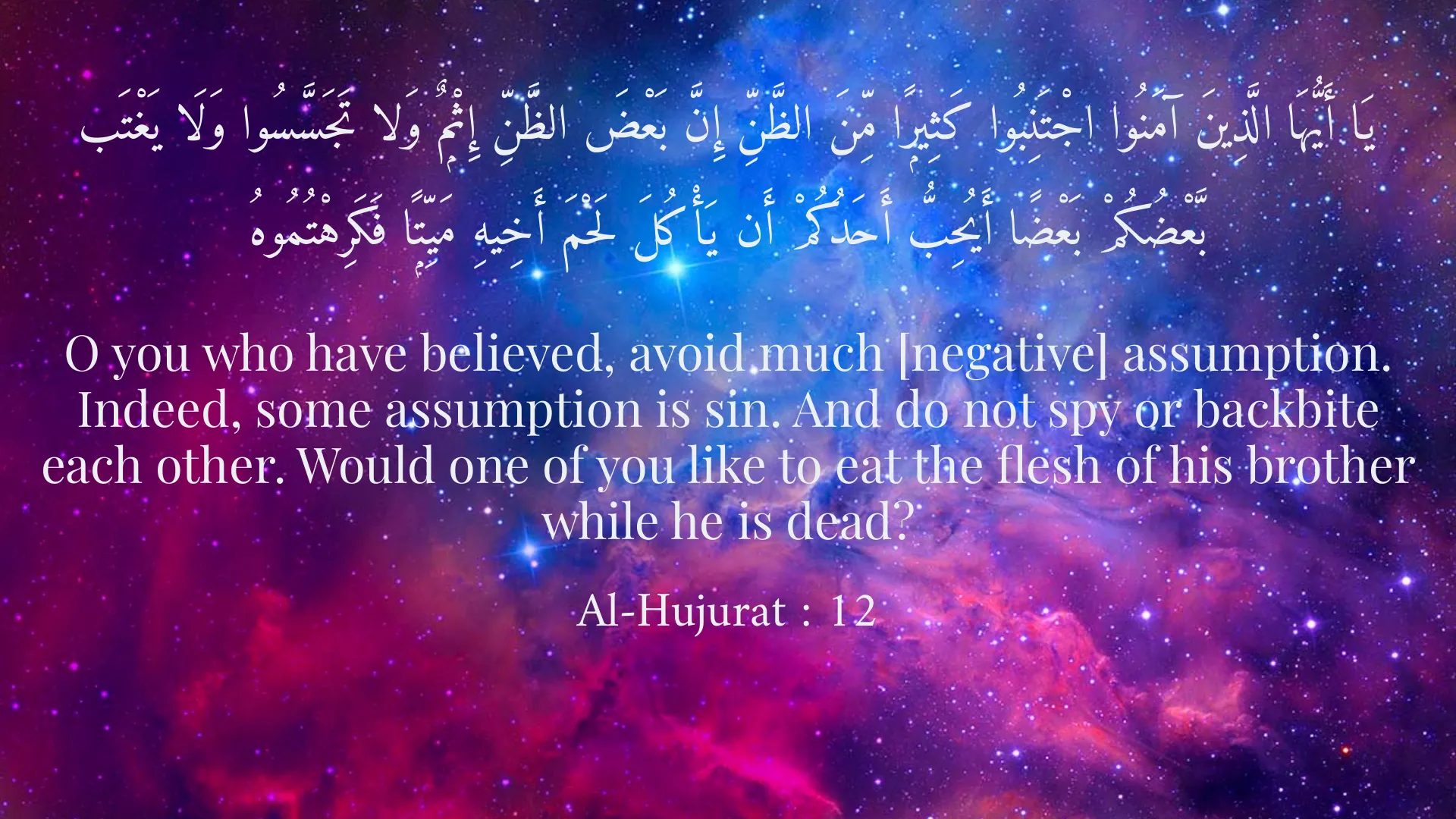
يَا أَيُّهَا الَّذِينَ آمَنُوا اجْتَنِبُوا كَثِيرًۭا مِّنَ الظَّنِّ إِنَّ بَعْضَ الظَّنِّ إِثْمٌۭ وَلا تَجَسَّسُوا وَلَا يَغْتَب بَّعْضُكُمْ بَعْضًا أَيُحِبُّ أَحَدُكُمْ أَن يَأْكُلَ لَحْمَ أَخِيهِ مَيِّتًۭا فَكَرِهْتُمُوهُ
O you who have believed, avoid much [negative] assumption. Indeed, some assumption is sin. And do not spy or backbite each other. Would one of you like to eat the flesh of his brother while he is dead?
Al-Hujurat : 12
وَلا تَصْعَبْ خَدَّكَ للنَّاسِ وَلَا تَمْشِ فِي الْأَرْضِ مَرَحًۭا ۚ إِنَّ اللَّهَ لَا يُحِبُّ كُلَّ مُتَكَبِّرٍۢ فَخُورٍۢ
And do not turn your cheek [in contempt] toward people and do not walk through the earth exultantly. Indeed, Allah does not like everyone self-deluded and boastful.
Luqman : 19
Short Story
One day, a man named Adel was shopping in the market. He noticed that some people were backbiting each other. He felt sad in his heart and remembered the verses of the Quran that call for caution in speech. Adel decided to choose silence instead of gossiping and treat others with kindness and respect. This decision led to a better day and more friends.