Quranic Answer
The Holy Quran, revered as the divine scripture of Islam, encapsulates profound wisdom that highlights various aspects of human behavior and morality. Among these critical themes is the topic of greed and excessive desire, which is addressed in numerous verses. Greed, often considered one of the most destructive traits a person can possess, can lead individuals astray from the path of righteousness and moral integrity. In this article, we will explore the Quranic teachings on greed and excessive desire, as referenced in several verses, and discuss their implications for our lives today. The Quran poignantly addresses the danger of excessive greed in Surah Al-Hashr, verse 19, where Allah states: "And do not be like those who forgot Allah, so He made them forget themselves. It is they who are the defiantly disobedient." This verse presents a stark warning against becoming so absorbed in worldly desires that one neglects to keep Allah in focus. The concept of 'forgetting Allah' can lead people down a perilous path, one filled with moral decay and spiritual emptiness. When we become preoccupied with our materialistic pursuits, we begin to lose sight of our true purpose in life, which is to worship Allah and uphold the principles of justice, compassion, and integrity. Greed has a propensity to overshadow one’s values and moral awareness. It can twist perceptions, leading individuals to prioritize material gain over spiritual growth. The Quran's admonition about forgetting Allah acts as a reminder to stay grounded and aware of our responsibilities toward our Creator and the world around us. This teaching implores us to seek a balance between fulfilling our material needs and maintaining our spiritual obligations. The consequences of unchecked greed can manifest in various forms, including strained relationships, dissatisfaction, and a profound sense of emptiness even in the midst of abundance. In Surah Al-Imran, verse 14, Allah further emphasizes human inclinations towards materialism. The verse states: "Beautified for people is the love of that which they desire - of women and sons, heaped-up sums of gold and silver, fine branded horses, and cattle and tilled land. That is the enjoyment of worldly life, but Allah has with Him the best return." This verse beautifully encapsulates the allure of worldly possessions and desires, delineating the various forms of materialism that capture human hearts. Here, Allah acknowledges that the love for worldly possessions is a natural inclination of humans, yet He juxtaposes it with the understanding that true satisfaction and return lie with Him. The critical takeaway from this verse is the reminder that while it is permissible to enjoy the blessings of this world, one must remain cognizant of the impermanence of material possessions. The transient pleasures of this world should not distract us from the eternal joy that is promised by Allah. In our quest for worldly success, we must ensure that our love for material goods does not eclipse our devotion to Allah. The Quran is urging us to elevate our understanding of satisfaction beyond mere physical acquisitions, directing our focus instead toward spiritual fulfillment that is rooted in our relationship with Allah. Moreover, greed often breeds a corrosive competition among individuals, leading to envy, malice, and discontent. In a society overly focused on materialism, it is easy to lose touch with the values of kindness, generosity, and empathy — qualities that are crucial for fostering healthy relationships and community cohesion. The societal implications of unchecked greed can result in economic disparity, social unrest, and a general decline in moral values as individuals become more self-interested and less communal. In Surah Al-Baqarah, verse 177, another vital aspect of this discourse is presented, emphasizing the importance of righteous actions instead of succumbing to excessive desire. It underscores that true righteousness is not merely about outward adherence to rituals but rather about embodying genuine ethical behavior and sincere intentions. The verse asserts: "It is not righteousness that you turn your faces toward the east or the west, but righteousness is in one who believes in Allah, the Last Day, the Angels, the Book, and the Prophets and gives his wealth, in spite of love for it, to relatives, orphans, the needy, the traveler, those who ask [for help], and for freeing slaves; [and who] establishes prayer and gives zakah; [those who] fulfill their promise when they promise; and [those who] are patient in poverty and hardship and during battle. Those are the ones who have been true, and it is those who are the righteous." This verse serves as a guide for individuals to assess their actions in light of righteousness, reminding us that wealth and material possessions are but tools for good in the world. One who may experience a deep-seated love for wealth is still capable of righteous acts when they choose to share and utilize their resources for the benefit of others. Here, the Quran highlights the transformative power of charity, empathy, and the overall commitment to community welfare as a counterbalance to the pitfalls of greed. In conclusion, the Quran invites us to reflect and contemplate the essence of life and to recognize the dangers inherent in excessive desire. It emphasizes that while we may nurture aspirations and ambitions toward worldly possessions, this affection should never divert us from the remembrance of Allah and the pursuit of a righteous life. Greed, in all its forms, can lead us away from our true purpose as servants of Allah. The teachings found in the Quran evoke a profound awareness that fulfillment and true contentment stem from our spiritual connection and adherence to ethical values, rather than from material wealth or status. Ultimately, the path to satiating our desires lies not in succumbing to greed, but in cultivating a balanced approach that honors our Creator, serves humanity, and cherishes the ephemeral joys of this world while striving toward the everlasting rewards available in the Hereafter.
Related Verses
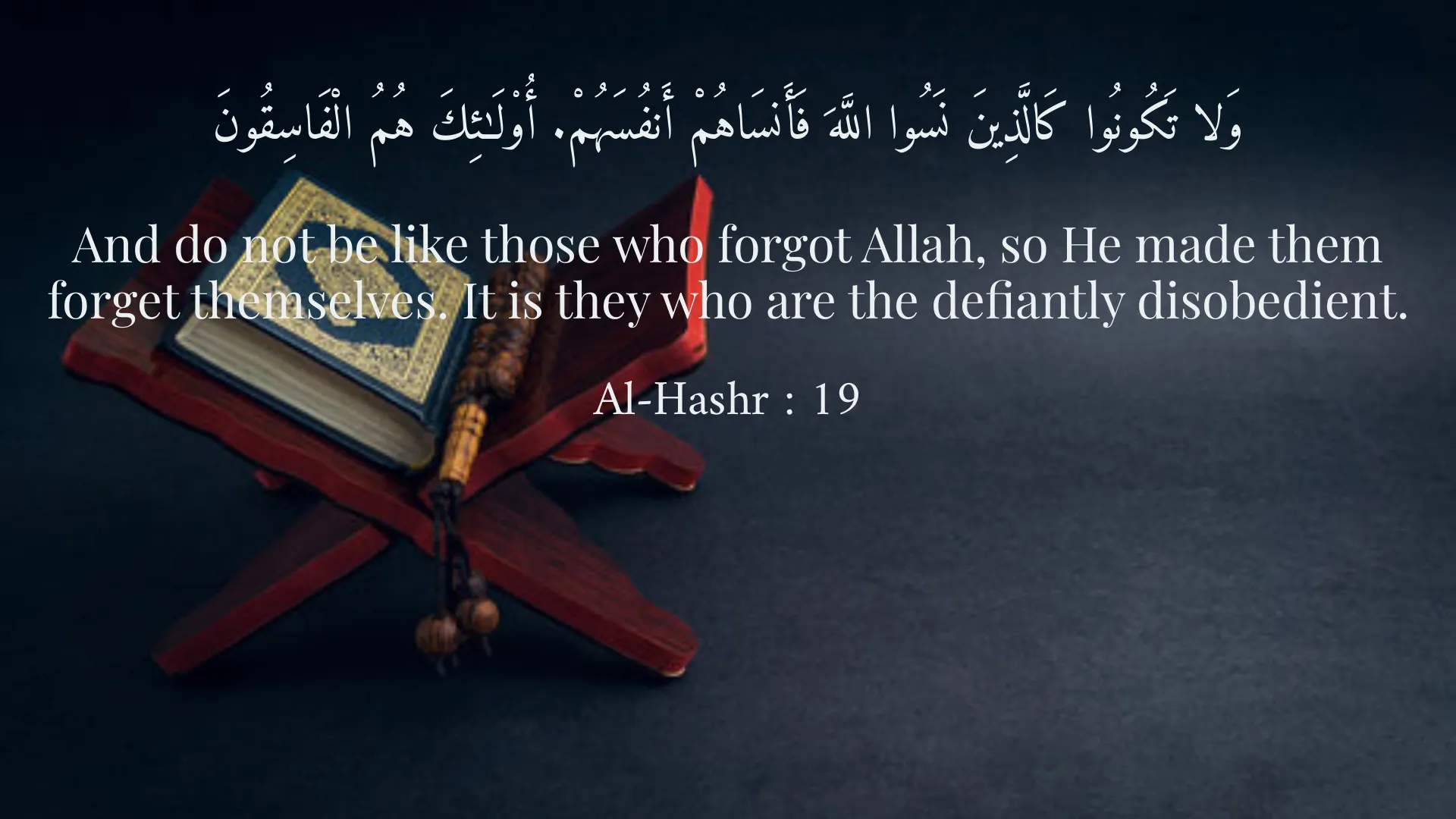
وَلا تَكُونُوا كَالَّذِينَ نَسُوا اللَّهَ فَأَنسَاهُمْ أَنفُسَهُمْ. أُو۟لَـٰئِكَ هُمُ الْفَاسِقُونَ
And do not be like those who forgot Allah, so He made them forget themselves. It is they who are the defiantly disobedient.
Al-Hashr : 19
زَينَ لِلنَّاسِ حُبُّ الشَّهَوَاتِ مِنَ النِّسَاءِ وَالْبَنِينَ وَالْقَنَاطِيرِ الْمُقَنَّطِرَةِ مِنَ الذَّهَبِ وَالْفِضَّةِ وَالْخَيْلِ الْمُسَوَّمَةِ وَالْأَنْعَامِ وَالزِّرَاعِ. ذَٰلِكَ مَتَاعُ الْحَيَاةِ الدُّنْيَا وَاللَّهُ عِندَهُ حُسْنُ الْمَئَابِ.
Beautified for people is the love of that which they desire - of women and sons, heaped-up sums of gold and silver, fine branded horses, and cattle and tilled land. That is the enjoyment of worldly life, but Allah has with Him the best return.
Al-Imran : 14
لَيْسَ الْبِرَّ أَن تَوَلُّوا وُجُوهَكُمْ قِبَلَ الْمَشْرِقِ وَالْمَغْرِبِ وَلَكِنَّ الْبِرَّ مَن آمَنَ بِاللَّهِ وَالْيَوْمِ الْآخِرِ وَالْمَلَائِكَةِ وَالْكِتَابِ وَالنَّبِيِّينَ.
Righteousness is not that you turn your faces toward the east or the west, but [true] righteousness is in one who believes in Allah, the Last Day, the Angels, the Book, and the Prophets.
Al-Baqarah : 177
Short Story
One day, a man nearing old age reflected on his life and considered the idea that maybe he had always sought more than what he needed. He remembered the Quranic verses and decided to focus on the essence of living. The man thought to himself: "Why should I always strive for more? My life is already full of blessings, and I should be grateful to Allah for this." Following this realization, he began helping others and pursuing knowledge, ultimately transforming his life into one of happiness and contentment.