Quranic Answer
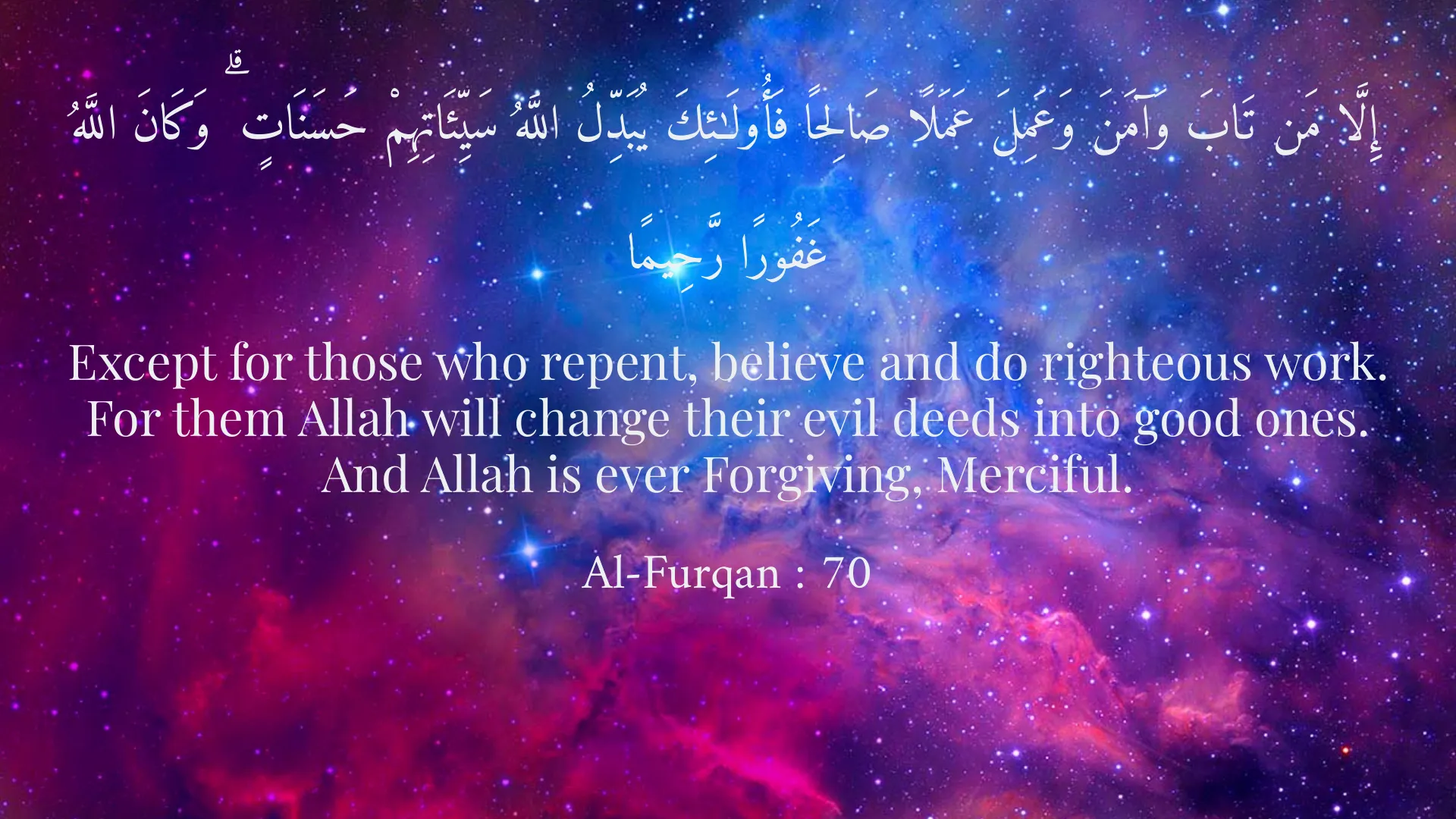
Understanding the concept of 'Tawbah' (repentance) in the Holy Quran requires a deep reflection on its various dimensions. Linguistically, 'Tawbah' means to return, and in religious terminology, it signifies returning from sin and disobedience towards obedience and submission to God. But is this return merely a behavioral change or a superficial regret, or does the Quran view it as an ontological transformation—a fundamental change in a person's essence, identity, and existential status? By examining the Quranic verses, one can conclude that the Quran perceives repentance as far more than a mere act or fleeting regret; rather, it considers it a profound transformative process that impacts the ontological and existential dimensions of a human being. The Holy Quran explicitly states that true repentance erases sins and can even convert evil deeds into good ones. This is clearly articulated in Surah Al-Furqan, verse 70: “Except for those who repent, believe and do righteous work. For them Allah will change their evil deeds into good ones. And Allah is ever Forgiving, Merciful.” This verse is one of the strongest pieces of evidence for the Quran's ontological view of repentance. The conversion of 'sayyi’at' (evil deeds) into 'hasanat' (good deeds) is not just a simple forgiveness; it indicates a fundamental change in the record of one's actions and, consequently, in their spiritual identity. It is as if the sins previously recorded are not merely wiped clean, but the individual's very essence is transformed in such a way that those bad deeds are converted into good ones. This process implies a 'creation' or 're-creation' of meaning and spirituality within the repenting individual. Furthermore, the Quran describes repentance as a path to return to the pure divine nature (fitra). Humans are created with a monotheistic and pure primordial nature, but sins and mistakes overshadow this inherent purity. Repentance removes the dust of sin from this fitra, bringing the person back to their original state. This return to fitra is itself a kind of ontological transformation, as the individual transitions from a state alienated from their true essence back to their authentic and real self. Surah Az-Zumar, verse 53, by urging not to despair of God's mercy, confirms this possibility of return: “Say, 'O My servants who have transgressed against themselves [by sinning], do not despair of the mercy of Allah. Indeed, Allah forgives all sins. Indeed, it is He who is the Forgiving, the Merciful.'” This universal invitation demonstrates the infinite capacity of repentance for internal and external transformation. Repentance also means the renewal of the covenant with God. Sin weakens the bond between a human and their Creator, and repentance strengthens this bond. From a Quranic perspective, when a person repents, they are not only freed from punishment but also become beloved by God. Allah states in Surah Al-Baqarah, verse 222: “Indeed, Allah loves those who turn to Him in repentance and loves those who purify themselves.” This divine love signifies the acceptance and elevation of the repenter’s existential status. When God loves someone, it means that individual has reached a level of proximity and perfection that they were deprived of before repentance. This shift in status from being 'displeasing to God' or 'heedless of God' to 'beloved by God' is a profound existential transformation. Moreover, sincere repentance leads to inner peace and purification of the soul. Sin darkens the heart and pollutes the spirit. Repentance cleanses this darkness, bringing tranquility to the heart and purity to the soul. This purification is a qualitative change within the human being that affects all aspects of their life. A repenting individual, with a pure heart and a tranquil spirit, embarks on a new life. This new state is not merely a behavioral one but a change in their inner condition and being. The Quran places great emphasis on the purification of the soul, and repentance is one of the primary means to achieve this purity. In summary, the Quran does not view repentance merely as an admission of guilt or fleeting remorse but as a complex and multifaceted process with deep ontological dimensions. From the cleansing of sins and the conversion of evil deeds into good ones, to the return to fitra, the renewal of the covenant with God, divine love, and the attainment of inner peace and purity of the soul, all are signs of a fundamental transformation in the being of the repenting individual. This transformation leads to a spiritual rebirth—a birth that separates the individual from their sinful past and transforms them into a new, pure entity, closer to divine perfection. Therefore, it can be asserted that the Holy Quran regards repentance as a profound ontological change that not only alters one's actions but also reconstructs and elevates their spiritual essence and identity.
Related Verses
إِلَّا مَن تَابَ وَآمَنَ وَعَمِلَ عَمَلًا صَالِحًا فَأُولَٰئِكَ يُبَدِّلُ اللَّهُ سَيِّئَاتِهِمْ حَسَنَاتٍ ۗ وَكَانَ اللَّهُ غَفُورًا رَّحِيمًا
Except for those who repent, believe and do righteous work. For them Allah will change their evil deeds into good ones. And Allah is ever Forgiving, Merciful.
Al-Furqan : 70
قُلْ يَا عِبَادِيَ الَّذِينَ أَسْرَفُوا عَلَىٰ أَنفُسِهِمْ لَا تَقْنَطُوا مِن رَّحْمَةِ اللَّهِ ۚ إِنَّ اللَّهَ يَغْفِرُ الذُّنُوبَ جَمِيعًا ۚ إِنَّهُ هُوَ الْغَفُورُ الرَّحِيمُ
Say, 'O My servants who have transgressed against themselves [by sinning], do not despair of the mercy of Allah. Indeed, Allah forgives all sins. Indeed, it is He who is the Forgiving, the Merciful.'
Az-Zumar : 53
إِنَّ اللَّهَ يُحِبُّ التَّوَّابِينَ وَيُحِبُّ الْمُتَطَهِّرِينَ
Indeed, Allah loves those who turn to Him in repentance and loves those who purify themselves.
Al-Baqarah : 222
Short Story
In ancient times, there lived a young man named Fereydoun, who was deeply engrossed in heedlessness, clinging daily to the fleeting pleasures of the world. His friends and family invited him to the right path, but he paid no heed. One night, he fell seriously ill, and in that state of weakness and helplessness, he pondered deeply upon his past actions. His heart ached from his sins, and he regretted them with all his being. With tearful eyes and a broken heart, he turned towards the heavens and sincerely sought forgiveness and pardon from his Lord. From that day forward, Fereydoun not only abandoned his sins but his life was so profoundly transformed that it was as if he had found a new existence; a heart filled with the light of faith and tranquility, and a pure soul. He spent the rest of his life in piety, serving creation, and drawing closer to the Divine. As Sa'di, the eloquent poet, beautifully put it: "When the king's servant comes into servitude, the servant attains kingship." Fereydoun, through his repentance, was freed from the servitude of his desires and attained divine proximity.