Quranic Answer
The Holy Quran, as a guide for humanity, does not explicitly use the term “social pressure for success,” but it profoundly and comprehensively addresses various aspects of human life that can encompass the phenomenon of social pressure to achieve worldly successes, issuing serious warnings in this regard. In fact, the Quran, instead of defining success merely within a material or social framework, emphasizes true and lasting success, which depends on proximity to God, piety, and righteous deeds. This Quranic perspective fundamentally offers a comprehensive solution for liberation from external pressures and an incorrect definition of success. One of the main concepts the Quran addresses in this context is “Hubb ad-Dunya,” or excessive attachment to worldly life and its adornments. Many social pressures for success stem from this desire to accumulate wealth, status, and fame, which are perceived as criteria for success in society. The Quran strongly warns against this temptation. In Surah Al-Hadid, verse 20, Allah Almighty says: “Know that the life of this world is only play and amusement, an adornment and boasting among yourselves, and rivalry in [increasing] wealth and children... and the worldly life is nothing but the enjoyment of delusion.” This verse clearly indicates that the nature of worldly competitions and self-display, often occurring under social pressure, is superficial and deceptive, holding no true value. This rivalry in accumulation is the root of many psychological pressures that individuals endure to surpass others. Furthermore, the Holy Quran emphasizes the danger of blindly following the majority or ignorant traditions that contradict the truth. This indirectly points to social pressure to conform and follow prevailing societal standards. In Surah Al-An'am, verse 116, we read: “And if you obey most of those on earth, they will lead you astray from the way of Allah. They follow not except assumption, and they are not but falsifying.” This verse serves as a warning to those who deviate from the right path under the influence of public opinion and societal norms. In many societies, “success” is defined as accumulating wealth, power, and prestige, and anyone who deviates from this path may be pressured or even ostracized. The Quran counters this superficial view, considering the path to salvation to be the pursuit of truth and divine values, not fleeting social acceptance. The story of Qarun (Korah) in Surah Al-Qasas (verses 79 to 82) is a striking example of the Quran’s warnings about the allure of worldly wealth and status, and the social pressures arising from it. Qarun, with his immense wealth, became arrogant among his people, and ultimately, due to this arrogance and ingratitude, Allah caused the earth to swallow him and his home. Verse 79 states: “So he came out before his people in his adornment. Those who desired the worldly life said, 'Oh, would that we had like what Qarun has been given. Indeed, he is one of great fortune.'” This verse clearly shows people’s longing and envy towards Qarun’s wealth, which itself is a form of social pressure to attain such a position. However, the very next verse, 80, immediately presents the perspective of those endowed with knowledge: “But those who had been given knowledge said, 'Woe to you! The reward of Allah is better for he who believes and does righteousness. And none are granted it except the patient.'” This contrast in perspectives forms the core of the Quran’s warning: divine and otherworldly values are superior to worldly glitter, and following social values that lead to heedlessness of God is dangerous. Individuals who, under social pressure, pursue purely material successes often suffer from anxiety and unrest, as societal standards are constantly changing, and satisfaction from them is temporary. Instead of worldly competition, the Quran calls for competition in good deeds and striving to excel in righteousness. This type of competition is not only harmless but also contributes to the spiritual and moral growth of individuals. In Surah Al-Baqarah, verse 148, it states: “And for every nation is a direction to which they face, so compete in [all] good deeds.” This competition is based on piety and serving creation, not on gaining fame and wealth for boasting. This perspective is entirely different from social pressures that drive individuals toward successes that may conflict with their ethical and spiritual principles. Thus, it can be said that the Holy Quran implicitly but very profoundly warns about social pressures to achieve worldly successes. These warnings are conveyed by emphasizing the reality of worldly life as a temporary passage, condemning arrogance and boasting, and presenting the true definition of success (falah and salvation in this world and the Hereafter). The Quran guides humans to measure their worth based on what is with Allah, not what is admired and envied by people. These teachings help individuals break free from the shackles of social pressures and achieve true peace and lasting happiness. A life built upon piety and divine pleasure, regardless of societal material standards, will be filled with blessings and tranquility. The Quran considers the primary goal of life to be worship and attaining Allah's pleasure, and any effort that diverts one from this path, even if it appears as worldly “success,” is condemned. This means real success lies in the balance between this world and the Hereafter, and in overcoming one’s lower self and satanic temptations, not in attracting attention and admiration from others or accumulating more than what is needed, which often stems from comparison and social pressure.
Related Verses
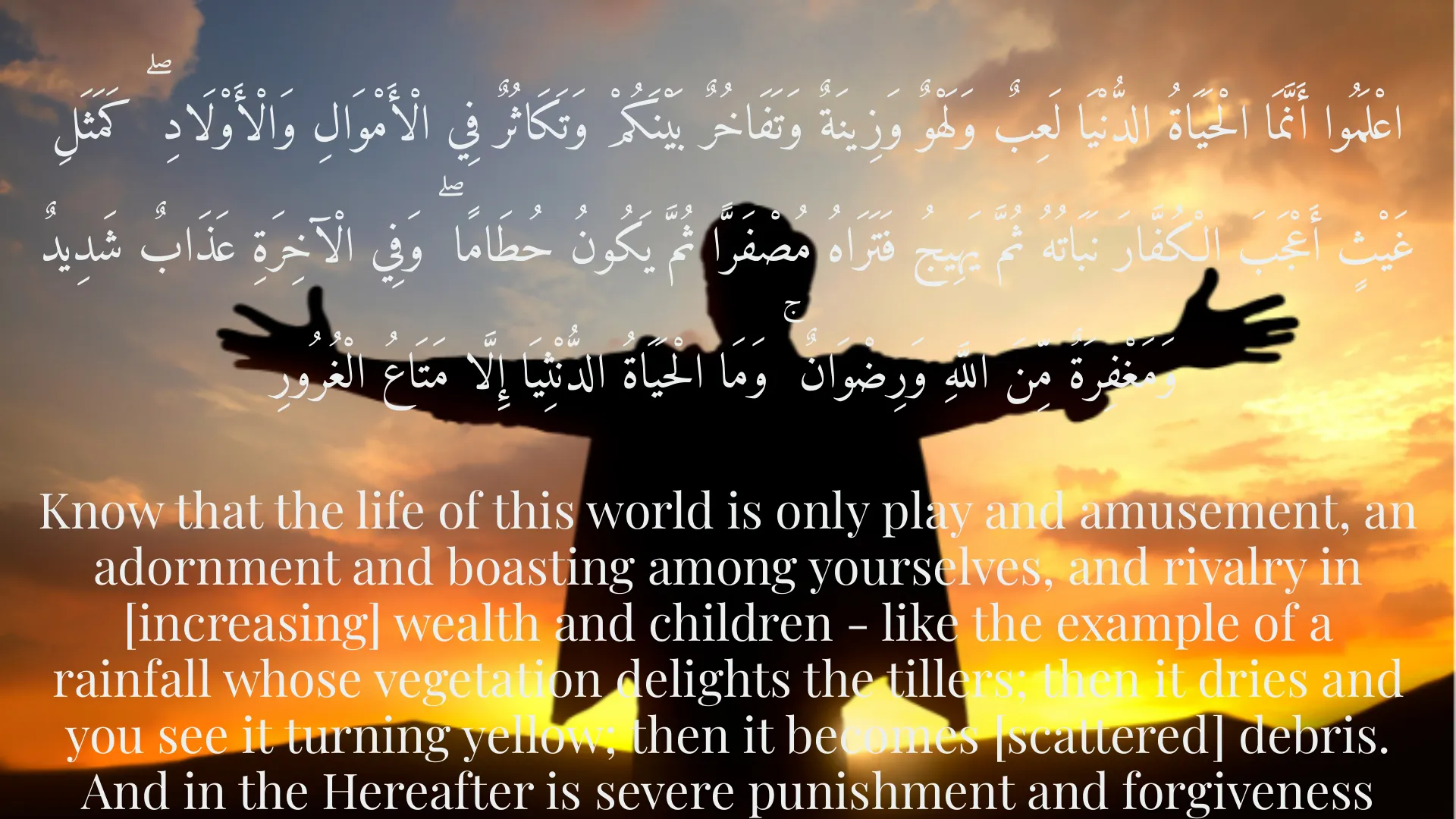
اعْلَمُوا أَنَّمَا الْحَيَاةُ الدُّنْيَا لَعِبٌ وَلَهْوٌ وَزِينَةٌ وَتَفَاخُرٌ بَيْنَكُمْ وَتَكَاثُرٌ فِي الْأَمْوَالِ وَالْأَوْلَادِ ۖ كَمَثَلِ غَيْثٍ أَعْجَبَ الْكُفَّارَ نَبَاتُهُ ثُمَّ يَهِيجُ فَتَرَاهُ مُصْفَرًّا ثُمَّ يَكُونُ حُطَامًا ۖ وَفِي الْآخِرَةِ عَذَابٌ شَدِيدٌ وَمَغْفِرَةٌ مِّنَ اللَّهِ وَرِضْوَانٌ ۚ وَمَا الْحَيَاةُ الدُّنْثِيَا إِلَّا مَتَاعُ الْغُرُورِ
Know that the life of this world is only play and amusement, an adornment and boasting among yourselves, and rivalry in [increasing] wealth and children - like the example of a rainfall whose vegetation delights the tillers; then it dries and you see it turning yellow; then it becomes [scattered] debris. And in the Hereafter is severe punishment and forgiveness from Allah and approval. And what is the worldly life except the enjoyment of delusion.
Al-Hadid : 20
فَخَرَجَ عَلَىٰ قَوْمِهِ فِي زِينَتِهِ ۖ قَالَ الَّذِينَ يُرِيدُونَ الْحَيَاةَ الدُّنْيَا يَا لَيْتَ لَنَا مِثْلَ مَا أُوتِيَ قَارُونُ إِنَّهُ لَذُو حَظٍّ عَظِيمٍ
So he came out before his people in his adornment. Those who desired the worldly life said, 'Oh, would that we had like what Qarun has been given. Indeed, he is one of great fortune.'
Al-Qasas : 79
وَقَالَ الَّذِينَ أُوتُوا الْعِلْمَ وَيْلَكُمْ ثَوَابُ اللَّهِ خَيْرٌ لِّمَنْ آمَنَ وَعَمِلَ صَالِحًا وَلَا يُلَقَّاهَا إِلَّا الصَّابِرُونَ
But those who had been given knowledge said, 'Woe to you! The reward of Allah is better for he who believes and does righteousness. And none are granted it except the patient.'
Al-Qasas : 80
أَلْهَاكُمُ التَّكَاثُرُ
Competition in [worldly] increase diverts you,
At-Takathur : 1
حَتَّىٰ زُرْتُمُ الْمَقَابِرَ
Until you visit the graves.
At-Takathur : 2
Short Story
It is narrated that one day, a king asked a scholar, "Why are you, despite your modest appearance, so joyful and at peace, while I, with all my grandeur, have no moment of tranquility?" The scholar smiled and said: "O King, you seek to accumulate more possessions and are never unmindful of what you lack. But I am grateful for what I have, and I do not cling to what I do not possess. You strive to display your superiority to others and suffer from comparisons, while I see superiority in piety and contentment, not in an abundance of wealth and status. This peace of mind is the result of freeing my heart from the glitter of the world and seeking only God's pleasure. Therefore, the pressures of the world and people's gazes do not preoccupy me."