Quranic Answer
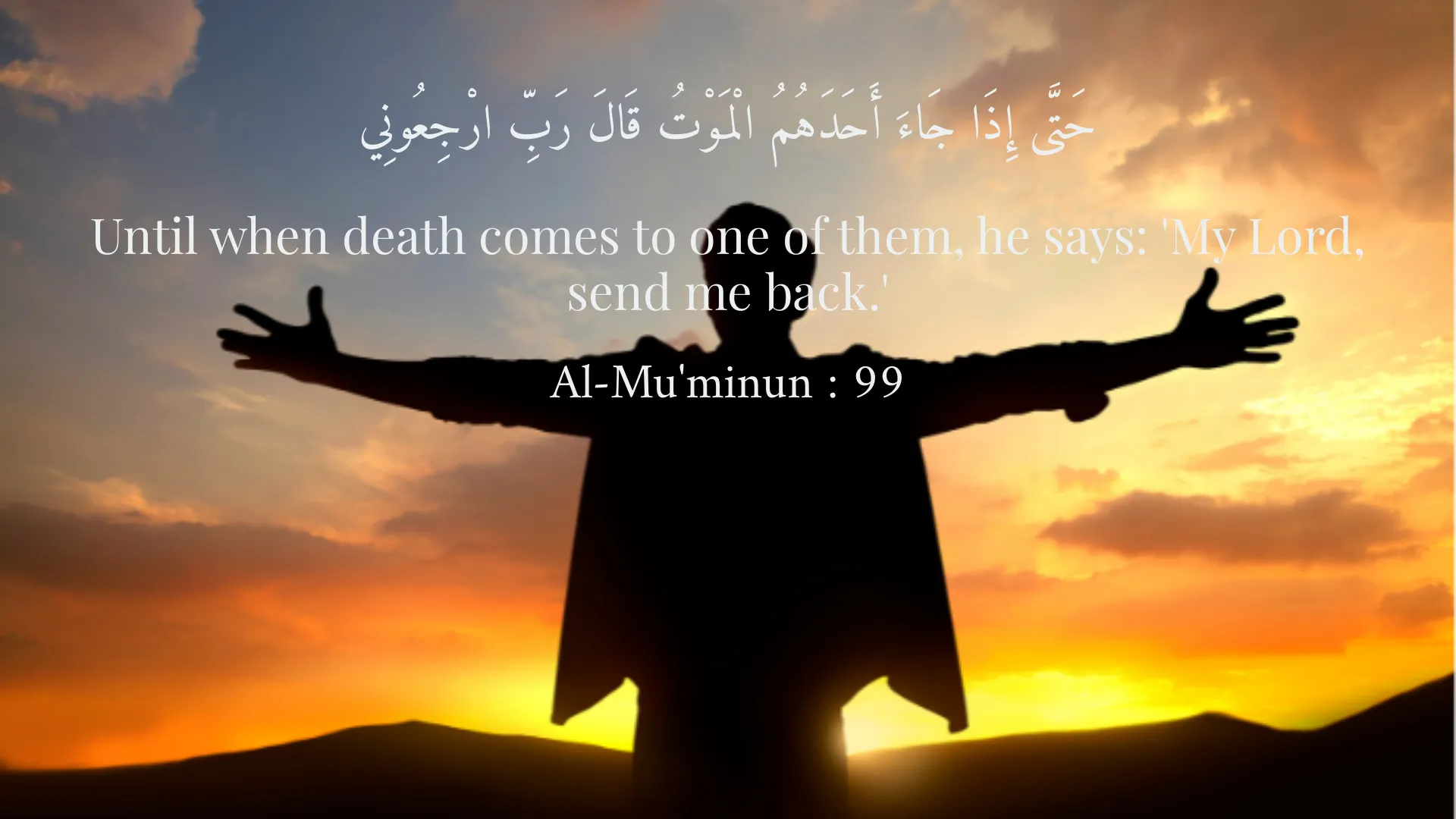
The concept of death is one that has been at the forefront of human contemplation and reflection throughout the ages. In Islamic teachings, the remembrance of death serves as a vital theme that plays a crucial role in fostering spiritual growth and reinforcing the transient nature of earthly life. The Quran, revered as the holy book of Islam, contains numerous verses that emphasize the significance of this remembrance. Among these verses, Surah Al-Mu'minun, verses 99-100, provides profound insights into the human condition regarding death and the afterlife. The verses state: 'Until when death comes to one of them, he says: 'My Lord, send me back so that I might do righteousness in that which I left behind.' This poignant statement unveils the inner turmoil one experiences at the brink of death, highlighting a desire to rectify past mistakes and engage in righteous deeds that align with God’s will. In this light, the remembrance of death can be seen as a powerful motivator for individuals to engage in self-reflection and assess their life choices. The urgency conveyed in these verses compels believers to question whether their actions have been favorable and whether they have endeared themselves to Allah throughout their lives. This process of introspection becomes essential in the journey towards spiritual growth as individuals strive to align their lives with the values and teachings of Islam. Moreover, the remembrance of death cultivates a significant shift in an individual's attachment to the Hereafter while simultaneously diminishing the reliance on worldly possessions and pleasures. Surah Al-Imran, verse 185 emphasizes this reality succinctly: 'Every soul will taste death, and only on the Day of Resurrection will you be given your full compensation.' By acknowledging the inevitability of death, individuals are reminded of the fleeting nature of worldly life and the importance of focusing on their spiritual journey. The inexorable truth that death awaits each individual serves as a sobering reminder of mortality—a truth that can motivate believers to pursue righteous deeds and avoid sinful actions. This realization fosters a sense of urgency and responsibility towards one's spiritual development, amplifying one's commitment to live a life in accordance with Islamic teachings. In addition to the verses of the Quran, the teachings of the Prophet Muhammad (peace be upon him) also underscore the importance of the remembrance of death. It is recorded in the hadiths: 'Frequent remembrance of death is recommended because it takes you away from the world and draws you closer to the Hereafter.' This wisdom reflects the understanding that a heightened awareness of mortality encourages believers to direct their focus away from the materialistic pursuits of life and towards a more profound spiritual connection with Allah. This spiritual connection often highlights the importance of charitable actions, prayers, and fulfilling one's responsibilities towards others, ultimately leading to a more meaningful and purpose-driven life. The practice of engaging in acts of kindness and generosity takes on greater significance when the inevitability of death is acknowledged, prompting individuals to leave a positive impact on the world. In addition to promoting righteous deeds, the remembrance of death allows individuals to clarify their priorities and identify their true objectives in life. Many people often get lost in the distractions of modern life, becoming consumed by the hustle and bustle of daily routines. However, when one embraces the concept of death as a central aspect of their existence, it encourages a more mindful and intentional approach to life. For instance, many Muslims find solace in rituals and practices that revolve around death, such as visiting graves, participating in funerals, and engaging in prayers for the deceased. These acts serve not only to honor the departed but also to remind the living of their own mortality. In this sense, the remembrance of death transforms into a practice of gratitude for life itself, inspiring individuals to live more fully and authentically. Furthermore, the remembrance of death is integral to shaping an individual's understanding of accountability in the Hereafter. Believers are assured that their worldly deeds will have consequences in the afterlife. This understanding compels individuals to act ethically and justly, reinforcing the notion that every action is significant and recorded. The realization that their time on earth is limited intensifies the urgency to achieve spiritual growth and seek forgiveness for past misdeeds. Moreover, the remembrance of death fosters a sense of community among believers. Shared reflections on mortality can strengthen bonds among individuals, encouraging discussions and mutual support in the pursuit of spiritual fulfillment. The themes of compassion, empathy, and solidarity emerge when the collective awareness of mortality is acknowledged, leading to stronger, more cohesive social structures within the Islamic community. Additionally, the contemplation of death has therapeutic effects on individuals' mental and emotional well-being. Understanding that life is transient can alleviate anxiety and fear associated with death itself. Instead of viewing death as an end, the remembrance allows believers to perceive it as a transition—a movement towards a different phase of existence. This perspective encourages acceptance of life’s challenges and fosters resilience amidst adversity. In conclusion, the remembrance of death is a multifaceted theme embedded within the teachings of the Quran and the hadiths. It acts as a catalyst for spiritual growth, urging individuals to reflect on their actions and prioritize their relationship with Allah. Through the lens of mortality, believers are encouraged to embrace righteous deeds, cultivate meaningful connections within their communities, and live with intention and purpose. By acknowledging the inevitability of death, individuals can gain clarity in their lives and embark on a transformative journey towards spiritual fulfillment in both this world and the Hereafter. Ultimately, the remembrance of death, as illuminated in Islamic teachings, not only shapes a believer’s worldview but also paves the way for profound spiritual growth, allowing them to lead a life that is aligned with the divine will of God.
Related Verses
حَتَّى إِذَا جَاءَ أَحَدَهُمُ الْمَوْتُ قَالَ رَبِّ ارْجِعُونِي
Until when death comes to one of them, he says: 'My Lord, send me back.'
Al-Mu'minun : 99
كُلُّ نَفْسٍ ذَائِقَةُ الْمَوْتِ وَإِنَّمَا تُوَفَّوْنَ أُجُورَكُمْ يَوْمَ الْقِيَامَةِ
Every soul will taste death, and only on the Day of Resurrection will you be given your full compensation.
Al-Imran : 185
Short Story
One day, a young man reflecting on his life began to remember death and decided to give meaning to his existence. He paid more attention to his parents and engaged in acts of charity. After some time, he realized he felt more satisfaction and peace, and his life took on a new color and flavor.