Quranic Answer
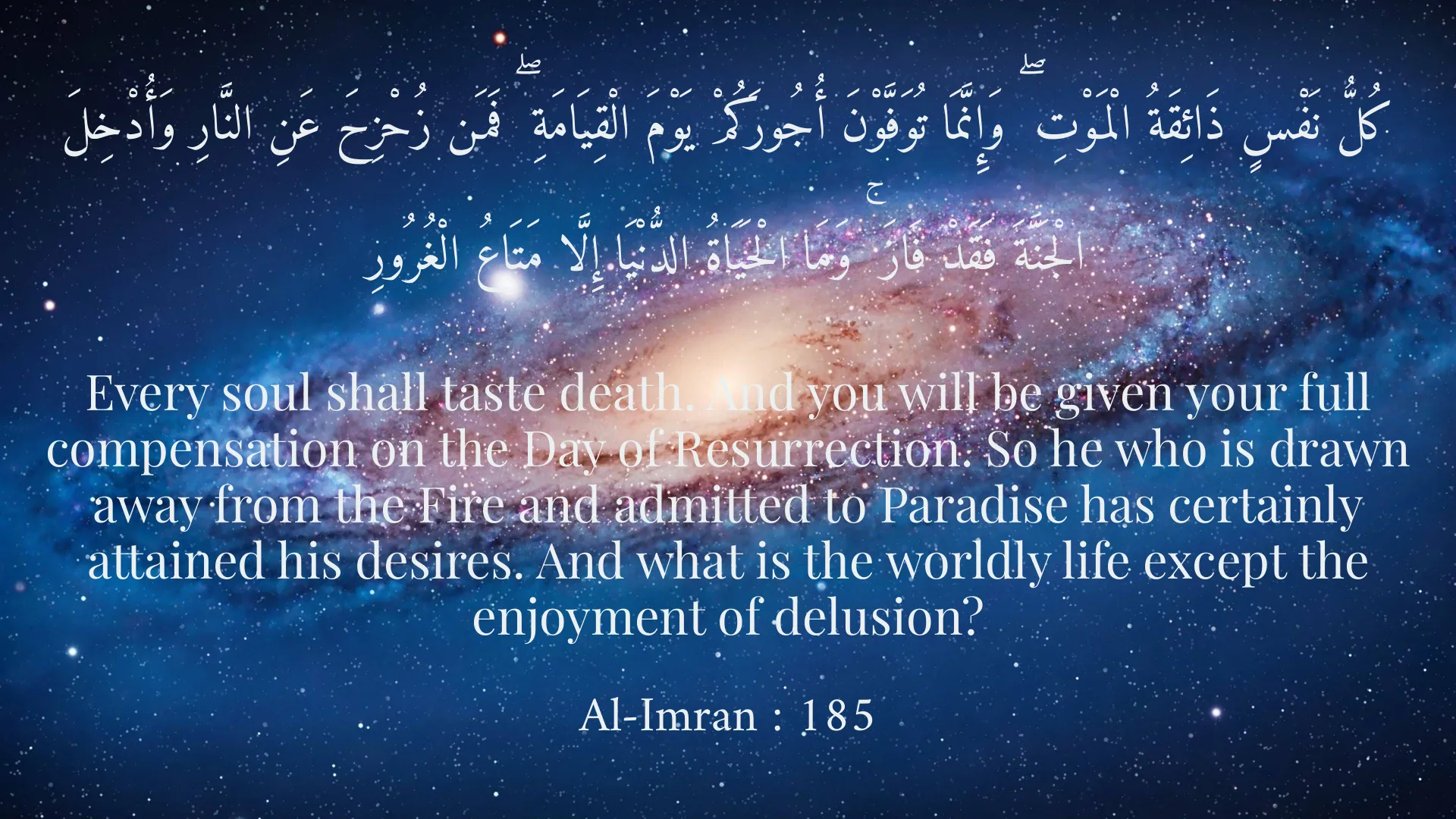
In the Holy Quran, the themes of contemplation and awareness of death are pivotal, playing a crucial role in shaping an individual’s spiritual and moral framework. The significance of reflecting upon death is emphasized as a means to awaken a person’s consciousness, to foster vigilance, and to compel them to lead a life rich in righteous deeds. The inevitability of death is not just a distant reality; it is an integral part of human existence that every individual must acknowledge and prepare for. This understanding can guide one's actions and priorities in life, and it also serves to re-align one's focus towards meaningful pursuits. Firstly, the Quran explicitly emphasizes the certainty of death in Surah Al-Imran, verse 185, where Allah states, 'Every soul shall taste death.' This verse poignantly reminds humanity that death is the common end for every individual. Regardless of one’s social status, wealth, or achievements, everyone is bound to face this ultimate reality. This acknowledgment of death is meant to inspire individuals to reflect on their lives, urging them to take account of their actions and intentions. In essence, by keeping the reality of death at the forefront of their minds, individuals can avoid negligence and errors in judgment, fostering a more responsible and purpose-driven life. Furthermore, contemplating death is intertwined with the Islamic concept of accountability. In Surah Al-Muddaththir, verse 46, Allah calls upon individuals to remember death and reflect upon the responsibilities they hold while they inhabit this ephemeral world. This verse serves as a powerful reminder that life is temporary, and the choices we make in this world will have everlasting consequences in the hereafter. This awareness acts as a catalyst for self-evaluation, urging believers to contemplate their purpose, their actions, and the legacy they are leaving behind. Islamic traditions further illustrate the importance of remembering death as a motivational tool for enacting positive change in one’s life. It is stated that the best reminder of death is that which leads an individual to perform beneficial deeds. This notion highlights that awareness of mortality can ignite a deeper sense of purpose, leading one to engage actively in charitable acts, community service, and self-improvement. Such actions are viewed not only as duties but as opportunities to fortify one’s character and spiritual standing, ensuring that one is favorably positioned for the afterlife. The continuous reminder of death instills a sense of urgency about the time one has left. Time, as understood in Islam, is considered a precious resource that must be utilized wisely. The realization that life is fleeting compels individuals to prioritize their time towards activities that are beneficial, both for themselves and for society at large. Engaging in prayer, seeking knowledge, nurturing relationships, and performing acts of kindness become focal points of a believer’s life, ultimately leading to personal growth and community enrichment. Moreover, reflecting on death encourages mindfulness—a state of awareness that allows individuals to live in the present moment while being cognizant of their spiritual journey. Mindfulness in Islam revolves around being aware of Allah’s presence and the impact of one's actions. The consciousness of death urges Muslims to reflect deeply on their daily lives, seeking to ensure that their conduct aligns with Islamic teachings. The transformative power of this awareness promotes a culture of repentance and behavior correction. In moments of transgression or moral uncertainty, the thought of death prompts individuals to seek forgiveness and strive for betterment, fostering a culture of humility and growth. Engaging in regular remembrance of death can also create a communal atmosphere of support and reflection among believers. In community settings, discussions surrounding death and the afterlife can lead to collective growth, encouraging members to work together towards shared goals in virtuous living. The acknowledgment of death becomes a unifying force, as it transcends individual concerns, bringing people together in their common pursuit of righteousness and the fear of not fulfilling their responsibilities. This communal aspect is essential in reinforcing the values of kindness, empathy, and mutual assistance within the society. In conclusion, the contemplation of death, as highlighted in the Quran, serves as a powerful catalyst for personal awakening, awareness, and moral vigilance. The teachings of the Quran remind believers that death is not just an end, but a profound aspect of existence that necessitates reflection, accountability, and transformation. By internalizing the inevitability of death, individuals can navigate their lives with purpose, cultivating a rich tapestry of righteous deeds, compassionate relationships, and spiritual resilience. Ultimately, this perspective fosters an enriched understanding of life’s purpose, guiding individuals towards a path of enlightenment and fulfillment, both in this world and the hereafter.
Related Verses
كُلُّ نَفْسٍ ذَائِقَةُ الْمَوْتِ ۖ وَإِنَّمَا تُوَفَّوْنَ أُجُورَكُمْ يَوْمَ الْقِيَامَةِ ۖ فَمَن زُحْزِحَ عَنِ النَّارِ وَأُدْخِلَ الْجَنَّةَ فَقَدْ فَازَ ۚ وَمَا الْحَيَاةُ الدُّنْيَا إِلَّا مَتَاعُ الْغُرُورِ
Every soul shall taste death. And you will be given your full compensation on the Day of Resurrection. So he who is drawn away from the Fire and admitted to Paradise has certainly attained his desires. And what is the worldly life except the enjoyment of delusion?
Al-Imran : 185
وَذَكِّرْ فَإِنَّ الذِّكْرَى تَنْفَعُ الْمُؤْمِنِينَ
And remind, for indeed, the reminder benefits the believers.
Al-Muddaththir : 46
Short Story
Ali Reza always pondered about his life, but one day he thought about death and decided to pay more attention to his deeds. Since that day, he aimed to do something good every day and assist others. He felt that this reminder of death gave him greater strength and motivation for life.