Quranic Answer
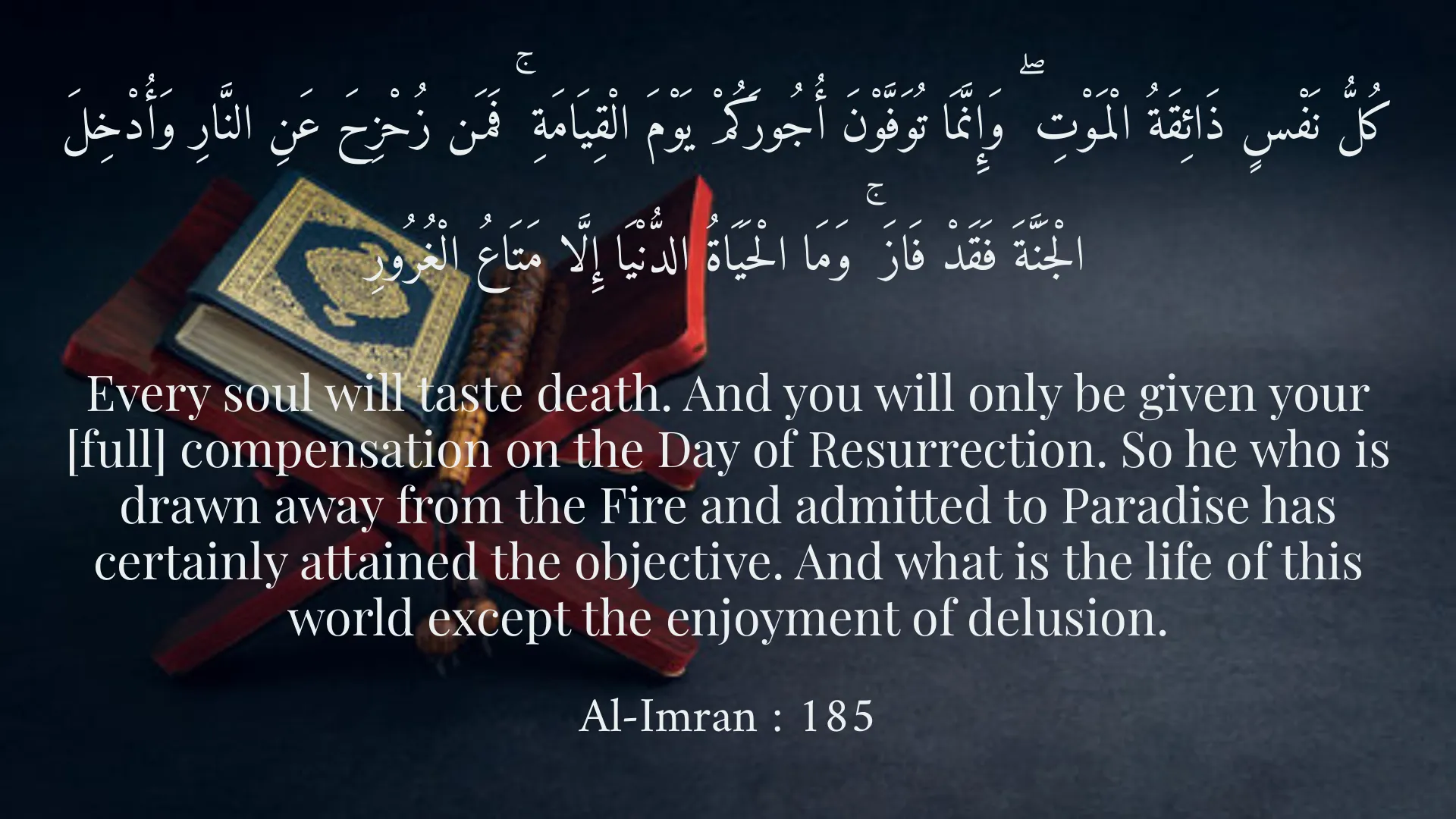
Reflecting on death and remembering it can profoundly influence the soul and lead to its improvement. Every culture and religion has its own perspective on mortality, encompassing beliefs about the afterlife, the purpose of life, and the legacy one leaves behind. The Islamic faith, grounded in the teachings of the Quran, encourages believers to continually reflect on death as a means to refine the soul, improve one's behavior, and cultivate spirituality. This intrinsic connection between the remembrance of death and personal development is distinctly expressed throughout the Quran, which illustrates how this reflection serves as a guiding light in one’s journey through life. The Quran frequently addresses the topic of death and the afterlife, reminding individuals of their inevitable fate. By acknowledging the transient nature of life, believers are encouraged to prioritize their actions and strive toward righteousness. Surah Al-Imran, verse 185 states: 'Every soul will taste death. And you will only be given your [full] compensation on the Day of Resurrection. So he who is drawn away from the Fire and admitted to Paradise has certainly attained the objective. And what is the life of this world except the enjoyment of delusion.' This verse encapsulates the essence of worldly existence, emphasizing that life, with all its pleasures, is ephemeral and deceptive. It invites individuals to look beyond worldly distractions and engage in self-reflection. Death serves as a powerful motivator for believers to rectify their behaviors and actions. In the hustle and bustle of daily life, it is easy to become consumed by material pursuits. However, the awareness of one’s mortality can shift priorities and lead to a more purpose-driven life. Reflecting on death invokes a sense of urgency to amend misdeeds and cultivate virtuous actions. This approach necessitates a departure from negligence and a serious engagement in righteous deeds. The understanding that one's actions are ultimately accountable in the eyes of God instills a sense of purpose and responsibility among believers. The Quran also emphasizes the significance of self-improvement in relation to death and the Day of Judgment. Surah Qaf, verse 22 reminds individuals, saying: 'And you were families,' urging them to contemplate mortality and face the reality of accountability. This contemplative process not only leads to a better understanding of one's existence but also fosters an environment for growth and development of character. By considering what lies ahead after death, individuals are prompted to evaluate their choices and align them with the teachings of Islam, driving them toward personal betterment and a healthy spirit. Contemplating death is not merely about fearing the end; rather, it is about embracing life with intention and purpose. It encourages individuals to submit to God and recognize His divine wisdom in the orchestration of life and death. By cultivating a relationship with God, believers find solace and strength in their faith, which guides them through trials and tribulations. This submission enhances one’s spiritual journey, leading to a profound transformation in character and behavior. It encourages adherence to moral principles, acts of kindness, and compassion towards others as a preparation for what comes after life. Additionally, the remembrance of death fosters empathy and generosity within communities. When individuals reflect on the temporality of their existence, they begin to appreciate their relationships and the impact they have on others. Understanding that life is fleeting encourages acts of philanthropy and support for those in need, highlighting the interconnectedness of human beings. By focusing on the well-being of others, individuals contributing to their communities embody the very values that are emphasized in the Quran. Moreover, reflecting on death provides clarity of purpose. It allows individuals to dissect the various distractions that life offers and determine what is truly significant. This clarity fuels personal growth, aligning thoughts and actions with values rooted in spirituality and righteousness. Just as the Quran states that every soul will taste death, it also illustrates life’s essence as ultimately connecting to a greater purpose — to worship God and live a life embodying virtue. In times of distress or loss, the remembrance of death can serve as a source of comfort and understanding. The acknowledgment that death is a natural part of life can provide solace in moments of grief and sorrow. Cultivating a mindset that sees life through the lens of mortality enables individuals to find meaning in their experiences, fostering resilience as they navigate challenges. In conclusion, reflecting on death and remembering it can significantly influence the soul, leading to its improvement and spiritual awakening. The Quran serves as a profound source of guidance in this regard, reminding individuals of the transient nature of life and the importance of preparing for the hereafter. By embracing the teachings of the Quran, believers are motivated to engage in righteous deeds, focus on self-improvement, and foster a strong connection with God. This reflection not only prepares individuals for what lies beyond but also enriches their current lives, enabling them to walk on the right path toward salvation. In all aspects, contemplating death acts as a catalyst for spiritual evolution, encouraging individuals to strive for a meaningful existence and legacy that reverberates through time.
Related Verses
كُلُّ نَفْسٍ ذَائِقَةُ الْمَوْتِ ۖ وَإِنَّمَا تُوَفَّوْنَ أُجُورَكُمْ يَوْمَ الْقِيَامَةِ ۚ فَمَن زُحْزِحَ عَنِ النَّارِ وَأُدْخِلَ الْجَنَّةَ فَقَدْ فَازَ ۚ وَمَا الْحَيَاةُ الدُّنْيَا إِلَّا مَتَاعُ الْغُرُورِ
Every soul will taste death. And you will only be given your [full] compensation on the Day of Resurrection. So he who is drawn away from the Fire and admitted to Paradise has certainly attained the objective. And what is the life of this world except the enjoyment of delusion.
Al-Imran : 185
وَكُنتُمْ أَزْوَاجًۭا
And you were families.
Qaf : 22
Short Story
One day, a man was walking in a beautiful garden. Suddenly, he thought about death and considered what truly matters in life. He realized that life is fleeting, and he should dedicate more time to improving his actions. From that day forward, he decided to engage more in worship and doing good for others. This reflection led him to goodness and changed his life.